Two Faces of Pricing: National vs. Private Brands
Labels, Not Water Sources, Determine the Price
Bottled Water Industry in a Transparency Blind Spot
The domestic bottled water market is caught in a structural illusion where prices vary depending on the "brand label." Water from the same source, when sold as a private brand (PB) product by a retailer, becomes ultra-low-priced bottled water, but when labeled as a national brand (NB) by a manufacturer, the price jumps by about 1.5 to 2 times. Although the ingredients, water source, and quality are the same, consumers have virtually no way to distinguish between them. As the bottled water market operates around brands, critics argue that the actual value of the water itself is being obscured by the label.
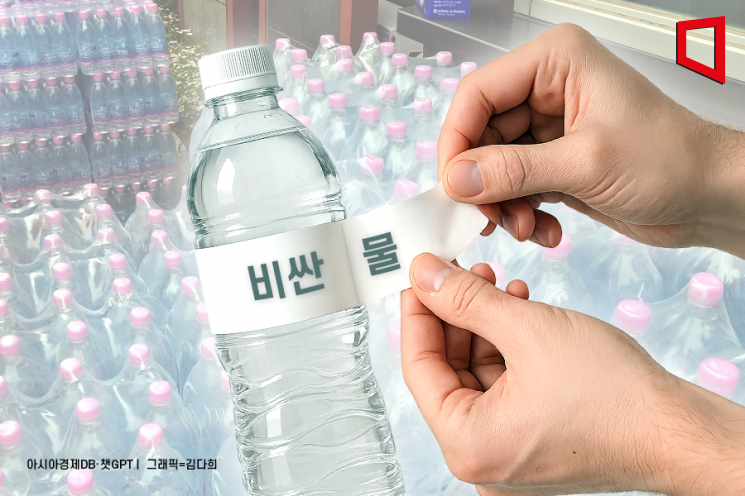
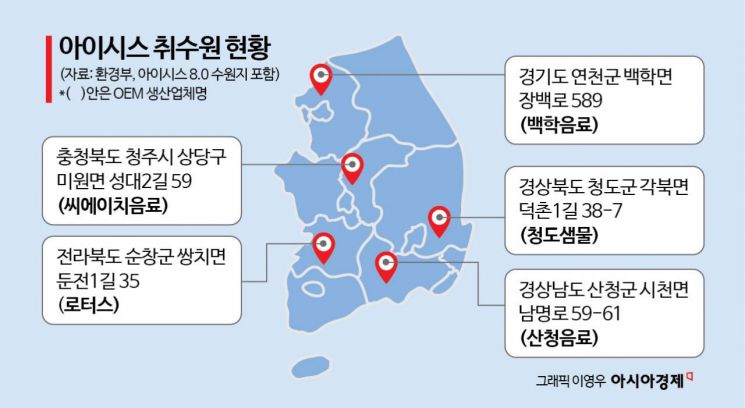
According to the Ministry of Environment and each company on November 17, multiple OEM (original equipment manufacturing) suppliers for Lotte Chilsung Beverage's Isis, such as Lotus, Baekhak Beverage, and Sancheong Beverage, provide water from the same source to various brands. The issue lies in the pricing. Even when water from the same source is bottled by the same manufacturer, the price increases when it carries a national brand, but drops to less than half when sold as a private brand.
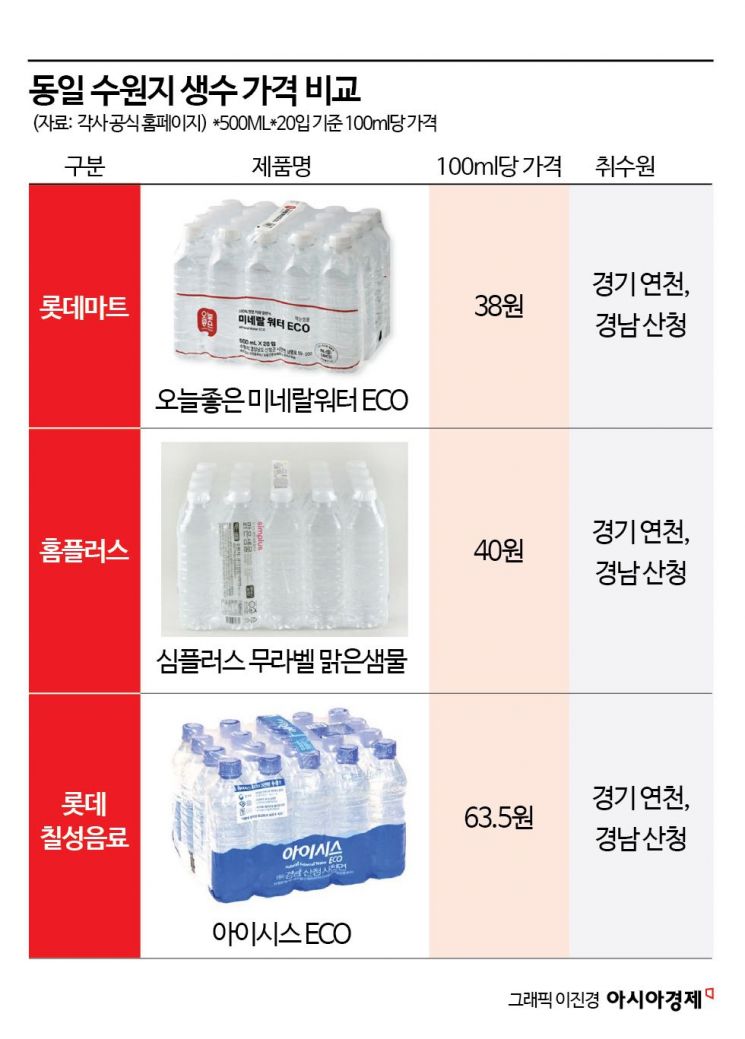
In fact, Homeplus Clear Spring Water (label-free), supplied by these OEM companies, sells for 40 KRW per 100ml for a 500ml PET bottle, and Lotte Mart Mineral Water ECO is 38 KRW. In contrast, Isis ECO, produced from the same water source, is priced at 63.5 KRW, showing a clear price difference.
Only Three Single Water Sources... Mineral Content and Hardness Differ by Brand
The background behind this price gap lies in the multi-source structure of the domestic bottled water industry. According to the Ministry of Environment, there are 60 bottled water manufacturers in Korea, each producing an average of 5.3 products. On average, a single brand uses about 4.5 different water sources, which means that even under the same brand name, "different water" can be bottled depending on the time, region, and production line. Since the water source is the key factor determining the mineral composition and hardness of the water, a change in source inevitably leads to subtle differences in composition and taste.
Among major domestic brands, only three-Samdasoo, Baeksansu, and Hweo Ullim Water-maintain a single water source. Samdasoo from Jeju Development Corporation sources its water from Gyorae-ri, Jocheon-eup, Jeju; Baeksansu, sold by Nongshim, is sourced from Antu County, Jilin Province, China; and Hweo Ullim Water from LG Household & Health Care is sourced from Buk-myeon, Ulleung-gun, North Gyeongsang Province. These brands are able to maintain relatively consistent composition.
Oligopoly Market... Information Asymmetry Hidden Behind Brand Trust
It is pointed out that this multi-source structure, combined with market oligopoly, significantly amplifies consumer illusions. The domestic bottled water market is an oligopoly, with the top three brands-Samdasoo from Jeju Development Corporation (40%), Isis from Lotte Chilsung Beverage (13%), and Baeksansu from Nongshim (8%)-accounting for over 60% of the market. The stronger the brand, the more consumers tend to believe that "the brand itself is a guarantee of quality." In reality, however, the operation of multiple water sources makes it difficult to ensure uniformity in quality and composition.
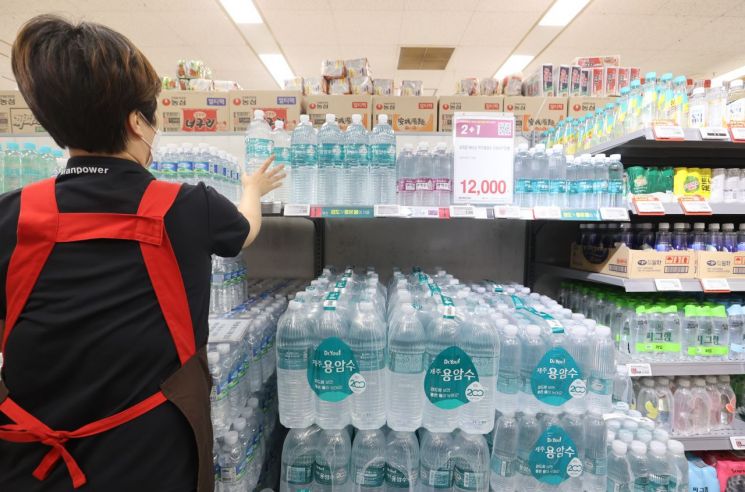
In particular, Isis, the second-largest market share holder, produces water from four different locations: Sancheong in South Gyeongsang Province, Cheongju in North Chungcheong Province, Sunchang in North Jeolla Province, and Cheongdo in North Gyeongsang Province. The manufacturer and water source change depending on the distribution channel, product volume, and whether the product is a PB or NB. In offline stores, where dozens of bottled water products are displayed, it is unrealistic to expect consumers to check every detail on the label. An industry insider said, "Most consumers choose bottled water based only on the brand name or price level. Unless the fact that the water source is the same is actively shared, it is difficult for consumers to make rational decisions."
However, a representative from Lotte Chilsung Beverage explained, "For PB bottled water, there are various reasons for cost reduction, such as securing stable sales channels, streamlining logistics processes, reducing inventory burden, and not incurring separate branding and marketing costs. This is the same situation for various PB products."
Consumers Have Virtually No Choice... Need for Substantial Information Disclosure
Industry experts point out that since bottled water has become an essential part of daily life, it is necessary to strengthen disclosure of ingredient differences within brands and ensure transparency in the price structure between NB and PB products.
An anonymous source said, "Because the mineral composition and characteristics of water differ by source, there is variability in quality, but this is not effectively communicated to consumers. Even if the water source is indicated on the label, it is hard to say that consumers are given a real choice in the purchasing environment, so the brand name excessively substitutes for information about quality."
The source continued, "Disclosure of ingredient differences should go beyond fine print on the label and be provided in a way that allows consumers to clearly compare the physical and chemical characteristics of water by brand and source. Key pricing factors such as manufacturer, water source, and distribution margin should also be disclosed in a way that consumers can understand."
© The Asia Business Daily(www.asiae.co.kr). All rights reserved.
![Clutching a Stolen Dior Bag, Saying "I Hate Being Poor but Real"... The Grotesque Con of a "Human Knockoff" [Slate]](https://cwcontent.asiae.co.kr/asiaresize/183/2026021902243444107_1771435474.jpg)

















