Dedicated PBV Plant with Annual Capacity of 250,000 Units
Completion Ceremony for East Plant and Groundbreaking for West Plant
Attended by Prime Minister, Gyeonggi Governor, Chairman Chung Euisun, and Others
Establishment of New PBV Busines
Kia is establishing an additional future mobility production hub in Hwaseong, Gyeonggi Province, with an annual capacity to produce 250,000 purpose-built vehicles (PBVs). By investing 4 trillion won, the company is building an advanced, eco-friendly, dedicated manufacturing facility in Korea, laying the groundwork to actively target the global PBV market.
On November 14, Kia held the completion ceremony for the EVO Plant East and the groundbreaking ceremony for the EVO Plant West, which is scheduled to begin operations in 2027, at Autoland Hwaseong in Ujeong-eup, Hwaseong City, Gyeonggi Province. The event was attended by Prime Minister Kim Minseok, Gyeonggi Province Governor Kim Dongyeon, Hyundai Motor Group Chairman Chung Euisun, Kia President Song Ho-sung, and approximately 200 other government and Hyundai Motor Group officials.
In his congratulatory remarks, Prime Minister Kim stated, "It is meaningful to be part of both the completion and groundbreaking ceremonies for the EVO Plant," adding, "Together with the automotive industry, we will usher in a new era of innovation in future mobility."
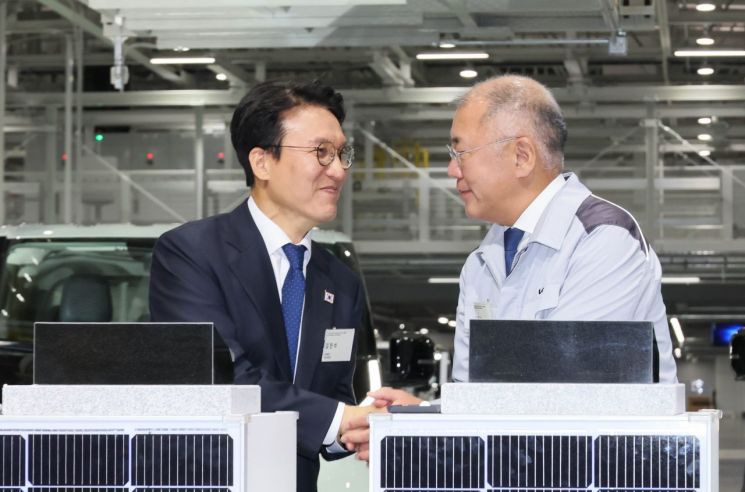 On the 14th, at the Kia Autoland Hwaseong in Ujeong-eup, Hwaseong City, Gyeonggi Province, Prime Minister Kim Minseok (left in the photo) and Hyundai Motor Group Chairman Chung Euisun shook hands at the completion ceremony of the Kia Hwaseong EV Plant East and the groundbreaking ceremony of the West. Photo by Yonhap News Agency
PBVs are electrified mobility vehicles that are custom-designed from the outset to meet specific use-case requirements. Kia emphasized its commitment to developing PBVs as a core pillar of its future business portfolio, rather than simply expanding its new vehicle lineup, with the launch of the EVO Plant. The company aims to build an integrated mobility business model that combines vehicle sales, manufacturing, operational services, and a platform ecosystem through PBVs.
Kia has secured a site of 300,000 square meters-larger than 40 soccer fields-and will invest approximately 4 trillion won in facility investment and research and development (R&D). The East Plant will produce 100,000 units annually of the mid-sized PBV model PV5, while the West Plant will manufacture 150,000 units annually of the large PBV PV7.
This dedicated PBV plant is significant as it marks Kia's addition of another electric vehicle production base in Korea. By establishing a dedicated facility for the high-growth PBV business, rather than for conventional passenger electric vehicles, Kia is demonstrating its strategic direction to make Korea a key hub for electric vehicles. Kia President Song Ho-sung announced, "In line with government policy, we plan to produce 2.63 million units, or 58% of the 4.51 million Kia electric vehicles scheduled for global production from 2026 to 2030, in Korea."
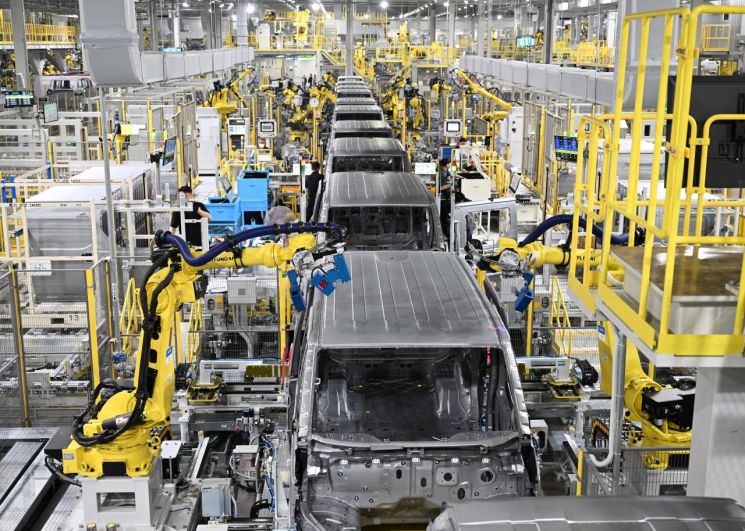
Advanced Eco-Friendly Plant: Hwaseong EVO Plant
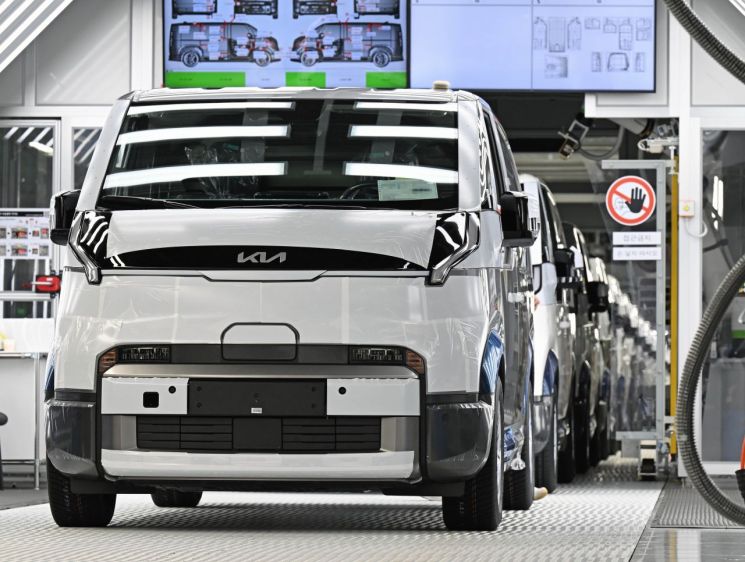
Kia has implemented a wide range of advanced, innovative manufacturing technologies and established facilities to minimize carbon emissions at the Hwaseong EVO Plant. The body shop features a smart logistics system utilizing automated guided vehicles (AGVs), while the paint shop is designed to reduce carbon and hazardous substances through the use of dry booths, resulting in approximately 20% lower carbon emissions compared to existing plants.
In particular, the assembly process has eliminated conveyor belts and adopted a "cell-based" manufacturing approach. By producing different mobility models simultaneously in cell units, the plant enables diverse and flexible vehicle production. Additional features include smart tags for location-based automation, monitors displaying specifications to prevent assembly errors, automation technologies for hazardous processes such as heavy component installation, and low-noise equipment, all of which contribute to a worker-friendly environment.
Kia is also committed to achieving RE100 (100% renewable energy use) in its manufacturing processes. The company plans to invest in a 50MW solar power renewable energy facility by utilizing approximately 105,000 pyeong of idle national land at Autoland Hwaseong, including the EVO Plant.
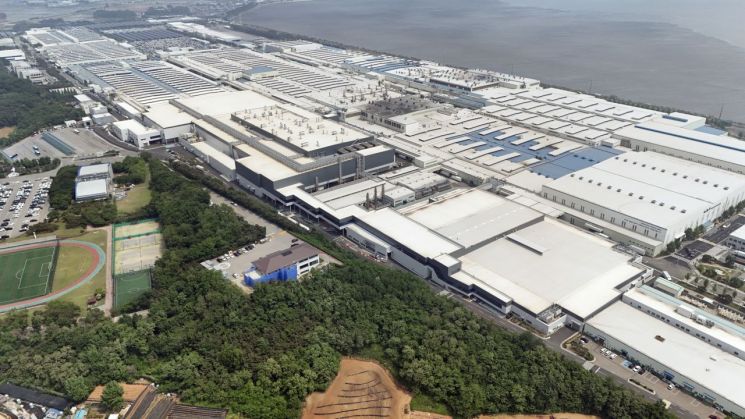 Aerial view of Kia Autoland Hwaseong located in Ujeong-eup, Hwaseong-si, Gyeonggi-do. Provided by Kia
Specialized PBV Conversion Center in Operation
Kia also operates a PBV Conversion Center, where it collaborates with partners to develop specialized models. The Conversion Center, built on a site of approximately 60,000 square meters, produces a variety of specialized conversion models using the PV5, including open beds, box trucks, and camping vehicles.
Future conversion models based on large PBVs such as the PV7 will also be developed and produced at this center.
A Kia representative stated, "By establishing a PBV ecosystem in Korea, we will not only contribute to revitalizing the manufacturing industry but also gain the competitiveness to lead the global light commercial vehicle market."
© The Asia Business Daily(www.asiae.co.kr). All rights reserved.