Reviewing Departure Tax Hike... Possible Reduction in Passport Issuance Fees
Visa and Pre-Screening Fees Also Set to Rise... Increased Burden on Foreign Visitors
The Japanese government is pushing forward plans to significantly increase taxes and visa fees imposed on foreign tourists in response to overtourism and traffic congestion.
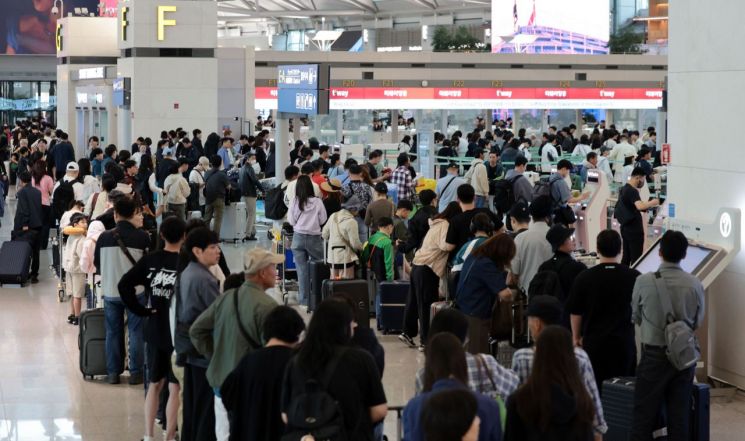 On the 2nd of last month, travelers were lined up for check-in at Terminal 1 of Incheon International Airport. Photo by Yonhap News
According to a report by the Mainichi Shimbun on November 12, the Japanese government is considering raising the current "International Tourist Departure Tax" (exit tax) from 1,000 yen (about 9,500 won) to more than 3,000 yen (about 28,500 won). Sanae Takaichi, the Chief Cabinet Secretary, had mentioned during the Liberal Democratic Party leadership election in September that she would raise the departure tax to 3,000 yen.
The Japanese government plans to use the additional tax revenue for measures related to overtourism, such as alleviating traffic congestion and cracking down on violations of regulations by some foreign tourists. In the 2023 fiscal year (April 2023 to March 2024), revenue from the departure tax reached 39.9 billion yen (about 378.4 billion won).
However, since the departure tax must be paid by all travelers leaving Japan, the burden on Japanese nationals will also increase. In response, the government is considering using part of the additional revenue to lower the passport issuance fee for Japanese citizens. Currently, the online issuance fee for a 10-year passport is 15,900 yen (about 150,000 won), and there is a possibility that it could be reduced to as low as 10,000 yen (about 95,000 won).
Additionally, the Japanese government has announced that it will raise visa issuance fees for foreign visitors starting in April next year. The current single-entry visa fee is around 3,000 yen, but the government is discussing raising it to the level of major advanced countries such as the United States (185 dollars, about 270,000 won). This will be the first time since 1978 that visa fees are increased.
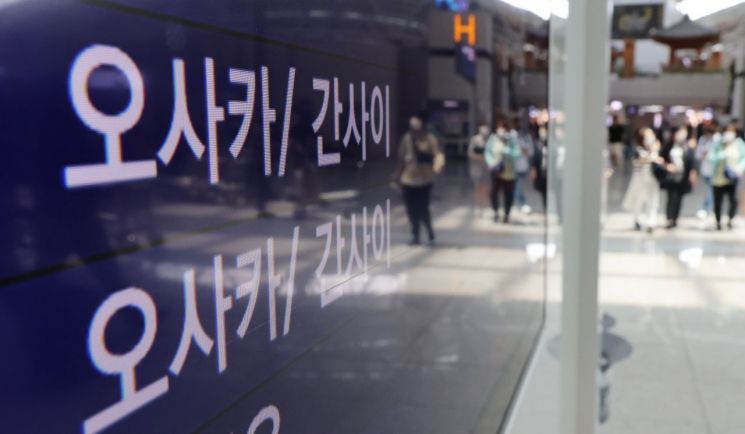 A display board showing flights departing from Terminal 1 at Incheon International Airport with flights to Japan being announced. Photo by Yonhap News Agency
Furthermore, starting around 2028, the government is planning to implement pre-screening procedures and impose a separate fee for foreigners making short-term visits without a visa.
Some in the political sphere are also calling for the abolition of the consumption tax exemption system currently applied to foreign tourists. The Mainichi Shimbun reported, "While measures to increase the burden on foreigners could help mitigate the negative effects of overtourism, there are significant concerns that they may discourage visits to Japan," adding, "Even within the government, there are calls for careful deliberation on these measures."
By September this year, the number of foreign visitors to Japan reached 31,650,500, surpassing 30 million in the shortest period on record.
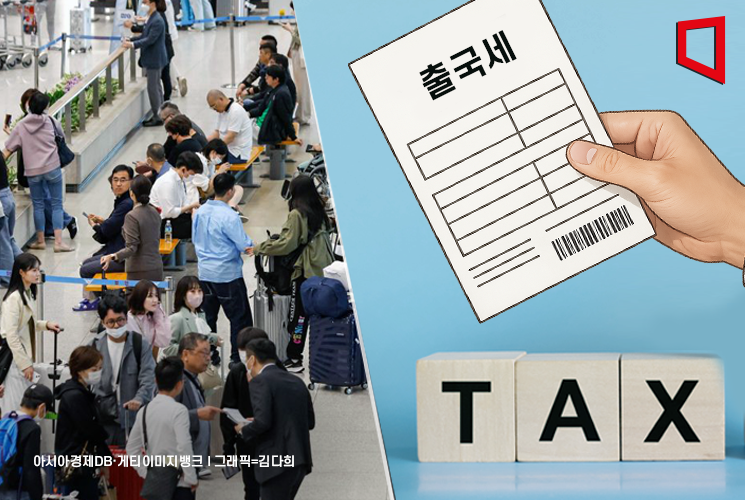
Last year, 8.82 million South Koreans visited Japan. According to the Japan National Tourism Organization (JNTO), in the first half of this year (January to June), South Koreans accounted for about 4,783,500 of all foreign visitors to Japan, ranking first ahead of China and Taiwan. This is a 7.7% increase compared to the same period last year. South Koreans can stay in Japan for up to 90 days without a visa for purposes such as tourism, visiting relatives, or study tours.
© The Asia Business Daily(www.asiae.co.kr). All rights reserved.
![Clutching a Stolen Dior Bag, Saying "I Hate Being Poor but Real"... The Grotesque Con of a "Human Knockoff" [Slate]](https://cwcontent.asiae.co.kr/asiaresize/183/2026021902243444107_1771435474.jpg)

















