Power Grid Paralyzed, Widespread Blackouts Reported
Zelensky Stresses Need for International Sanctions
On November 8 (local time), Ukrainian authorities announced that at least seven people had lost their lives after Russian forces struck substations supplying power to nuclear power plants in Ukraine. The attack reportedly targeted substations related to power plants in the Khmelnytskyi and Rivne regions.
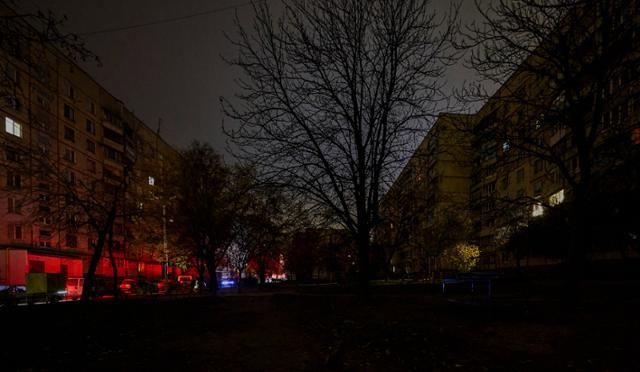 The northern Ukrainian city of Kharkiv was plunged into darkness on the 8th due to a power outage caused by Russia's attack on a substation using drones and missiles. Photo by EPA Yonhap News
According to AFP, AP, and Bloomberg News, Ukrainian Foreign Minister Andriy Sybiha stated via his X (formerly Twitter) account that this attack was not accidental but a meticulously planned operation, warning that "Russia is deliberately threatening Europe's nuclear safety." He also criticized Russia for "cutting off electricity, heating, and water supplies and destroying the railway network, targeting the daily lives of residents."
The Ukrainian Air Force reported that Russian forces had launched 458 drones and 45 missiles overnight in recent days, with a significant number intercepted and neutralized. However, in Dnipro, a drone attack caused a nine-story building to collapse, resulting in three deaths and twelve injuries, including two children.
This attack halted power production in various parts of Ukraine. The state-run energy company Centrenergo announced that, following the largest attack since the war began, power plant operations in the Kyiv and Kharkiv regions had been temporarily suspended. The Trypilska and Zmiivska thermal power plants sustained damage. The Trypilska plant had already been damaged by a missile attack last year.
In northern Kharkiv, a Russian airstrike killed one energy company employee, and some areas experienced power outages and disruptions to water supply. In the southern cities of Odesa and Kremenchuk, drone attacks damaged energy facilities, leaving electricity and water supplies cut off.
The Russian Ministry of Defense claimed that the attacks targeted Ukraine's military and industrial complexes, as well as energy infrastructure. However, Ukrainian President Volodymyr Zelensky urged the international community, including the United States and Europe, to respond via X, stating, "Sanctions against Russia's energy industry are necessary in response to attacks targeting civilians ahead of winter."
As the war enters its fourth winter, this attack is being assessed as a strategic operation targeting Ukraine's power grid at a time when heating demand is rising. Energy expert Oleksandr Kharchenko warned that if the Kyiv combined heat and power plant remains offline for more than four days in temperatures below minus 10 degrees Celsius, a technical disaster could occur.
Meanwhile, Ukraine has also recently expanded its attacks on Russia's oil and gas facilities. On the night of November 7, a drone attack in Russia's southern Volgograd region damaged energy infrastructure, resulting in a blackout in the area.
Both Russia and Ukraine are utilizing energy as a key tool in the war. Analysts interpret the attacks by both sides as part of a strategy to undermine the opponent's war capabilities, shake public morale, and exert economic pressure.
© The Asia Business Daily(www.asiae.co.kr). All rights reserved.
![Clutching a Stolen Dior Bag, Saying "I Hate Being Poor but Real"... The Grotesque Con of a "Human Knockoff" [Slate]](https://cwcontent.asiae.co.kr/asiaresize/183/2026021902243444107_1771435474.jpg)















