KB Securities announced on the 29th that it has raised its 12-month KOSPI target index to 5,000 points, according to its "KB 2026 Equity Strategy Annual Outlook" report published on the 28th.
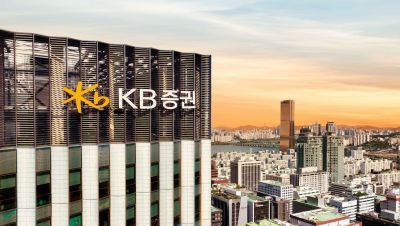
In the report, KB Securities assessed that the Korean stock market has entered a bull market for the first time in 40 years since 1985, driven by the government’s strengthened capital market revitalization measures and a revaluation of valuations due to a weaker dollar. KB Securities also projected a long-term weakening trend for the dollar and analyzed that this rally marks the third major bull market in the history of the Korean stock market.
The "three lows" (low dollar, low oil prices, low exchange rates) boom is an extremely rare combination, as the coexistence of a weak dollar and low oil prices is particularly difficult to achieve. This rare combination is being replicated for the first time in 40 years since the "three lows" boom of 1985, with oil prices remaining low despite the recent weakening of the dollar. As a result, countries with a high proportion of raw material imports that are not dollar-based, such as Korea, are expected to see improved corporate profitability and accelerated inflows of global capital.
Furthermore, regarding the future trend of oil prices, KB Securities judged that oil has entered a long-term downward trajectory. This is due to oversupply, the growing share of alternative energy, and the structural decline in the proportion of industrial sectors with high oil consumption within the global industrial structure.
KB Securities identified semiconductors, nuclear power, electricity, shipbuilding, defense, and securities as its preferred sectors.
In the case of semiconductors, with investments in artificial intelligence (AI) data centers expected to exceed 1 trillion dollars by 2028, a meaningful increase in DRAM supply, including high-bandwidth memory (HBM), is anticipated only from 2028, when the Pyeongtaek P5 and Yongin semiconductor clusters begin full-scale operations. Especially given that investments are currently focused on HBM and that a short-term increase in DRAM supply is virtually impossible, the DRAM market is expected to face a severe supply shortage in 2026-2027. This is likely to lead to greater long-term earnings visibility for semiconductor companies, which is expected to drive further valuation increases.
For the nuclear power and electricity sectors, the U.S. Secretary of Energy has stated that the United States aims to become the hub of nuclear technology, highlighting the country’s current leadership in the global nuclear industry. As a result, the U.S. urgently needs to build and rebuild its nuclear supply chain, centered on Westinghouse. Moreover, it has been reported that the Korean government is considering using nuclear cooperation, specifically MANUGA (Make America Nuclear cooperation Great Again), as a bargaining chip in Korea-U.S. trade negotiations. Therefore, cooperation between Korean nuclear and electricity companies and their U.S. counterparts is expected to become more visible as the U.S. seeks to secure a competitive edge over China in the nuclear field.
Kim Dongwon, Head of Research at KB Securities, said, "Despite the recent rise in the Korean stock market, strengthened government capital market revitalization measures and a weaker dollar are expected to serve as additional drivers for further gains. From a long-term perspective, we expect the bull market to continue due to valuation re-ratings, with major sectors reaching new all-time highs, leaving ample room for further KOSPI growth."
The "KB 2026 Equity Strategy Annual Outlook" research report is available on the KB Securities website, the KB Securities research website, and the mobile trading system (MTS) 'KB M-able (M-able)'.
© The Asia Business Daily(www.asiae.co.kr). All rights reserved.
![Clutching a Stolen Dior Bag, Saying "I Hate Being Poor but Real"... The Grotesque Con of a "Human Knockoff" [Slate]](https://cwcontent.asiae.co.kr/asiaresize/183/2026021902243444107_1771435474.jpg)















