Food Assistance and Early Childhood Education Support for Low-Income Americans at Risk
Vance: "Military Personnel Will Receive Their Pay"
Court Blocks Mass Layoffs of Federal Employees
On October 28 (local time), the U.S. Senate held a vote on the Republican Party's short-term spending bill (continuing resolution, or CR), but the measure was rejected. With this vote marking the 13th consecutive failure to pass a continuing resolution, it is now expected that the partial shutdown of the U.S. federal government will extend beyond one month.
In the Senate vote on the Republican continuing resolution, there were 54 votes in favor and 45 against. At least 60 votes were required for passage.
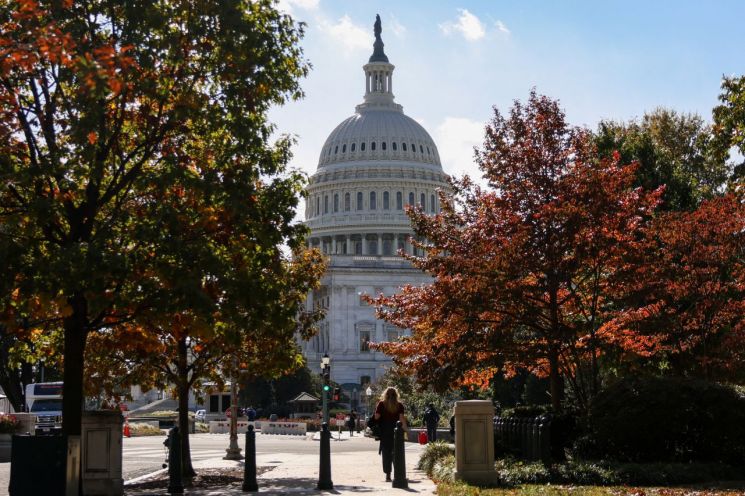
All Republican senators voted in favor of the continuing resolution, while all Democratic senators opposed it, resulting in a standoff between the two parties. As this deadlock continues, the shutdown that began on the first of this month is now likely to last for more than a month.
The longest federal government shutdown in U.S. history lasted 35 days during the first Donald Trump administration (from December 22, 2018, to January 25, 2019). If the current shutdown continues past November 5, it will set a new record for duration.
Due to the shutdown, the Supplemental Nutrition Assistance Program (SNAP), which provides food assistance to 42 million low-income Americans, is expected to be suspended starting November 1 as funding runs out. The U.S. Department of Agriculture claimed that financial support for SNAP is not being provided because Democratic lawmakers are opposing the passage of the continuing resolution. In response to requests to use the $500 million SNAP contingency fund, the department declined, stating that the funds must be reserved for emergencies such as natural disasters.
On this day, 24 states led by Democratic governors and Washington, D.C. filed a lawsuit against the federal government to prevent the suspension of SNAP.
Starting November 1, more than 130 early childhood education programs under the Head Start initiative will also lose access to federal funding. Over 65,000 Head Start programs nationwide, and the children enrolled in them, will be affected.
Some 1.3 million military personnel, as well as essential government workers in fields such as law enforcement and firefighting, are now required to work without pay for a month due to the shutdown.
With the next payday scheduled for October 31, Vice President JD Vance stated, "This weekend, military personnel will receive their pay." However, he did not specify how the necessary funds would be secured.
As a large number of federal employees have been placed on temporary furlough, the American Federation of Government Employees (AFGE), the largest federal employee union, urged both the Republican and Democratic parties to reach a prompt agreement and pass a continuing resolution.
Senator Ron Johnson (Republican, Wisconsin) has proposed to the Democrats a plan to pay all federal employees, including key personnel working without pay and those temporarily laid off, in light of the prolonged shutdown, according to political news outlet The Hill.
On October 16, in response to AFGE's request, Judge Susan Illston of the U.S. District Court in San Francisco issued a temporary restraining order to halt mass layoffs of federal employees. On this day, she issued a preliminary injunction to maintain this order during the course of the lawsuit. Judge Illston stated, "Mass layoffs are illegal and exceed the scope of authority." However, the Trump administration maintains that personnel-related lawsuits are beyond the jurisdiction of district courts.
© The Asia Business Daily(www.asiae.co.kr). All rights reserved.
![Clutching a Stolen Dior Bag, Saying "I Hate Being Poor but Real"... The Grotesque Con of a "Human Knockoff" [Slate]](https://cwcontent.asiae.co.kr/asiaresize/183/2026021902243444107_1771435474.jpg)















