Financial Accidents on the Rise, Zero Sanctions Imposed
Financial Authorities Move to Institutionalize Clawback Mechanisms for Performance Bonuses
It has been confirmed that the performance bonuses paid to executives at KB Kookmin Bank last year exceeded 300 million won per person. At Hana Bank, another major commercial bank, executive compensation nearly doubled in just one year. Meanwhile, as financial accidents continue to increase, criticism is mounting that "performance is shared, but responsibility is avoided."
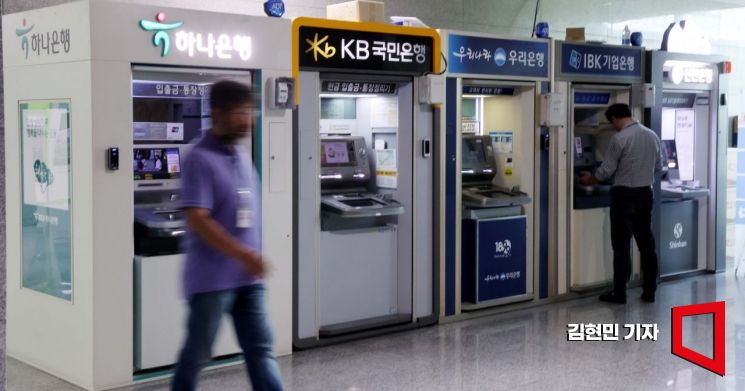 Criticism is growing over major commercial banks' executives holding a bonus party, with accusations that "performance is shared, but responsibility is avoided" (photo is for illustrative purposes and unrelated to the article).
According to data submitted by the Financial Supervisory Service to Assemblyman Lee Heonseung of the National Assembly's Political Affairs Committee on October 26, the total amount of performance bonuses paid to KB Kookmin Bank executives last year was 14.2 billion won. The average compensation per executive was approximately 310 million won, representing an increase of around 40% compared to 2023 (220 million won per person). This is the first time in the past five years that the average has exceeded 300 million won.
The situation at Hana Bank is similar. Last year, the total amount of executive performance bonuses was 8.9 billion won, with an average of 120 million won per executive, nearly double the previous year (4.8 billion won and around 70 million won per person). At Shinhan Bank, total performance bonuses for all employees slightly increased to 148 billion won, while at Woori Bank, the figure fell by more than 30% to 107.7 billion won.
While performance bonuses have grown, financial accidents have actually increased as well. From January to August of this year, there were 74 financial accidents at the four major commercial banks, with total damages reaching 197.2 billion won. Compared to the previous year (62 cases and 136.8 billion won), the number of incidents increased by 19%, and the amount of damages rose by 44%.
Nevertheless, in the past eight years (2016 to August 2024), there has not been a single case in which a major bank executive was sanctioned by the Financial Supervisory Service due to a financial accident. This has led to criticism that "profits are taken by management, while losses are borne by society."
Financial authorities are reviewing measures to strengthen mechanisms for recovering performance bonuses in order to address these issues. Legislation is being pursued to institutionalize the "clawback system," which would allow for the recovery of bonuses already paid if an incident is discovered.
Currently, the supervisory regulations on the governance of financial companies do specify grounds for recalculating performance bonuses in the event of losses, but the rules are ambiguous, and actual cases of recovery are extremely rare. Lee Chanjin, Governor of the Financial Supervisory Service, stated during a parliamentary audit that "the criteria for performance evaluation and the compensation system will be completely overhauled." In addition, as this issue aligns with President Lee Jaemyung's campaign pledge to eradicate the evasion of responsibility for financial accidents, institutional reforms are expected to accelerate.
© The Asia Business Daily(www.asiae.co.kr). All rights reserved.
![Clutching a Stolen Dior Bag, Saying "I Hate Being Poor but Real"... The Grotesque Con of a "Human Knockoff" [Slate]](https://cwcontent.asiae.co.kr/asiaresize/183/2026021902243444107_1771435474.jpg)















