Gwangju Chamber of Commerce and Industry Surveys Business Performance Outlook of 134 Companies
Rising Raw Material and Labor Costs Identified as Key Factors Worsening Profitability
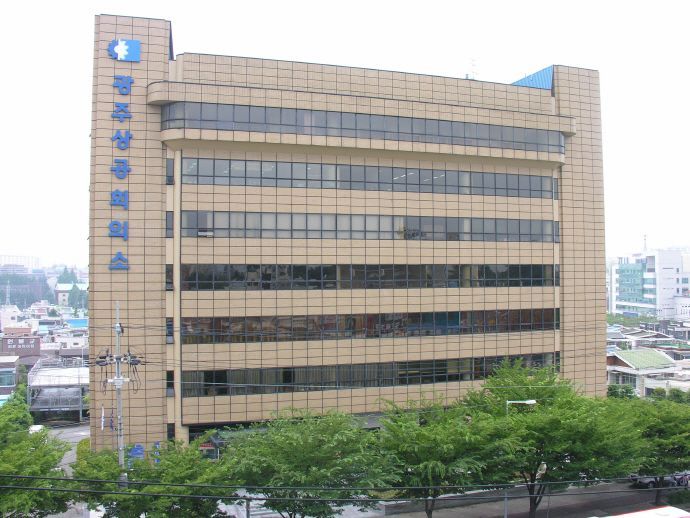
Seven out of ten manufacturing companies in Gwangju and South Jeolla Province expect that their annual sales and operating profit this year will fall short of their targets, citing factors such as rising raw material prices and increased labor costs.
According to the Gwangju Chamber of Commerce and Industry on October 23, the Chamber recently announced the results of its "Business Performance Outlook and Obstacles Survey," which was conducted with 134 manufacturing companies based in Gwangju and South Jeolla Province to assess their business performance outlook and major challenges.
This survey focused on companies' sales and operating profit forecasts, management obstacles, production and organizational management challenges, and legislative areas of concern or necessity during the regular session of the National Assembly.
The results showed that 70.1% of responding companies expect their annual sales for this year to fall short of targets, while only 24.6% anticipate meeting their targets and 5.3% expect to exceed them.
The most significant obstacle to increasing sales was "domestic market stagnation" (57.5%), followed by "sluggish export market conditions" (23.9%) and "intensified market competition" (11.2%). This indicates that both weak domestic demand and a global economic slowdown are simultaneously undermining the sales base of the region's manufacturing sector.
Similarly, 70.9% of companies expect their operating profit to fall short of targets, and 47.0% said their operating balance would remain at the break-even level, suggesting that improving profitability remains difficult.
The main factors worsening profitability were identified as "rising raw material prices" (41.8%), "increased labor costs" (20.1%), and "higher financial costs" (15.7%). In terms of production and organizational management, "corporate funding conditions" (39.6%) and "workforce supply" (28.4%) were cited as major challenges, confirming that both liquidity and securing talent are critical threats to business stability.
The areas of legislation that companies were most concerned about (multiple responses allowed) were "increased corporate costs such as corporate tax" (56.7%), "tighter regulations such as the Commercial Act and Fair Transactions Act" (53.7%), and "increased labor-management burden" (33.6%). This reflects concerns that additional institutional and cost burdens in an uncertain business environment could further constrain corporate activity.
For corporate growth and improved business performance (multiple responses allowed), the most frequently cited legislative needs were "support for revitalizing the regional economy" (58.2%), "greater flexibility in employment and the labor market" (52.2%), and "support for restructuring crisis industries" (23.1%). This suggests that, in order for companies to overcome the current crisis and secure new growth engines, industrial support policies and institutional improvements centered on the region must be implemented in tandem.
Chae Hwaseok, Executive Vice Chairman of the Gwangju Chamber of Commerce and Industry, stated, "Local companies are facing a critical situation due to prolonged domestic market stagnation and rising costs," adding, "It is urgent to improve the business environment by easing tax and financial burdens and to provide practical support for industrial restructuring."
© The Asia Business Daily(www.asiae.co.kr). All rights reserved.
![Clutching a Stolen Dior Bag, Saying "I Hate Being Poor but Real"... The Grotesque Con of a "Human Knockoff" [Slate]](https://cwcontent.asiae.co.kr/asiaresize/183/2026021902243444107_1771435474.jpg)
















