Shortage of Professionals Raises Concerns Over 'K-Culture' Progress
Min Hyungbae: "The Government Must Invest in Cultural Infrastructure"
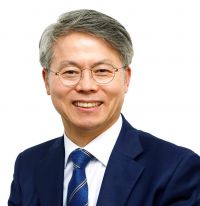 Min Hyungbae, member of the Democratic Party of Korea.
As the acquisition budgets for major national cultural institutions in Korea have stagnated for an extended period, concerns are mounting over the future competitiveness of Korean culture and the arts.
According to Min Hyungbae, a Democratic Party of Korea lawmaker representing Gwangsan-eul in Gwangju, who received the 'Status of Acquisition Budgets for the Past 10 Years' from the National Museum of Korea and the National Museum of Modern and Contemporary Art, the National Museum of Korea has spent an average of about 4 billion won per year on acquisitions for the past decade, while the National Museum of Modern and Contemporary Art has spent about 5.2 billion won annually.
Given that the consumer price index has risen by 19.98% over the past decade, the real purchasing power of these institutions for acquisitions has actually declined. This has led to criticism that there is a lack of foundational infrastructure investment needed to enhance the status of K-Culture.
The bold investments made by leading overseas cultural institutions stand in stark contrast to the domestic situation. For example, the Metropolitan Museum of Art in the United States spends an average of 81.7 billion won annually on acquisitions, while the National Museum of Modern and Contemporary Art operates at a level about 16 times lower. Major countries such as the United Kingdom's Tate Museum (39.7 billion won), the Museum of Modern Art in New York (28.2 billion won), the British Museum (20.1 billion won), and Japan's National Institutes for Cultural Heritage (13.3 billion won) each allocate hundreds of billions of won every year to secure collections.
This issue is also linked to a shortage of curatorial professionals. Of the total 11,518 employees across 916 registered museums in Korea, only 3,982 are curatorial professionals, accounting for just 34.6%. This is only about half the OECD average of approximately 65%.
Min Hyungbae stated, "To achieve the 300 trillion won K-Culture era, the government must first strengthen investment in cultural infrastructure that benefits the public." He urged, "Securing collections and expanding curatorial staff are not merely expenditures, but essential investments that protect our cultural sovereignty and generate future value. The government must recognize this and take responsible action."
© The Asia Business Daily(www.asiae.co.kr). All rights reserved.