"If We Lose, U.S. Will Be Vulnerable and Face Financial Turmoil"
Trump Announces Attendance at First Oral Argument on November 5
Aims to Highlight Legitimacy of Protectionist Policy
U.S. President Donald Trump, ahead of a court trial that will determine the legality of his reciprocal tariff policy, stated on October 15 (local time), "This lawsuit is one of the most important cases in American history." He also announced his intention to personally attend the Supreme Court and observe the first hearing.
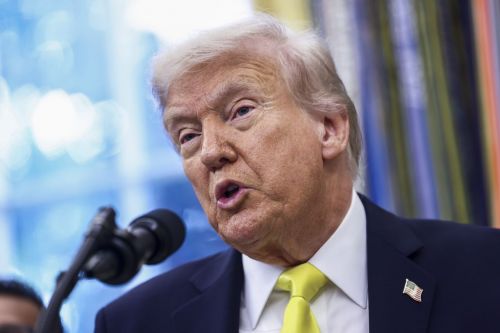
Speaking to reporters in the Oval Office that day, President Trump said, "We have a very big case coming up before the Supreme Court," adding, "If we do not win this lawsuit, we will become vulnerable and face difficulties for years to come, and we will fall into prolonged financial turmoil." He continued, "That is why I want to go to the Supreme Court myself to watch," noting, "Until now, I have not visited the court for other important cases."
This lawsuit challenges the legality of the reciprocal tariffs that President Trump imposed globally last April, citing the International Emergency Economic Powers Act (IEEPA) as the legal basis. The first oral argument is scheduled for November 5.
President Trump's announcement that he will attend the hearing in person is seen as an expression of his determination to underscore the legitimacy of his core policy of protectionism.
Currently, the Supreme Court has a 6-3 conservative majority, leading to speculation that a ruling favorable to President Trump is possible. Some observers believe a conclusion could be reached before the end of this year.
However, even if the Supreme Court rules the tariffs illegal, the Trump administration still possesses various legal tools to impose tariffs beyond the IEEPA. These include Section 122 of the Trade Act, which allows for tariffs of up to 15% for a maximum of 150 days in the event of a trade deficit; Section 232 of the Trade Expansion Act, based on national security; Section 301 of the Trade Act and Section 338 of the Tariff Act, which are used to counter unfair trade practices. These are being discussed as 'Plan B' options.
© The Asia Business Daily(www.asiae.co.kr). All rights reserved.
![Clutching a Stolen Dior Bag, Saying "I Hate Being Poor but Real"... The Grotesque Con of a "Human Knockoff" [Slate]](https://cwcontent.asiae.co.kr/asiaresize/183/2026021902243444107_1771435474.jpg)















