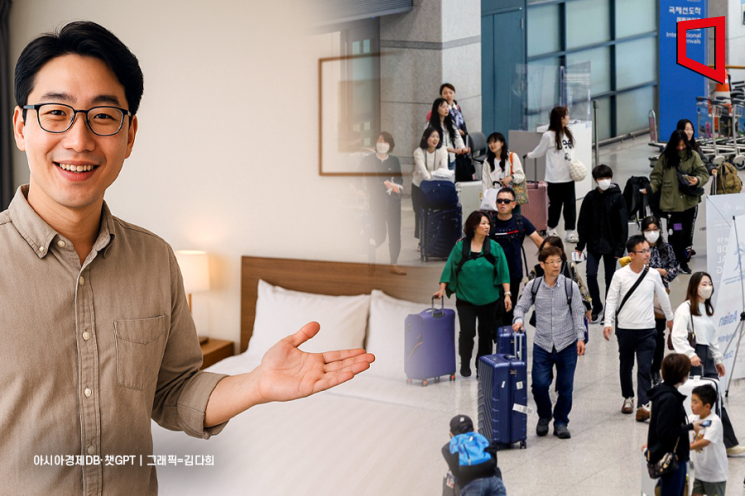
A new type of accommodation, called Urban Homestay Business for Foreign Tourists (UHBFT), is drawing attention as a solution to accommodate the rapidly increasing number of foreign tourists. With the number of inbound tourists to Korea expected to reach an all-time high this year, the number of UHBFT accommodations in Seoul, where most foreign visitors are concentrated, has nearly doubled over the past year.
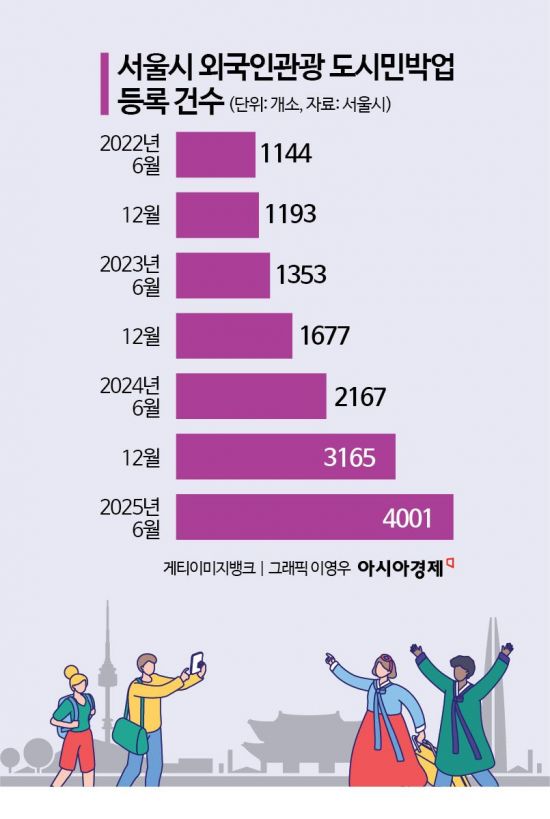
According to the Seoul Metropolitan Government on October 13, the number of registered UHBFT accommodations in Seoul stood at 4,001 as of the first half of this year, nearly double the 2,167 recorded in the first half of last year. The number of UHBFT accommodations, which was around 1,100 in 2022, has been growing rapidly since 2023 as inbound tourism to Korea has begun to recover in earnest.
Utilizing Residences with Actual Residents...Providing Meals and Korean Cultural Experiences
The surge has been particularly pronounced over the past year, driven by the global popularity of K-content such as "Maybe Happy Ending" and "K-Pop Demon Hunters," which has led to a sharp increase in foreign tourists visiting Seoul. UHBFT is a type of accommodation business that utilizes residential homes (with a total floor area of less than 230 square meters) in urban areas where residents actually live, offering foreign tourists lodging, meals, and opportunities to experience Korean culture.
An official from the Ministry of Culture, Sports and Tourism explained, "With the K-content boom, the number of foreign tourists has increased significantly, and more people are viewing UHBFT as an attractive investment opportunity. It allows for the creation of added value by utilizing idle spaces such as vacant rooms."
According to the Korea Tourism Organization, the number of inbound foreign tourists to Korea from January to August this year reached 12,379,498, averaging about 1.55 million per month. If this trend continues, the total number of foreign tourists for the year is expected to easily surpass the previous record of 17,502,756 set in 2019.
The mandatory business registration policy implemented by the accommodation-sharing platform Airbnb is also cited as a major factor behind the surge in UHBFT registrations. Since last year, Airbnb has required newly registered accommodations to submit a business registration certificate, and starting from October 16, this rule will also apply to existing listings. If hosts fail to submit the certificate by the deadline, they will not be able to accept bookings through Airbnb from January 1 of next year. Through this policy, Airbnb aims to address safety and hygiene issues associated with unregistered accommodations and to establish a sound culture of shared lodging.
Mandatory Airbnb Business Registration...Registration Now Allowed for Homes Over 30 Years Old
As a result of Airbnb's policy, UHBFT accommodations that previously operated without business registration are gradually becoming legalized. The number of registered UHBFT accommodations is expected to continue rising for the time being. With the government designating tourism as a key strategic industry and aiming to attract 30 million foreign tourists by 2030, UHBFT is being highlighted as an alternative to improve Korea's capacity to accommodate international visitors.
To respond to the recent surge in inbound tourism, the government has also decided to allow homes over 30 years old to be registered as UHBFT accommodations, provided their safety is verified. Previously, homes more than 30 years old after approval for use were classified as "aged or substandard buildings" and were restricted from registration, but the government has eased regulations by removing the relevant administrative guidelines.
An official from the Ministry of Culture, Sports and Tourism stated, "As part of regulatory rationalization, buildings over 30 years old can now be registered as UHBFT accommodations if their safety is ensured. With the number of individual travelers (FITs) who prioritize local experiences over group tours on the rise, UHBFT accommodations will play a positive role by offering a variety of lodging experiences that hotels may find difficult to provide."
© The Asia Business Daily(www.asiae.co.kr). All rights reserved.
![Clutching a Stolen Dior Bag, Saying "I Hate Being Poor but Real"... The Grotesque Con of a "Human Knockoff" [Slate]](https://cwcontent.asiae.co.kr/asiaresize/183/2026021902243444107_1771435474.jpg)
















