The 14th Shutdown Since 1980
Inevitable Economic Ripple Effects
Shutdowns Institutionalized by Structural Limitations
The U.S. federal government has shut down once again. At 12:01 a.m. on October 1, 2025, the federal government entered a shutdown-the first in seven years-after Congress failed to pass a budget for the new fiscal year. As a result, 750,000 federal employees were placed on unpaid leave, and some public services were partially paralyzed. However, such scenes are far from new. Since the 1980s, the United States has experienced as many as 14 shutdowns. Why does the U.S. government come to a halt so regularly?
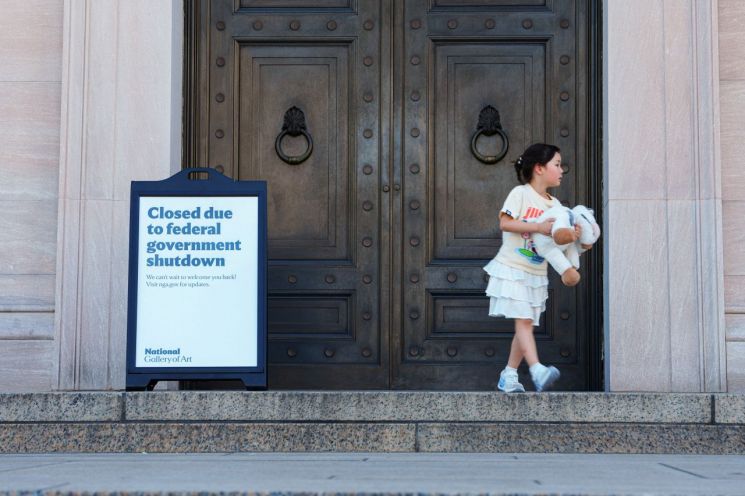
The Institutionalization of Shutdowns in the 1980s: 'A Practice Becomes Illegal'
Before the 1980s, even if Congress failed to reach a budget agreement, federal government operations did not come to a complete halt. In a 2017 report, the Congressional Research Service noted, "The shutdowns of the 1970s were not true shutdowns but rather funding gaps."
However, in 1980, then-Attorney General Benjamin Civiletti issued a legal interpretation stating that "using government funds without congressional approval violates the Antideficiency Act," putting a stop to the previous practice. He argued that, to avoid violating the Antideficiency Act, government agencies must cease all activities. From that point on, shutdowns became an 'institutional procedure.' CBS reported, "If the budget is not passed, the executive branch is legally tied up."
Shutdowns became a political battleground in 1995-1996. At that time, former President Bill Clinton and former House Speaker Newt Gingrich of the Republican Party clashed head-on over welfare spending cuts and a balanced budget bill. After a sweeping victory in the 1994 midterm elections, Republicans took control of the House and pushed for their key pledges-reducing welfare spending, cutting taxes, downsizing the federal government, and achieving a balanced budget within seven years. President Clinton refused to sign the budget bill and held his ground. As a result, the government shut down, and the shutdown lasted a total of 21 days.
Reuters Yonhap News reported that at the time, "800,000 U.S. federal employees were placed on unpaid leave, and national parks and public institutions were closed." However, the Republican Party could not escape political responsibility for the shutdown. President Clinton's approval ratings actually rose, while Speaker Gingrich was criticized for making a political miscalculation.
The next shutdown occurred in 2013 under former President Barack Obama. The Republican Party blocked the budget bill, demanding the repeal of funding for 'Obamacare' (the Affordable Care Act), leading to a 16-day government shutdown. The Bureau of Economic Analysis estimated that, during this period, the GDP growth rate fell by 0.3 percentage points. However, President Obama, backed by public support, took a firm stance, and the Republican Party, facing worsening public opinion, had no choice but to agree to a budget deal.
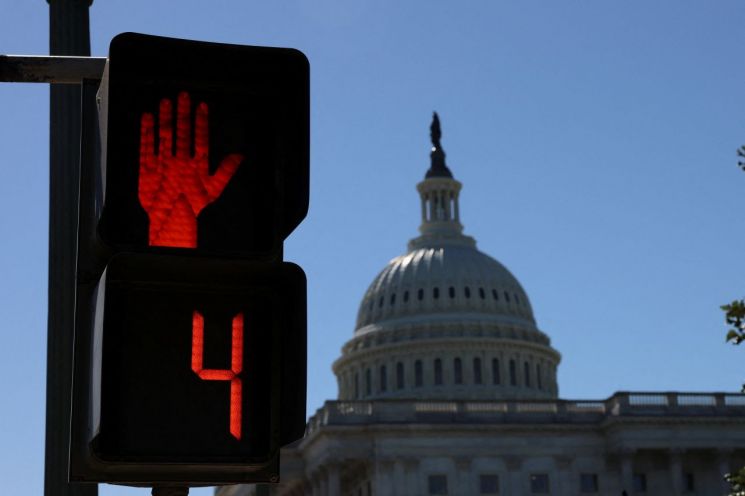
The Longest Shutdown in History Was Under Trump: 35 Days of Federal Government Closure
The longest shutdown in history occurred during the first term of the Donald Trump administration. From December 22, 2018, to January 25, 2019, the federal government was closed for a staggering 35 days. The key issue at the time was the $5.7 billion budget for the Mexico border wall. The Congressional Budget Office estimated that the shutdown resulted in a total economic loss of $11 billion (approximately 12.3 trillion won), of which about $3 billion (3.4 trillion won) was a permanent loss.
CNBC reported, "The closure of national parks, suspension of food safety inspections, and delays in passport issuance had a widespread impact on the daily lives of citizens."
And seven years later, in October 2025, history repeated itself. With the Republican and Democratic parties failing to reach a budget agreement, another shutdown became a reality.
Analysts point to the limitations of the institutional structure as the reason for the recurring shutdowns in the United States. Foreign Policy noted, "Shutdowns, in which a significant portion of the federal government effectively hits the 'pause button' due to partisan conflict and budget deadlines, are almost unheard of in other countries." The publication explained, "This is because the political systems and constitutional structures of other countries are designed to prevent such situations from occurring."
In countries with parliamentary systems, failure to pass a budget leads to a vote of no confidence, cabinet resignation, or early general elections. However, in the United States, where the legislative and executive branches are separated under a presidential system, not a single dollar can be spent without congressional approval. As a result, if political conflict over the budget cannot be resolved, shutdowns that halt government functions are bound to be repeated.
The Hutchins Center at the Brookings Institution diagnosed, "Shutdowns are no longer exceptional events; they have become a symbol of political dysfunction and paralyzed governance."
If a shutdown is prolonged, it inevitably delivers a significant shock to the overall economy, including growth rates. This has happened before. Goldman Sachs projected that if the shutdown continues, the annualized U.S. GDP growth rate for the fourth quarter will drop by about 0.15 percentage points for each week of the shutdown. Deutsche Bank also analyzed that the longer the shutdown lasts, the greater the decline in growth, with a decrease of about 0.2 percentage points per week. In the process, consumer confidence is expected to plummet, and private sector employment and investment sentiment are likely to weaken.
The Wall Street Journal pointed out, "A shutdown leads to delayed paychecks for hundreds of thousands of federal employees and the suspension of economic data releases. The longer it lasts, the greater the impact on economic and business activity," adding that the already slowing U.S. labor market is expected to face additional shocks.
© The Asia Business Daily(www.asiae.co.kr). All rights reserved.
![Clutching a Stolen Dior Bag, Saying "I Hate Being Poor but Real"... The Grotesque Con of a "Human Knockoff" [Slate]](https://cwcontent.asiae.co.kr/asiaresize/183/2026021902243444107_1771435474.jpg)
















