Advantages include traversing rough terrain and avoiding magnetic mines
"Irregular tactics show no results... Unlikely to play a major role"
There is evidence that Russia has begun training cavalry units. This move appears to be an attempt to leverage the relative advantages of cavalry tactics at a time when Ukraine is enhancing its capabilities in drones, mines, and artillery.
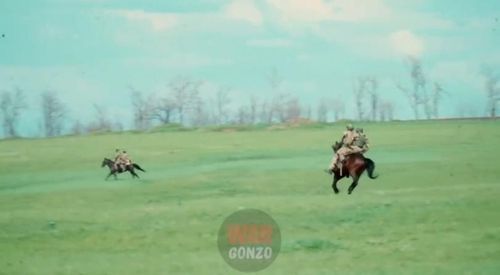
On October 5, foreign media outlets including the British daily The Telegraph reported that the commander of the 9th Motorized Rifle (Mechanized Infantry) Brigade "Storm Unit" of Russia's 51st Army, which operates on key frontlines in Donetsk, eastern Ukraine, has recently been training cavalry assault teams.
The Russian daily Kommersant explained, "Horses have the clear advantage of being able to traverse rough terrain where vehicles struggle, and if they are not shod with metal horseshoes, they can reduce the risk of triggering magnetic mines." Pro-Russian military blogger Semyon Pegov stated, "Horses have good night vision, do not require roads for the final charge, and are said to instinctively avoid mines." He added, "We will soon witness the historic return of Russian cavalry units." Western intelligence agencies estimate that Russia has lost more than 15,000 vehicles since February 2022.
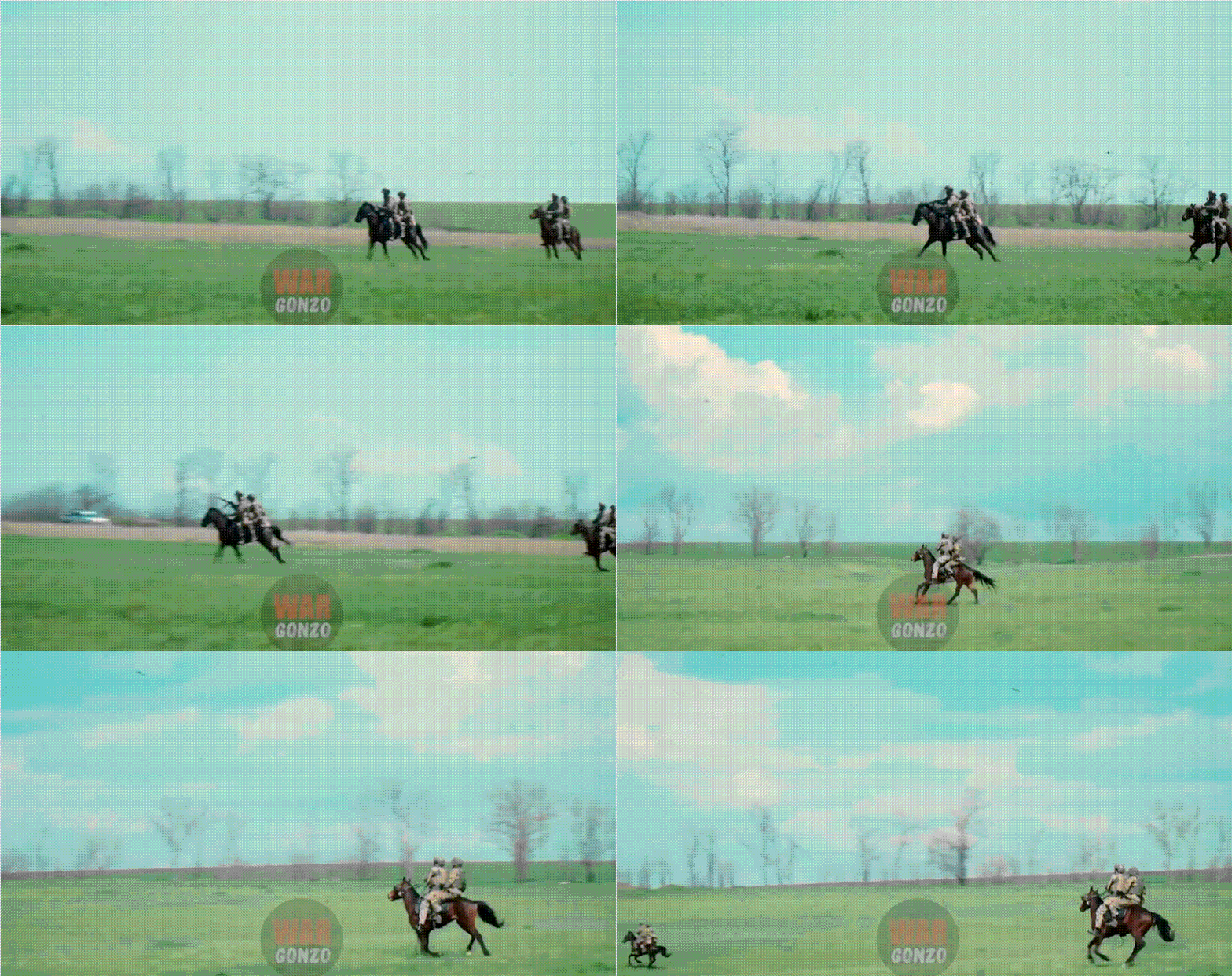
A video posted on Pegov's Telegram channel, "War Gonzo," shows Russian soldiers riding horses across fields. In the footage, two soldiers are mounted on a single horse: one controls the horse while the other prepares to fire a weapon, taking up an attack posture. A remotely operated drone accompanies them overhead. Upon reaching the attack point, both soldiers dismount and advance on foot.
Pegov explained that this training aims to condition both soldiers and horses, with the goal of ensuring that the horses do not become startled by gunfire and explosions on the battlefield.
However, Kommersant noted that there are risks: horses can still trigger various types of anti-personnel mines other than magnetic ones, and they require food, water, and medical care. Their transport capacity is also lower than that of vehicles. Moreover, training both riders and horses is difficult and time-consuming. Kommersant concluded that while it is unlikely that cavalry units will be deployed on a large scale, their use symbolizes the limitations of modern technology on a battlefield saturated with advanced surveillance, reconnaissance, and engagement equipment.
The Telegraph also predicted that cavalry units are unlikely to play a significant role in actual combat. The Telegraph pointed out, "The Russian military previously formed motorcycle units to evade Ukrainian drone strikes, but most riders were reportedly killed before reaching their targets after their introduction last year." The outlet noted that the lack of success with such unconventional tactics is evident in the slowdown of Russia's advance within Ukraine.
According to a report by the U.S. think tank Institute for the Study of War (ISW), Russia secured only 30 square kilometers of new territory between September 20 and 30. As of last month, the amount of new territory occupied by Russia had dropped by 44% compared to the previous month, marking the lowest figure since May. ISW analyzed that Russia's advance has effectively stalled and that the frontlines have reached a stalemate.
© The Asia Business Daily(www.asiae.co.kr). All rights reserved.
![Clutching a Stolen Dior Bag, Saying "I Hate Being Poor but Real"... The Grotesque Con of a "Human Knockoff" [Slate]](https://cwcontent.asiae.co.kr/asiaresize/183/2026021902243444107_1771435474.jpg)
















