Full-Scale Launch of Public Institution Relocation Facilities
Including Daejeon Station Area Complex 2-1 Development
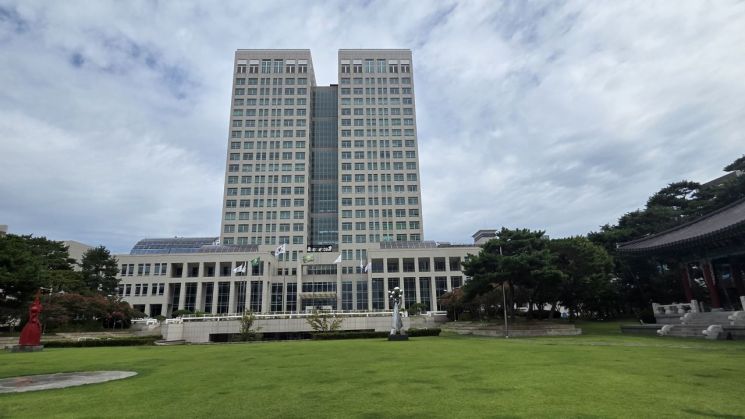
Recently, as the government officially announced the promotion of the second phase of relocating public institutions to regional areas through its five-year state administration plan, Daejeon Metropolitan City is making thorough preparations to ensure that institutions can relocate immediately once the government finalizes the list of institutions to be moved.
◆ Daejeon Station Area Development
The city plans to begin construction and select operators within this year for the Daejeon Station Area Complex 2-1 Development Project and the Mega Chungcheong Square Project, both of which are being considered as priority locations for relocated public institutions.
Accordingly, unlike the first phase of public institution relocation, which took over seven years to create spaces for relocated institutions, Daejeon expects to complete the process swiftly once the government confirms the institutions to be moved.
In particular, the combined Daejeon Station Area Complex 2-1 Development Project and Mega Chungcheong Square will provide approximately 60,000 square meters of space, able to accommodate 1,500 to 2,000 people. With excellent transportation infrastructure and residential conditions in the surrounding area, these sites are expected to be highly favored by the institutions selected for relocation.
◆ Yeonchuk District Development in Daedeok-gu
Additionally, Daejeon is securing space for relocated public institutions in the Yeonchuk District of Daedeok-gu, which is expected to sufficiently accommodate large public institutions that require extensive office space.
Daejeon was designated as an innovation city along with South Chungcheong Province in October 2020, establishing the foundation for public institutions in the Seoul metropolitan area to relocate. However, due to delays in the second phase of public institution relocation, Daejeon remained an "innovation city" in name only, with no actual institutions having moved despite the title.
During this period, the city has developed strategies to attract public institutions and selected 39 key targets in preparation for government policy implementation. In particular, Daejeon has been actively promoting the competitiveness of Daejeon Innovation City to public institutions in the Seoul metropolitan area, and has continued behind-the-scenes efforts such as signing memorandums of understanding (MOUs) with institutions expressing interest in relocation.
The city will strengthen its efforts to attract public institutions by leveraging the excellent locations of the Daejeon Station Area Complex 2-1 Development Project and Mega Chungcheong Square, both of which are moving forward as priority projects.
In this regard, the city plans to enhance its existing attraction strategies by highlighting the excellence of available spaces for public institutions and by collaborating with local small and medium-sized enterprises, universities, and research institutes in Daedeok Innopolis. The goal is to attract institutions that can have a significant economic ripple effect on the region and create quality jobs, with a particular focus on those linked to Daejeon's strategic industries such as biohealth, nanosemiconductors, and defense.
At the same time, Daejeon will directly visit public institutions in the Seoul metropolitan area to actively promote the advantages of Daejeon Innovation City, including its location, transportation, and residential environment. The city will also strengthen direct attraction efforts, such as signing MOUs, to prepare for intensified competition among regions in the future.
◆ Actively Requesting Priority Placement of Relocated Public Institutions to the Government and Political Circles
Furthermore, the city plans to actively request the government and political circles to prioritize the placement of relocated public institutions in Daejeon. In particular, there is a strong sentiment among citizens that Daejeon was disadvantaged by being excluded from the first phase of relocation and that the launch of Sejong City led to negative side effects such as population outflow. Therefore, the city believes it is necessary to accurately convey local public opinion to the government.
The city expects that if the priority placement of relocated public institutions in Daejeon is realized, it will gain a competitive edge in attracting large institutions with significant ripple effects and scale when competition for public institutions intensifies in the future.
To this end, Daejeon is also considering working together with South Chungcheong Province, which was similarly excluded from the first phase of innovation city public institution relocation, to jointly respond to the government and political circles.
As government policies such as the decision on which institutions to relocate are implemented in earnest, the city plans to build public consensus on the creation of Daejeon Innovation City and to join forces with local political circles, taking into account the government's schedule and recognizing the importance of local cooperation.
Jeon Jaehyun, Director-General of Administration and Autonomy of Daejeon Metropolitan City, stated, "Daejeon is fully prepared to ensure that institutions can relocate immediately once the government finalizes the list of institutions to be moved," adding, "We will respond strategically in line with government policy so that Daejeon Innovation City can function as a new growth hub for the region."
© The Asia Business Daily(www.asiae.co.kr). All rights reserved.
![Clutching a Stolen Dior Bag, Saying "I Hate Being Poor but Real"... The Grotesque Con of a "Human Knockoff" [Slate]](https://cwcontent.asiae.co.kr/asiaresize/183/2026021902243444107_1771435474.jpg)















