After a Decade of Negotiations, Supply Chain Diversification in Focus
Indonesia Emerges as Southeast Asia's Largest Economy
Tariffs on 96% of Goods to Drop to 'Zero' Within Five Years
Bloomberg reported on September 23 (local time) that the European Union (EU) and Indonesia have signed a comprehensive trade agreement that will eliminate tariffs on nearly all goods.
According to Bloomberg on September 23 (local time), the two parties reached an agreement on a Comprehensive Economic Partnership Agreement (CEPA) after more than a decade of negotiations. CEPA is a type of free trade agreement (FTA). This agreement, signed after over ten years of talks, is seen as a measure to diversify supply chains in response to the aggressive tariff policies of U.S. President Donald Trump.
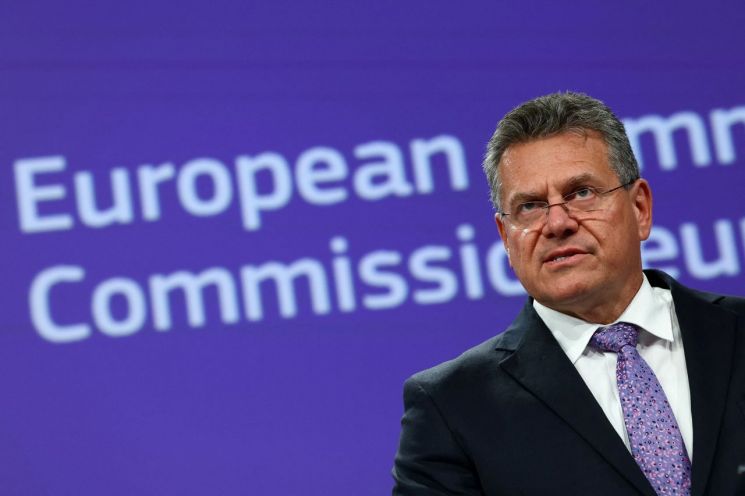
Maro? ?ef?ovi?, the EU Commissioner for Trade and Economic Security, said in an interview with Bloomberg, "Indonesia is one of the largest economies in Southeast Asia, with a market larger than the combined size of Vietnam, the Philippines, and Thailand. However, the trade volume so far has not matched this potential. Now, we are opening an entirely new chapter of tremendous scale."
Commissioner ?ef?ovi? is scheduled to sign the Comprehensive Economic Partnership Agreement (CEPA) in Indonesia today.
According to Bloomberg, once the agreement takes effect, tariffs on about 96% of all traded goods will be reduced to 0% within the next five years. The 50% tariff imposed on EU-made automobiles will be eliminated within five years, and the 30% tariffs on machinery and electronic appliances are also expected to be quickly reduced to 0%. In addition, various export restrictions such as licensing requirements will be abolished, and agricultural and food products are also expected to benefit from the trade agreement.
As a result, EU exports to Indonesia are expected to increase by at least 30%, or approximately 3 billion euros (about 4.936 trillion won). However, Indonesia’s export ban on nickel will remain in place. For the agreement to take effect, it must be approved by the EU member states, the European Parliament, and the Indonesian parliament.
Commissioner ?ef?ovi? stated that this agreement will allow European exporters to save approximately 600 million euros (about 990 billion won) in tariffs.
© The Asia Business Daily(www.asiae.co.kr). All rights reserved.
![Clutching a Stolen Dior Bag, Saying "I Hate Being Poor but Real"... The Grotesque Con of a "Human Knockoff" [Slate]](https://cwcontent.asiae.co.kr/asiaresize/183/2026021902243444107_1771435474.jpg)















