Lawsuit Filed After Completion of Statute of Limitations on Construction Payment
Debtor Admitted Debt and Apologized
"Cannot Conclude It Was a Waiver of the Benefit of Prescription"
The Supreme Court has ruled that even if a debtor acknowledges their debt and apologizes to the creditor, this cannot be regarded as a waiver of the benefit of prescription.
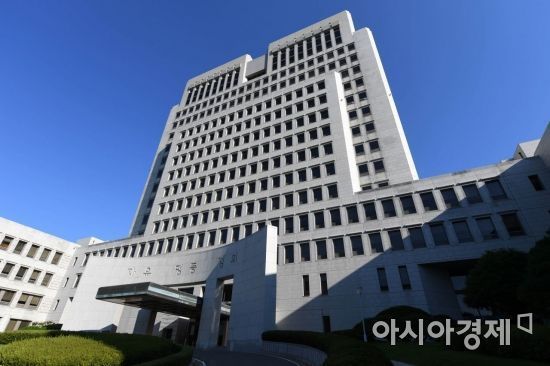
According to the legal community on September 23, the Supreme Court's Third Division (Presiding Justice Lee Heungku) overturned the appellate court's decision, which had ruled in favor of construction company A in a lawsuit over construction payment against contractor B, and remanded the case to the Changwon District Court.
Company A, which was contracted to build new accommodation facilities in Geoje, South Gyeongsang Province, was awarded a construction contract worth 1.01 billion won in August 2013 and completed the project in December of the same year. However, Company B paid only 960 million won of the construction payment to Company A.
In response, Company A filed a lawsuit in October 2019, demanding the unpaid 50 million won and delayed damages. Company B argued that the lawsuit was filed after the three-year statute of limitations for construction payment claims had expired, and therefore it was not obligated to pay the debt.
The appellate court ruled in December last year in favor of Company A, stating, "The defendant has already waived the benefit of prescription." The waiver of the benefit of prescription refers to voluntarily relinquishing the 'benefit of completed prescription' by the party's intention. The appellate court determined that Company B had waived this benefit, as representatives of Company B repeatedly apologized to Company A in November 2023 regarding the unpaid 50 million won, saying, "Did I not tell you that I did not pay?"
However, the Supreme Court held, "The mere fact that the defendant's representative acknowledged the unpaid construction payment and admitted the debt does not immediately imply an intention to forgo the legal benefit arising from the completion of prescription." This means that Company B is not required to pay the debt.
This decision is based on a Supreme Court en banc ruling from July. The full bench of the Supreme Court revised previous precedents, stating, "Even if a debtor acknowledges the debt after the completion of prescription, it cannot be presumed that the debtor has expressed an intention to waive the benefit of prescription."
The Supreme Court explained, "Even if the defendant's representative apologized to the plaintiff's CEO for the unpaid construction payment, it cannot be concluded that the true intent of the action was to waive the benefit of prescription, nor can it be easily assumed that the apology was made with knowledge of the completion of prescription."
© The Asia Business Daily(www.asiae.co.kr). All rights reserved.
![Clutching a Stolen Dior Bag, Saying "I Hate Being Poor but Real"... The Grotesque Con of a "Human Knockoff" [Slate]](https://cwcontent.asiae.co.kr/asiaresize/183/2026021902243444107_1771435474.jpg)















