579 won per ton... Lower than the national average of 796 won
Daecheong Lake as a water source
Real-time water quality monitoring system in place
As the water shortage crisis in Gangneung, Gangwon Province has become a major social issue, it has been revealed that Daejeon has the lowest water rates in the country. The city also maintains the highest water quality grade nationwide.
On September 21, the Daejeon Waterworks Headquarters announced that, according to the Ministry of Environment's recently released "2023 National Average Water Rate by Region" report, the average water rate in Daejeon was 579 won per ton (㎥), which is 27% lower than the national average of 796 won.
This is the lowest among the 17 metropolitan cities and provinces nationwide. In contrast, Gangwon Province had the highest rate at 1,068 won per ton.
This is largely due to the presence of the clean water source, Daecheong Lake. Daecheong Lake is the third largest multipurpose dam in Korea, with a storage capacity of 1.49 billion tons, and since its operation began in 1981, it has never experienced a water shortage.
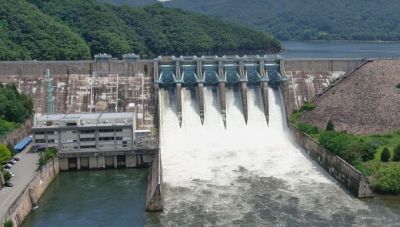
At the time of Daecheong Dam's construction, Daejeon City was exempted from paying raw water charges in exchange for sharing part of the construction costs (9%) and maintenance expenses. As a result, the city currently receives raw water at 11 won per ton, which is about 20% of the supply price (53 won per ton) set by Korea Water Resources Corporation. This has enabled Daejeon to establish a supply system that provides high-quality tap water at low cost.
Daejeon also maintains the highest national water quality grade, BOD·TP 1a. To preserve the quality of its water sources, the city has installed underwater aeration facilities, artificial plant islands, and artificial wetlands to suppress algae growth and operates a real-time water quality monitoring system. In addition, the city manages microorganisms and trace pollutants by conducting inspections on 247 items, far exceeding the 60 legally required items.
Furthermore, the city invests 30 billion won annually to replace 50 kilometers of old water pipes, and plans to replace a total of 300 kilometers by 2030 with a total investment of 182.5 billion won. In addition, by 2028, the city will introduce advanced water treatment facilities with a total capacity of 600,000 tons at the Wolpyeong and Sintanjin water purification plants.
Lee Jongik, head of the Daejeon Waterworks Headquarters, stated, "Daejeon supplies the most affordable and highest quality tap water in the country. We will continue to strengthen our management system to reliably provide safe and trustworthy tap water for our citizens."
© The Asia Business Daily(www.asiae.co.kr). All rights reserved.
![Clutching a Stolen Dior Bag, Saying "I Hate Being Poor but Real"... The Grotesque Con of a "Human Knockoff" [Slate]](https://cwcontent.asiae.co.kr/asiaresize/183/2026021902243444107_1771435474.jpg)















