Jose Munoz, President of Hyundai, Meets with Korean Correspondents in New York
Short-Term Focus on Optimizing Demand and Supply Instead of Price Hikes
Full-Year Tariff Impact Expected Next Year... "Price Increase Possible with Summer New Models"
Jose Munoz, President of Hyundai Motor Company, stated that despite the 25% U.S. automotive tariff, the company will not immediately raise vehicle prices in the United States. In the short term, Hyundai plans to absorb the tariff impact through expanded sales and demand management rather than price hikes. However, starting next year, as the tariff impact is reflected throughout the entire year, the company has left open the possibility of price increases when new models are released in the summer.
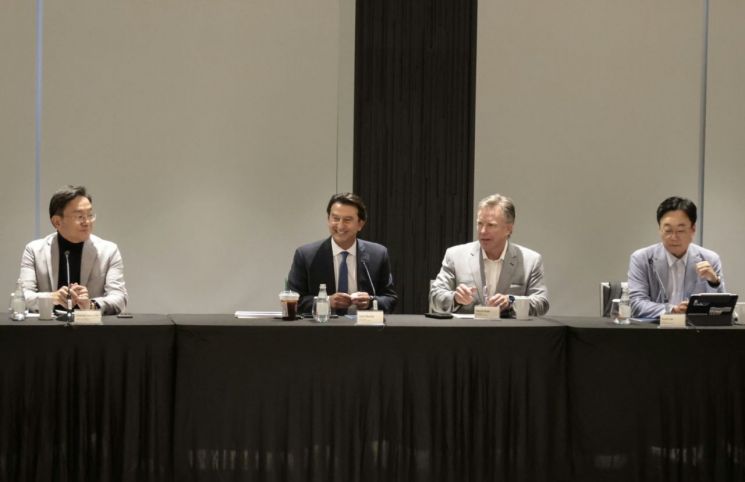
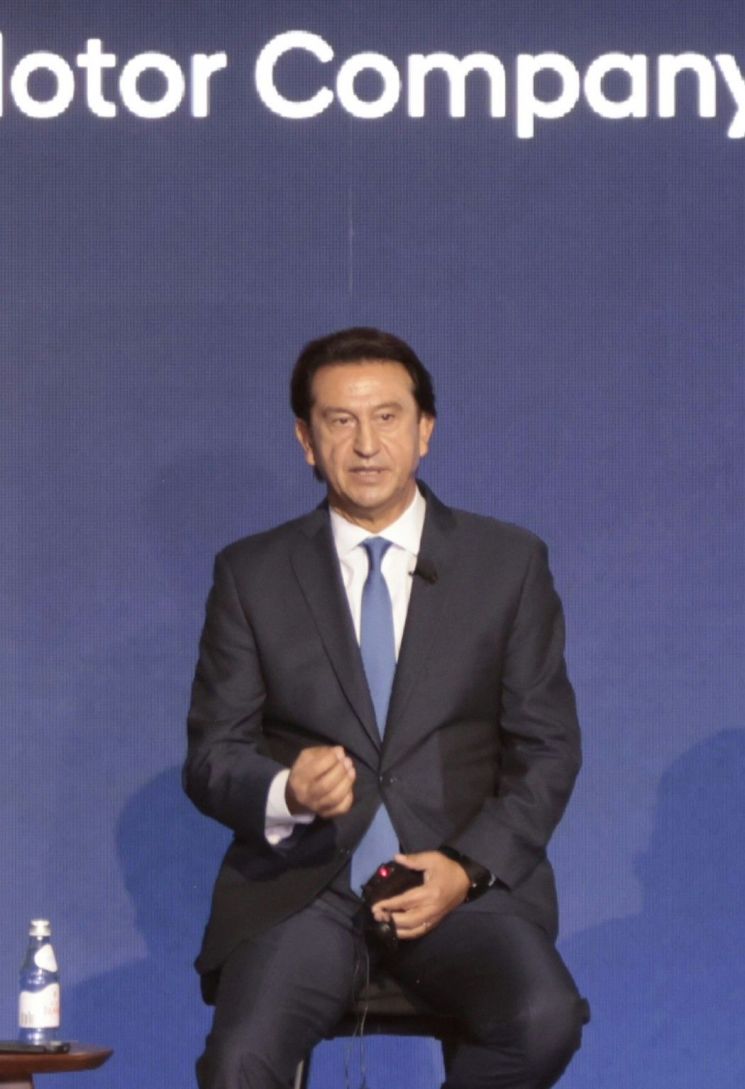
On September 18 (local time), during a press conference with Korean correspondents after the "2025 CEO Investor Day" held at "The Shed" in Manhattan, New York, President Munoz said, "Vehicle prices are determined by supply and demand, not tariffs," adding, "If we raise prices now, customers may not purchase our products, which could lead to losses in sales and profit."
He explained, "While tariffs may be related to costs, the key factor in pricing is supply and demand," and added, "Currently, we are focusing on optimizing supply and demand and on various marketing activities to stimulate demand." He also highlighted that the partnership with Amazon has significantly increased brand awareness.
Although President Munoz ruled out short-term price increases, he acknowledged the possibility of price hikes next year. He said, "Every summer, we release new models, add new features, and there is a cycle of price increases," adding, "We will also boost demand through improvements in design, quality, safety, and brand activities."
Next year will be the first time the tariff impact is reflected in Hyundai Motor’s sales and operating profit for the entire 12 months. Previously, the United States applied zero tariffs to Korean-made vehicles, but since April this year, a 25% tariff has been imposed. Reflecting this impact, Hyundai Motor lowered its target consolidated operating margin for this year by 1 percentage point, from the previous 7-8% to 6-7%.
Lee Seungjo, Executive Vice President and Head of Hyundai Motor’s Planning and Finance Division, said, "The tariff was imposed starting in April, and since we secured inventory in advance, the actual impact this year will be for six to seven months," adding, "Next year, the impact will be felt throughout the entire period, so we expect a more challenging situation. We will respond by reducing internal costs and improving efficiency, but the situation is not easy." He also noted, "This year, the exchange rate worked in our favor, but next year remains uncertain."
In particular, the tariff gap with Japan has become a burden. Since September 16, the United States has imposed a 15% tariff on Japanese-made vehicles, widening the competitiveness gap between Korean and Japanese automakers.
Regarding the tariff reversal with Japan, President Munoz said, "We are facing a 25% tariff while Japan benefits from a lower tariff, giving them an advantage, but we cannot give up," adding, "The answer lies in building better products, technology, quality, and supply chains, and increasing sales." He also emphasized the need for a prompt trade agreement, saying, "I hope that government-level negotiations will proceed well and deliver a favorable outcome for us."
To address tariff risks, Hyundai Motor plans to increase the proportion of vehicles produced locally in the United States from the current 40% to 80% by 2030.
Regarding concerns that expanding local production in the United States might reduce domestic production, President Munoz explained, "We plan to expand global production by 30% to reach 5.55 million units by 2030, and Genesis also aims to grow by 50% from 225,000 units to 350,000 units," adding, "We are localizing new models overseas that were not previously produced in Korea, not replacing existing Korean production." He reiterated, "We are increasing production capacity at the Ulsan plant by 200,000 units," and "We are not relocating Korean vehicle production to the United States."
At the same time, he expressed confidence in targeting new segments to expand sales in the U.S. market. President Munoz said, "Entering new segments such as large SUVs, pickup trucks, and electric vehicles is not a risk but an opportunity," adding, "We have already demonstrated strong performance in the European and North American EV markets and are fully competitive with Tesla." He further stated, "Hyundai Motor has solid manufacturing, engineering, and operational capabilities, so we can achieve results in new markets as well."
Reflecting on his nine months in office, President Munoz said, "Even in times of crisis, Hyundai Motor has proven its resilience and growth potential," adding, "We have completed preparations for the 25% tariff shock, and thanks to the group’s philosophy and the efforts of our employees, we have achieved record sales and strengthened our global competitiveness."
© The Asia Business Daily(www.asiae.co.kr). All rights reserved.
![Clutching a Stolen Dior Bag, Saying "I Hate Being Poor but Real"... The Grotesque Con of a "Human Knockoff" [Slate]](https://cwcontent.asiae.co.kr/asiaresize/183/2026021902243444107_1771435474.jpg)

















