Ruling Could Come by Year-End
Presidential Authority Under IEEPA at Issue
Alternative Legal Tools Remain Even If Ruled Unlawful
The first Supreme Court oral argument in the appeal regarding the legality of the "reciprocal tariffs" imposed by U.S. President Donald Trump on South Korea and other countries around the world is scheduled for November 5 (local time).
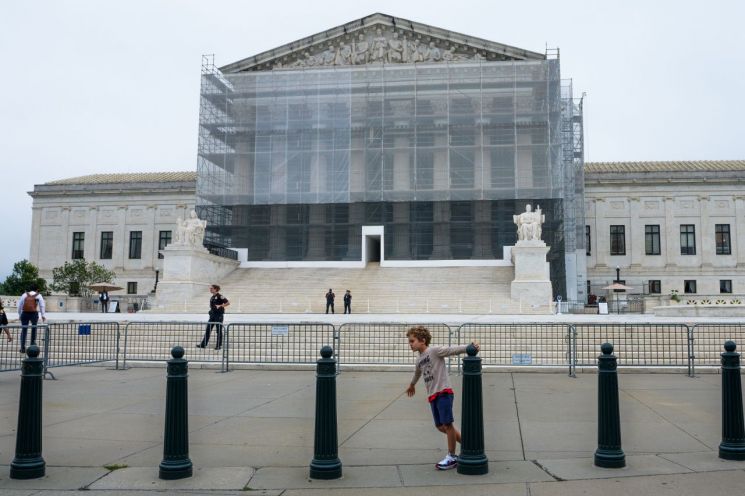
On September 18 (local time), the U.S. Supreme Court announced in its published hearing schedule that the oral argument for this case will take place on November 5. The confirmation of the first oral argument date comes just one week after the Supreme Court agreed to hear the Trump administration's appeal and decided to expedite the proceedings. U.S. media outlets predict that a ruling could come as early as the end of this year.
The key issue in the lawsuit is whether the President can impose reciprocal tariffs worldwide based on the International Emergency Economic Powers Act (IEEPA). The IEEPA has mainly been used as a tool for sanctioning hostile countries or freezing assets, and President Trump is the first to use it as a basis for tariffs.
The district and appellate courts ruled that the IEEPA’s authority to regulate imports granted to the President does not extend to the imposition of tariffs. The U.S. Constitution vests the power to levy tariffs and other forms of taxation in Congress. Therefore, if the Supreme Court upholds the lower court rulings, the 15% reciprocal tariff that President Trump has imposed on Korean products could be invalidated.
In addition to the interpretation of the IEEPA, there is also interest in whether the Supreme Court will apply the "major questions doctrine." This doctrine holds that unless Congress has explicitly delegated authority to the executive branch, the executive cannot unilaterally interpret statutes flexibly to implement policies with significant economic or political impact on the nation. The Supreme Court has invoked this doctrine in blocking several Democratic policies, including former President Joe Biden's student loan forgiveness plan.
Some expect that even if the Supreme Court rules against the Trump administration, it could still utilize other laws. The product-specific tariffs imposed on automobiles and steel under Section 232 of the Trade Expansion Act are unrelated to this case. Additionally, Section 301 and Section 122 of the Trade Act, as well as Section 338 of the Tariff Act, are also being discussed as potential legal bases for imposing tariffs.
© The Asia Business Daily(www.asiae.co.kr). All rights reserved.
![Clutching a Stolen Dior Bag, Saying "I Hate Being Poor but Real"... The Grotesque Con of a "Human Knockoff" [Slate]](https://cwcontent.asiae.co.kr/asiaresize/183/2026021902243444107_1771435474.jpg)















