Jeonnam Health and Environment Research Institute Conducts Intensive Pollution Investigation
No Toxic Substances Detected... Ongoing Monitoring
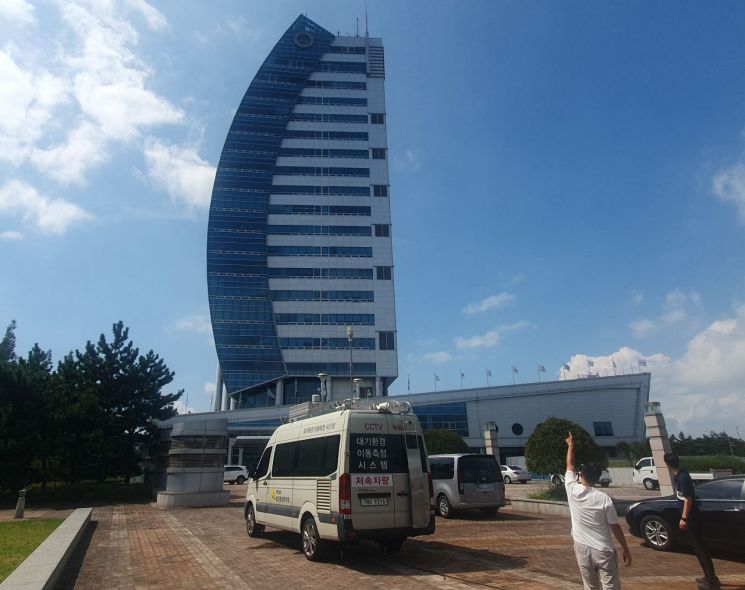 The Jeonnam Health and Environment Research Institute is measuring air pollution using a mobile air quality monitoring vehicle in relation to the warehouse fire that occurred in Doidong, Gwangyang City on the 13th. Provided by Jeonnam Province
The Jeonnam Health and Environment Research Institute announced that, following an intensive investigation of air pollution levels in the vicinity of the warehouse fire that occurred on the 13th in Doidong, Gwangyang City, fine dust concentrations were found to be below the advisory threshold, and volatile organic compounds were either undetected or present at minimal levels.
Immediately after the fire, the Jeonnam Health and Environment Research Institute deployed a hazardous air mobile monitoring vehicle to the site and measured over 100 types of volatile organic compounds (VOCs) in the air.
No toxic substances were detected, and the possibility of direct harm to residents' health was found to be low.
Two heavy metal sampling devices were installed at the site to analyze concentrations of major heavy metals such as lead (Pb), iron (Fe), and aluminum (Al).
The concentration of lead was 0.033㎍/㎥, which is lower than the environmental standard of 0.5㎍/㎥, and the concentrations of iron and aluminum were similar to or lower than the previous year's average. Detailed analysis is still underway for other items.
In addition, air quality changes over five days from the day of the incident were closely analyzed using air monitoring networks installed in five areas, including Jungdong in Gwangyang. The results showed that air quality in all areas remained within environmental standards, with no significant difference compared to the annual average for 2024. Real-time information is available through the Jeonnam Air Quality Information System and the national air pollution integrated platform 'Air Korea.'
Mobile air monitoring vehicles have also been deployed around Gwangyang Port, adjacent to the fire site, and real-time monitoring is being conducted using data from the Jungdong urban air monitoring station, the port monitoring station, and meteorological data to track the movement of pollutants caused by the fire.
Real-time monitoring of particulate matter (PM-2.5 and PM-10) showed a temporary increase in concentrations at the Jungdong urban air monitoring station immediately after the fire, influenced by southwesterly winds. However, the peak concentration of PM-10 was 40-50㎍/㎥ and that of PM-2.5 was 30-40㎍/㎥, both below the advisory threshold.
Ahn Yangjun, Director of the Jeonnam Health and Environment Research Institute, stated, "Since the impact of the fire may not be limited to the short term and could persist, we will continue to monitor air quality in the affected areas and transparently provide the results to citizens and relevant agencies. We will do our utmost to prevent secondary environmental damage in close cooperation with Jeonnam Province, Gwangyang City, and the fire authorities."
© The Asia Business Daily(www.asiae.co.kr). All rights reserved.
![Clutching a Stolen Dior Bag, Saying "I Hate Being Poor but Real"... The Grotesque Con of a "Human Knockoff" [Slate]](https://cwcontent.asiae.co.kr/asiaresize/183/2026021902243444107_1771435474.jpg)















