Simultaneous Production of Electric and Internal Combustion Vehicles
Strategy to Offset U.S. Tariff Risks
Proactive Response to European Emissions Regulations
Hyundai Motor Company has decided to implement a production system at its European manufacturing base that will produce both internal combustion engine vehicles and electric vehicles. This strategic move aims to strengthen its presence in Europe to offset the threat to export competitiveness posed by rising tariff barriers in the U.S. market. Starting in the second half of this year, the company will launch various electric vehicle models and proactively respond to the European Union's tightening emissions regulations to gain an early foothold in the market.
According to industry sources and foreign media on September 16, Hyundai Motor will add an electric vehicle production line at its Izmit plant in T?rkiye. To secure a new electric vehicle production line, the company reportedly reduced its internal combustion engine vehicle output from 245,000 units to around 190,000 units in the first half of this year.
The flexible production system offers the advantage of being able to respond swiftly to changes in market demand. This system has already been implemented at major domestic plants such as Ulsan (Hyundai Motor) and Gwangmyeong (Kia). After completing the line conversion, the Izmit plant is expected to begin electric vehicle production as early as the second half of next year.
The main reason Hyundai Motor decided to establish an electric vehicle production line in T?rkiye is to strengthen its strategy for the eco-friendly vehicle market in Europe, especially as exports to the United States face restrictions. Although Korea and the United States agreed to lower auto tariffs to 15% through negotiations, disagreements over details have resulted in a 25% tariff still being applied, putting Hyundai at a disadvantage.
Accordingly, Hyundai plans to actively target the European market, where demand for electric vehicles is high. According to SNE Research, electric vehicle sales in Europe from January to July this year reached 2.26 million units, up 29.7% from the same period last year, accounting for more than half of the global sales (excluding China), which stood at 4.09 million units.
The model expected to go into production in T?rkiye is the new compact car from the dedicated electric vehicle brand Ioniq, tentatively named "Ioniq 3." Currently, Hyundai produces electric vehicles such as the Kona Electric at its Nosovice plant in the Czech Republic and other European locations, but Ioniq series electric vehicles and the Inster (known as Casper Electric in Korea) are still exported from Korea.
With the launch of the "Ioniq 3" in mind, Hyundai Motor unveiled the Ioniq compact concept car "Concept Three" at the "IAA Mobility 2025" in Munich, Germany, on September 9 (local time). Concept Three adds a compact model to the Ioniq lineup, which has so far focused on mid- to large-sized vehicles. It is designed as a hatchback to appeal to European consumers, taking into account the region's narrow roads and limited parking space.
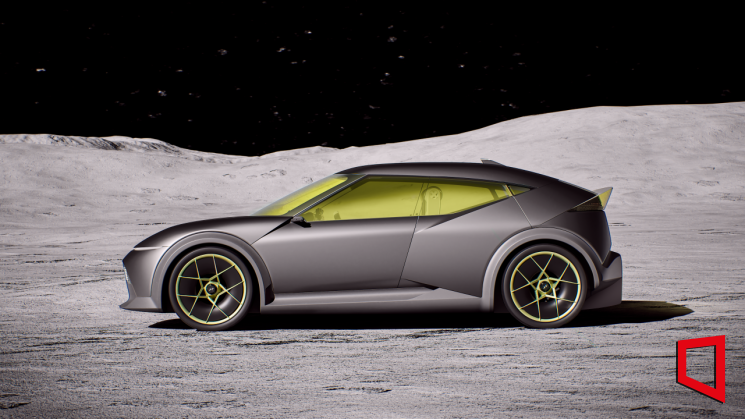
Xavier Martinet, Head of Hyundai Motor Europe, stated, "Concept Three has been specially designed from the outset with the tastes and lifestyles of European customers in mind."
According to local media outlet T?rkiye Today, Murat Berkel, CEO of Hyundai Motor T?rkiye, said, "Concept Three is based on the E-GMP electric vehicle platform," adding, "This means that a variety of electric vehicle models, from the A-segment to the E-segment, can be produced on the same infrastructure. Hyundai will be the first overseas automaker to introduce this technology in T?rkiye."
Hyundai Motor plans to launch seven new models, including electric vehicles, in Europe by 2027. Currently, Hyundai offers four electric vehicle models in Europe: the Inster, Ioniq 5, Ioniq 5 N, and Kona Electric.
At the end of this year, the company will launch the "Ioniq 6 N" to target the high-performance market. The Ioniq 6 N has already generated high expectations in the European media. In addition, Hyundai plans to sequentially launch its flagship model, the "Ioniq 9," across Europe and introduce the hydrogen electric vehicle "The All New Nexo" to the European market following its debut in the United States.
Europe, which has decided to completely ban the sale of new internal combustion engine vehicles by 2035, has recently reinstated electric vehicle subsidies to achieve this goal. In July, the UK began offering up to 10% subsidies for new electric vehicles priced under 37,000 pounds (approximately 69 million won). Germany is providing tax credits for electric vehicles purchased by companies, and Italy also announced the introduction of electric vehicle subsidies starting this month. These measures are expected to serve as opportunities to boost electric vehicle sales in Europe.
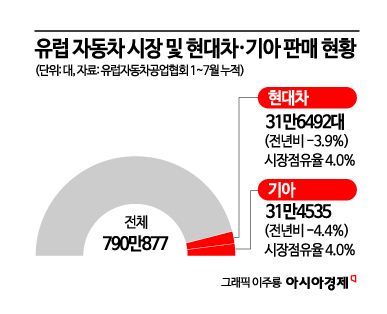
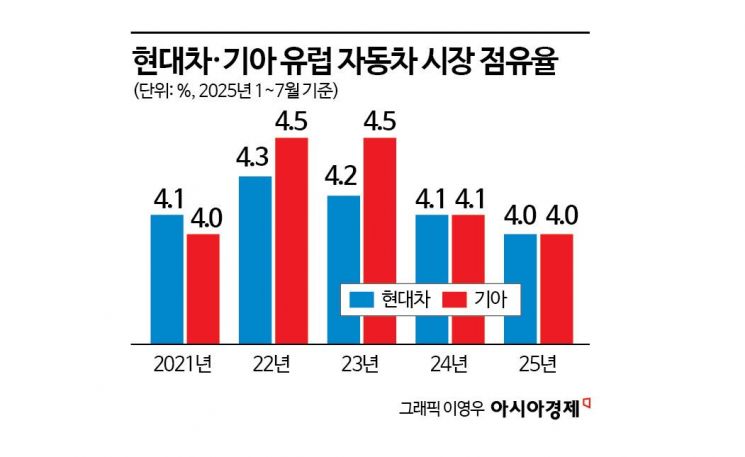
Hyundai Motor and Kia aim to sell 200,000 electric vehicles annually in the European market this year. From January to July, electric vehicle sales reached 106,000 units, a 46% increase compared to the same period last year.
© The Asia Business Daily(www.asiae.co.kr). All rights reserved.
![Clutching a Stolen Dior Bag, Saying "I Hate Being Poor but Real"... The Grotesque Con of a "Human Knockoff" [Slate]](https://cwcontent.asiae.co.kr/asiaresize/183/2026021902243444107_1771435474.jpg)

















