Interview with Min Kyung-sun, President of Gyeonggi Transportation Corporation
"Overcoming Structural Deficits... Achieving First Profit in 2024
Tokbus, Now the Leading Model for Gyeonggi Transportation
Rail Business Division Launched in July... Preparing for Direct Operation
Leading the Way in Future Mobility with UAM and Autonomous Driving"
"The reason for the corporation's existence is to simultaneously ensure the mobility rights of Gyeonggi residents and strengthen public interest."
Min Kyung-sun, President of Gyeonggi Transportation Corporation, stated in an interview with Asia Economy on the 8th, "I stabilized the organization, which had been left without a president for about a year following the resignation of the first president, and established the corporation's identity through the official launch of the Tokbus service and the expansion into future mobility such as rail, aviation, and autonomous driving."
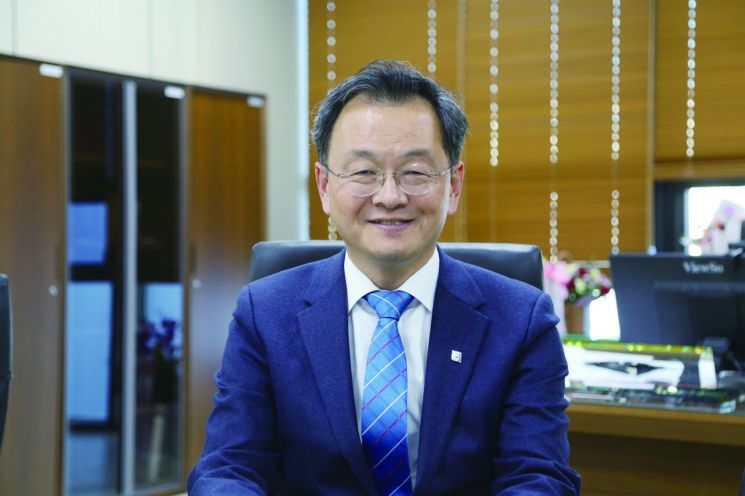 Min Kyung-sun, President of Gyeonggi Transportation Corporation, stated in an interview with Asia Economy on the 8th, "The reason for the corporation's existence is to simultaneously ensure the mobility rights of Gyeonggi residents and strengthen public interest."
President Min explained, "When I took office, the corporation had a high turnover rate and a lack of communication within the organizational culture. By introducing empathy talks with employees, one-on-one interviews, and a preferred position system, I improved the organizational atmosphere and increased employee satisfaction." He added, "Externally, there were many doubts about whether Gyeonggi Transportation Corporation was truly necessary. However, by converting Tokbus into an official business and expanding its service area through cooperation with cities and counties, the corporation has become a core pillar of transportation policy for Gyeonggi residents."
He went on to say that, taking the launch of the Rail Business Division as an opportunity, the corporation will prepare to directly operate major lines such as the Dobongsan-Okjeong Line and lead new transportation modes such as Urban Air Mobility (UAM) and autonomous driving, opening the future of transportation in Gyeonggi Province. The following is a Q&A with President Min Kyung-sun.
.
- What was your primary focus immediately after taking office?
"When I became the second president of the corporation, Gyeonggi Transportation Corporation was a newly established organization, and the first president had resigned after just one year, leaving the position vacant for about a year. Therefore, stabilizing the organization was the most urgent priority. Internally, there was a high turnover rate and a culture lacking smooth communication. To address this, I held annual 'empathy talks' as a communication channel to directly listen to and resolve employees' concerns, conducted frequent one-on-one interviews and team meetings, and accepted as many opinions as possible on welfare issues and work-related difficulties, leading to positive changes. I also introduced a preferred position system, allowing employees to work in areas they preferred and were competent in, and supported various activities to strengthen teamwork within departments. As a result of these efforts, even though the work intensity increased, the turnover rate has significantly decreased and employee satisfaction has improved. Externally, since the corporation was mainly operating public bus management consignment projects at the time, there were many questions about whether Gyeonggi Transportation Corporation was truly necessary. To establish the corporation's identity, I converted the Tokbus, which was operating as a pilot program at the time, into an official business and actively collaborated with cities and counties to expand its service area and scope. Thanks to this, Tokbus has become the corporation's flagship project, and we are now expanding into various transportation sectors such as rail, aviation, autonomous driving, and Intelligent Transportation Systems (ITS)."
- What was the background behind the corporation's successful turnaround to profitability?
"The corporation's initial capital was 18.5 billion won, but due to chronic deficits, it was in a state of capital erosion. At the time, even employees were worried about whether they would be able to receive their salaries, and a sense of crisis permeated the entire organization. The main reason was that the business consignment fee rate was only 0.3%, which was far lower than that of other public institution consignment projects. By continuously raising this issue with the province, 31 cities and counties, and the provincial council, we managed to increase the fee rate to 2.2%. Internally, we stabilized in-house businesses, entered new business areas, and improved management efficiency. As a result, in 2024, for the first time since its establishment, the corporation achieved a net profit of 4.7 billion won, attaining financial stability. Net profit is expected to increase further in 2025. The corporation plans to reinvest the secured funds in organizational stabilization and improving transportation convenience for residents by building a transportation convergence town and expanding in-house businesses, thereby strengthening both public interest and growth potential."
- Please explain Tokbus, the corporation's flagship project.
"Tokbus is Gyeonggi Province's demand-responsive public transportation service. Unlike conventional city buses that run on fixed routes, Tokbus is a call-based bus that passengers can summon via an app, without a set route. The call process is simple: passengers enter their departure and arrival points in the 'Tokta' app, and for seniors who have difficulty using the app, a telephone call service is also available. Tokbus offers more pick-up and drop-off points than traditional routes, and its AI algorithm suggests the most efficient route, allowing passengers to reach their destination faster than with conventional buses. This approach reduces operating costs compared to traditional route buses while improving service convenience. For example, in Daebudo, Ansan, operating four Tokbuses instead of seven route buses resulted in a 34% reduction in transportation costs, a 45% increase in service area, and a 93% decrease in waiting times. In Icheon, replacing deficit routes with Tokbus reduced the local government's financial burden and increased satisfaction with transportation services. Tokbus has become an essential model for Gyeonggi Province's transportation policy, improving mobility in areas with declining populations, city outskirts, and new towns, all within a reasonable budget. Currently, 280 Tokbus vehicles operate in 19 cities and counties in Gyeonggi Province, and the service will expand to 306 vehicles in 20 cities and counties within this year. We are also recommending that more cities and counties replace route buses with Tokbus, and the corporation will support this trend to ensure residents' mobility rights and drive innovation in transportation services."
- How does the corporation manage not only Tokbus, but also Gyeonggi's metropolitan, city, and village buses?
"Gyeonggi Transportation Corporation plays a public role in managing and supporting all aspects of bus transportation. We provide financial support to ensure stable operation of metropolitan, city, and village buses, strengthen public interest through transparent settlement of transportation costs, and improve safety and convenience through vehicle management. Currently, the corporation manages 309 metropolitan bus routes (2,944 vehicles) and 440 city bus routes (2,623 vehicles). Recently, leveraging this expertise, we have also begun managing 75 village bus routes (169 vehicles) in Yongin and 10 village bus routes (15 vehicles) in Yangju. The public bus management system allows local governments to directly design bus routes, with the corporation managing them. This ensures the autonomy of private operators while the public sector oversees the overall framework, securing both service stability and public interest. Gyeonggi's public management system has adopted a 100% performance-based profit structure, aiming to improve service levels and establish a performance-based compensation structure, thus achieving both service improvement and operational efficiency. We also inspect safety and convenience equipment twice a year and request immediate improvements based on the results, ensuring passengers can use the service safely and comfortably. Ultimately, Gyeonggi Transportation Corporation's public bus management system is becoming a structure that provides stable and convenient transportation services to residents and fair, performance-based compensation to transportation companies. Going forward, we will focus on establishing a sustainable public transportation system based on transparency and efficiency."
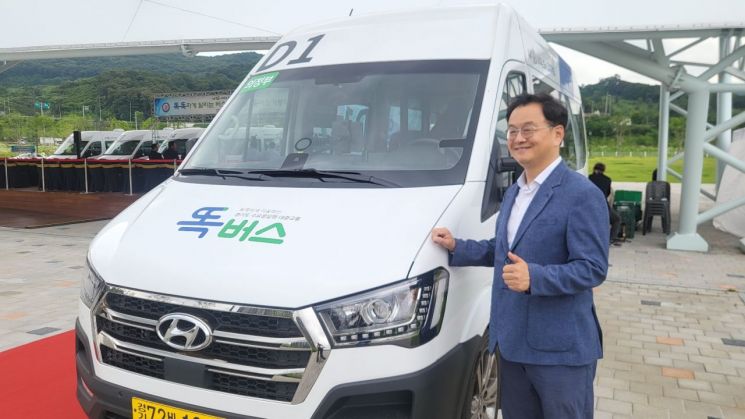 Minkyung Sun, President of Gyeonggi Transportation Corporation, is explaining the Tokbus on the 8th. Currently, 280 vehicles are operating in 19 cities and counties, and it is scheduled to expand to 306 vehicles in 20 cities and counties within this year. Provided by Gyeonggi Transportation Corporation
- The Rail Business Division was recently launched. What are its main objectives?
"The rail business is so important that it can be considered the primary reason for establishing Gyeonggi Transportation Corporation. Currently, most rail projects in Gyeonggi Province, such as the Jinjeop Line, Byeollae Line, Hanam Line, Gimpo Gold Line, Yongin EverLine, and Uijeongbu Light Rail, are operated by transportation corporations from other municipalities or private companies. This requires significant budget allocations and does not sufficiently guarantee public interest and safety. Accordingly, the Metropolitan Area Transportation Committee is supporting Gyeonggi Transportation Corporation to operate these lines directly. In line with this trend, the corporation launched the Rail Business Division in July this year and held an inauguration ceremony in August, beginning to build specialized rail operation capabilities. The primary goal is to secure the operating rights for the Dobongsan-Okjeong Line, which is currently under construction, and to establish a rational and sustainable operating structure by applying an appropriate fee rate tailored to Gyeonggi Province, unlike Seoul. Starting with the Dobongsan-Okjeong Line, we are preparing for the corporation to directly lead major rail projects in Gyeonggi, such as the Hwaseong Tram, Okjeong-Pocheon Line, and Goyang-Eunpyeong Line. This will improve residents' transportation convenience while establishing a stable and efficient rail operation system. There are also challenges and suggestions. Structurally, rail projects are bound to incur deficits, so to reduce the burden on municipalities that own the lines, the 'Ordinance on the Promotion of Rail Projects in Gyeonggi Province' should be revised to provide a basis for the province to partially cover operational deficits. Also, the current consignment method limits the operation period, leading to job insecurity and succession issues for employees. If we switch to direct operation, these problems would be resolved, and the corporation could accumulate operational know-how, allowing new rail projects to stabilize more quickly in the future."
- There is growing interest in future mobility. What is Gyeonggi Transportation Corporation preparing in this area?
"The hottest topic in transportation recently is Urban Air Mobility (UAM), commonly referred to as drone taxis. Even the GTX-A line, which began discussions in 2007, will only start partial operation in 2025. Since GTX-B and C are also expected to take a long time, there is a need for new alternatives to address immediate transportation inconveniences, and I believe UAM is the key to solving this issue. Once vertiport infrastructure is established at key locations, the transportation paradigm itself will change. The government plans to build vertiports in Suseo, Jamsil, Yeouido, and Gimpo by 2030, and this year, demonstration projects will be conducted on two routes: 'KINTEX (Goyang) - Gimpo Airport - Yeouido Park' and 'Jamsil - Suseo Station.' Gyeonggi Transportation Corporation is also working with Hanseo University in a consortium to conduct a research project on 'Basic Plan and Pilot Project for Urban Air Mobility (UAM) Industry in Gyeonggi Province.' Based on the results, we will propose and promote various UAM projects to cities and counties, ensuring that the corporation plays a central role in making Gyeonggi a leader in UAM. Autonomous driving is also a key pillar of future mobility. Currently, a significant portion of the transportation business budget is allocated to labor costs, but with the completion of autonomous driving, we expect not only budget savings but also improved safety and efficiency through integration with Intelligent Transportation Systems (ITS). In fact, in Pangyo, Seongnam, we are operating a pilot project for 'FantaG Bus,' the nation's first public transportation equipped with autonomous driving technology. In the future, Tokbus operated by the corporation will also adopt autonomous driving technology, further enhancing convenience and safety, and helping to resolve transportation challenges in vulnerable areas, achieving even greater results."
- What are your goals for the remainder of your term?
"I have two main goals. The first is to finalize the plan for constructing the corporation's headquarters. We are currently reviewing administrative procedures and land acquisition for the headquarters, and I will quickly complete these reviews and secure the site to lay the foundation for construction. The second goal is to structurally stabilize the rail business. I will continue to propose revisions to the 'Ordinance on the Promotion of Rail Projects in Gyeonggi Province' to include provisions for the province to cover rail project deficits until the end of my term. I believe the corporation has contributed to improving residents' transportation convenience and welfare through various projects as it has grown rapidly. However, I will not be satisfied with the present and will continue striving to provide even better transportation services. With the continued interest and support of the residents, I will work even harder to repay their trust."
© The Asia Business Daily(www.asiae.co.kr). All rights reserved.
![Clutching a Stolen Dior Bag, Saying "I Hate Being Poor but Real"... The Grotesque Con of a "Human Knockoff" [Slate]](https://cwcontent.asiae.co.kr/asiaresize/183/2026021902243444107_1771435474.jpg)
















