Condensation in Greenhouses Increases Risk
of Gray Mold, Leaf Mold, and Other Bacterial Diseases
The Namwon Agricultural Technology Center in North Jeolla Province has urged farmers to exercise special caution, warning that condensation inside greenhouses caused by large temperature differences ahead of the full-scale tomato cultivation and harvest season could lead to crop damage.
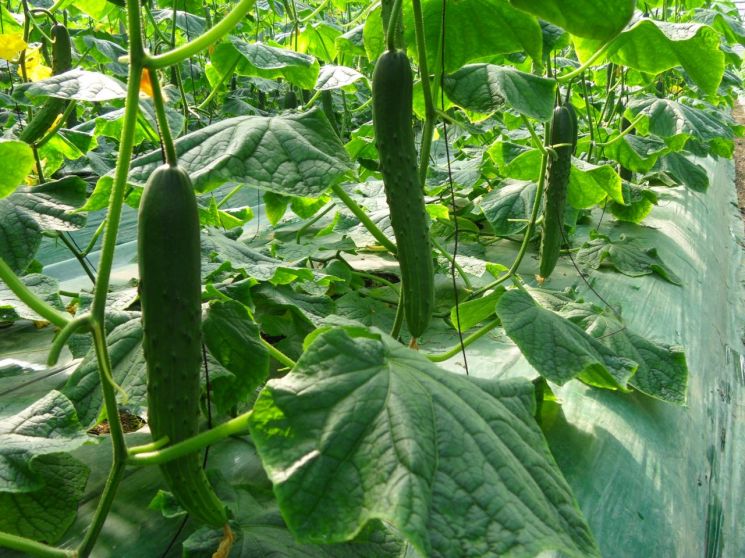 Namwon Agricultural Technology Center, ahead of the full-scale tomato cultivation and harvest season, warned farmers to be especially cautious as condensation occurs inside the greenhouse due to large temperature differences, raising concerns about crop damage. Photo by Namwon City
According to the center on September 8, when cultivating fruit vegetables such as tomatoes and cucumbers in greenhouses, condensation can easily form on the surfaces of structures and crops when there are significant temperature differences between day and night.
This condensation is a major cause of diseases and physiological disorders. In particular, if dew remains for more than four hours, it can lead to fungal diseases such as gray mold and leaf mold, as well as bacterial diseases like soft rot and bacterial wilt.
If condensation is left unchecked, it can hinder the transpiration of leaves, disrupt the flow of nutrients, and, due to the magnifying effect of water droplets, cause leaf burn, poor fruit coloration, and sunscald. As a result, fruit quality may decline, directly leading to reduced productivity.
Kim Yeonju, Director of the Namwon Agricultural Technology Center, stated, "During the autumn transition period, it is necessary to heat the greenhouse at night to prevent the internal temperature from falling below 15°C and thus prevent condensation. In the morning, it is important to gradually start ventilation to avoid sudden temperature differences between the air and the fruit, which can also cause condensation."
Meanwhile, the center plans to continue providing technical guidance on crop growth management in response to seasonal environmental changes, actively supporting farmers in maintaining stable production activities.
© The Asia Business Daily(www.asiae.co.kr). All rights reserved.
![Clutching a Stolen Dior Bag, Saying "I Hate Being Poor but Real"... The Grotesque Con of a "Human Knockoff" [Slate]](https://cwcontent.asiae.co.kr/asiaresize/183/2026021902243444107_1771435474.jpg)















