Safe-Haven Asset Gold Goes Digital
World Gold Council: "Digital Gold to Launch Early Next Year"
Gold Market Shifts as Bitcoin Enters Mainstream
Gold's Limited Liquidity... Uncertain Prospects for Success
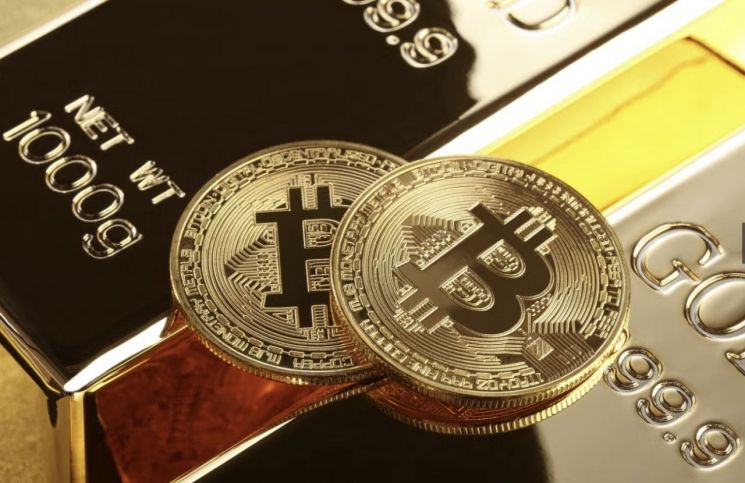
The World Gold Council (WGC) has announced that, for the first time ever, it will launch a pilot program for "Digital Gold" starting next year, raising expectations of significant changes in the international financial markets. The question remains whether the digitalization of gold could serve as a flexible yet secure store of value in the financial markets, potentially emerging as a rival to Bitcoin.
'Digital Gold' Initiative Launched...Expectations for Diverse Financial Products
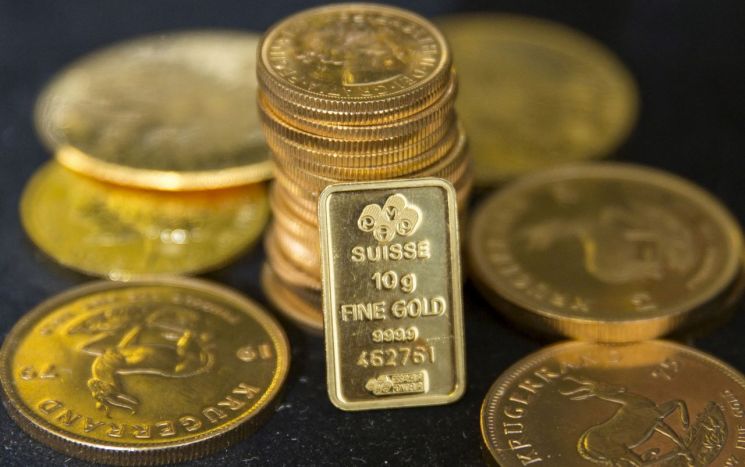
On September 7 (local time), the WGC announced the formation of an initiative to launch Digital Gold and revealed plans to conduct a pilot program for Digital Gold within the first quarter of next year. The WGC plans to create a new over-the-counter market where the ownership of physical gold deposited in each account is digitalized, allowing banks and investors to buy and sell it.
Earlier, on September 3, WGC CEO David Tait said in an interview with major international media, "We are aiming to standardize gold in digital form. Various financial products used in other markets will be available in the gold market as well," adding, "Once gold is digitalized, it can be used for margin calls or collateral, and a wider variety of financial products will become possible."
Gold is typically regarded as the quintessential safe asset, leading many investors to invest directly in physical products such as gold bars for long-term holding. While there are some indirect investment products, such as exchange-traded funds (ETFs) that track gold futures prices, the number of derivatives is very limited compared to cryptocurrencies. As a result, there have been calls for digitalization to enable the creation of diverse derivative financial products and to enhance the accessibility of gold investment to the broader public.
Stablecoin Legislation Phase Could Be a Game-Changer...Potential Rival to Bitcoin
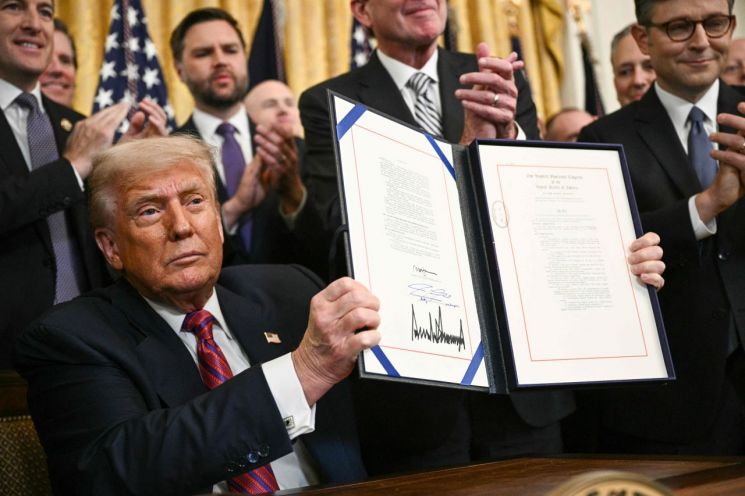 On July 18 (local time), U.S. President Donald Trump signed the GENIUS Act, which legalizes stablecoins. Photo by AFP Yonhap News
The launch of Digital Gold is also expected to impact the cryptocurrency market going forward. Analysts predict that Digital Gold will compete with top market capitalization coins such as Bitcoin and Ethereum, which have been regarded as safe assets and used as underlying assets for stablecoins in the cryptocurrency market.
FXStreet, a cryptocurrency-focused media outlet, reported, "While the U.S. government is leading the adoption of Bitcoin and Ethereum as stores of value comparable to gold, gold continues to strongly maintain its status as a major safe asset." The report added, "After Bitcoin reached an all-time high of $120,000 in mid-August and then hovered between $100,000 and $110,000 for three consecutive weeks, gold prices continued to rise, surpassing a record high of $3,600 per ounce last week."
Dr. Alexander Krivolutsky, a macroeconomics expert at the German Institute for Economic Research (DIW Berlin), also noted in a recent report, "Although Bitcoin is perceived as relatively safe among cryptocurrencies, it still moves in tandem with risk assets like the stock market, rather than with safe assets such as gold or government bonds." He emphasized, "Gold remains recognized as the optimal safe asset, and Bitcoin cannot replace it."
Limited Circulation and Conservative Market Sentiment Are Variables
 The underground vault of the Federal Reserve Bank of New York, known as the single vault unit storing the largest amount of gold in the world. It holds 6,200 tons of gold. Federal Reserve Bank of New York website
However, some experts argue that, given the still-conservative sentiment in the gold market and regulatory barriers, it will be difficult for Digital Gold to be used as actively as cryptocurrencies. They also point out that it will be challenging to dramatically increase the circulation of gold, which is currently mainly held as a safe asset, in a short period of time.
The WGC estimates that the total amount of gold mined and sold up to last year is around 200,000 to 210,000 tons. Of this, 35,000 tons are held by central banks around the world, while the remainder is owned privately in the form of gold bars, jewelry, and other products. The amount of gold traded in the global gold market last year was approximately 4,974 tons.
Due to the low trading volume, attempts have been made to create stablecoins backed by gold, but most have failed. Even the gold-backed stablecoins that continue to be traded, such as Tether Gold and PAX Gold, only reached trading volumes of about 1.3 billion dollars (around 1.81 trillion won) and 1 billion dollars (about 1.4 trillion won), respectively, last year. This is negligible compared to the 400 billion dollars in global gold futures-linked ETFs.
Adrian Ash, Head of Research at the online gold exchange BullionVault, commented, "The rise in gold prices is already being driven by central banks buying gold to reduce their exposure to dollar-denominated assets, and the rate of increase is among the highest on record." He added, "It is difficult to see digitalization as something that requires immediate participation at this stage."
© The Asia Business Daily(www.asiae.co.kr). All rights reserved.
![Clutching a Stolen Dior Bag, Saying "I Hate Being Poor but Real"... The Grotesque Con of a "Human Knockoff" [Slate]](https://cwcontent.asiae.co.kr/asiaresize/183/2026021902243444107_1771435474.jpg)

















