15% Tariff on Japanese Cars to Take Effect Next Week
Reduction Implemented Before South Korea
Concerns Rise Over Diminished Competitiveness of Korean Automobiles
On September 4 (local time), U.S. President Donald Trump signed an executive order to implement the U.S.-Japan trade agreement, which includes lowering tariffs on Japanese automobiles to 15%. Although the United States also agreed to reduce tariffs on South Korean automobiles from 25% to 15%, concerns have been raised that the price competitiveness of South Korean cars in the U.S. market may weaken for the time being, as the tariff reduction for Japan will take effect first.
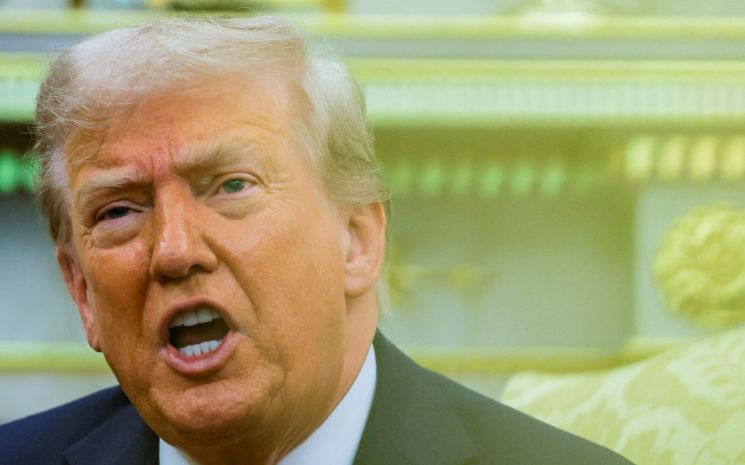
Bloomberg, citing the White House, reported that the executive order includes a provision for the United States to impose a basic tariff of 15% on most Japanese imports, including automobiles and auto parts. This measure is expected to take effect next week.
Previously, at the end of July, Japan pledged to invest $550 billion in the United States and to open its automobile and rice markets, in exchange for a promise from the U.S. to lower reciprocal and automobile tariffs from the previous 25% to 15%. However, disagreements over the details of the agreement led the United States to delay signing the executive order for the tariff reduction. With this signature, the combined tariff rate of 27.5% (2.5% automobile tariff plus 25% auto parts tariff) previously applied to Japanese automobiles has been significantly eased.
In particular, the two countries clashed over whether to include the existing U.S. tariff rate within the 15% reciprocal tariff and over the method of Japan's $550 billion investment. While Japan insisted on creating a fund centered on guarantees and loans, the United States demanded an increase in direct investment. Ultimately, under U.S. pressure, Japan agreed to document all commitments, including not only investment but also expanding rice imports and purchasing U.S.-made aircraft, which led to the confirmation of the automobile tariff reduction. In relation to this, Ryosei Akazawa, Japan's Minister for Economic Revitalization, departed for the United States on this day for ministerial-level talks.
The issue now lies with South Korea. The United States also agreed with South Korea to lower reciprocal and automobile/auto parts tariffs from 25% to 15%, but the automobile tariff has not yet taken effect. The U.S. is demanding, as it did with Japan, an increase in direct investment in relation to the $350 billion investment South Korea has pledged, causing a delay in the implementation of the agreement. With President Trump signing the executive order to lower tariffs on Japanese automobiles to 15% first, it has become more likely that South Korea will be subject to higher automobile tariffs than Japan in the U.S. market for the time being. As a result, the South Korean government is expected to face increased pressure to expedite the implementation of the previously agreed 15% automobile tariff with the United States.
© The Asia Business Daily(www.asiae.co.kr). All rights reserved.
![Clutching a Stolen Dior Bag, Saying "I Hate Being Poor but Real"... The Grotesque Con of a "Human Knockoff" [Slate]](https://cwcontent.asiae.co.kr/asiaresize/183/2026021902243444107_1771435474.jpg)















