'Technical Position Trade' Temporarily Suspended
Aimed at Addressing Labor Shortages and Reducing Labor Costs
Controversy Over Fairness and Gender Equality
Precedent Set by Hyundai Motor Company and Kia's "Employment Inheritance"
KG Mobility (KGM) decided to hire the sons of production workers nearing retirement age if those employees voluntarily resigned, but ultimately scrapped the plan. Although this was intended as a kind of "employment experiment" to address a severe labor shortage, concerns arose that it could potentially violate current laws and inevitably fuel controversy.

According to industry sources on September 5, KGM fully reconsidered and ultimately canceled the so-called "technical position trade," which was centered on this idea. The original applicants were to be technical employees born in 1968 (age 57) or later. The applicants' sons needed to be men who had completed or were exempted from military service, with no disqualifying factors under the company’s hiring regulations.
The plan was to increase new hires' retention by having the sons inherit the positions of employees approaching retirement. A company representative explained, "Even when we hire new employees, the turnover rate is high because they are not from the local area or receive lower wages compared to nearby factories. Last year, we conducted hiring for low-income individuals in partnership with Pyeongtaek City, but some of those employees have already left within less than a year." The representative added, "The average age of technical employees is in the late 40s to early 50s. Last year alone, 70 to 80 employees (including office workers) retired upon reaching retirement age, and we expect a similar number each year going forward, so a labor shortage is anticipated."
Cost savings on labor were also expected. As high-wage employees nearing retirement left, the company could bring in new hires at relatively lower salaries. According to last year's business report, KGM paid a total of 399.8 billion won in wages for the year, with the average employee receiving 94 million won.
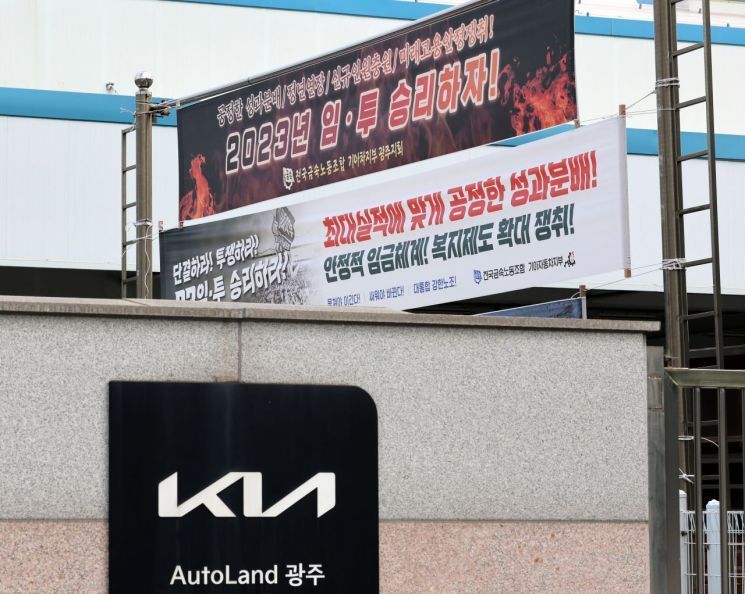 Kia's labor and management parties revised the collective agreement clause related to preferential hiring of long-term employees' children, which was socially criticized as "employment inheritance" in 2023. Yonhap News
However, concerns were raised that legal issues could arise. Under current law, there is no clause explicitly prohibiting the so-called "employment inheritance," where a job is passed from parent to child. However, there have been legal disputes at Hyundai Motor Company and Kia, where employment inheritance was included in collective bargaining agreements, on the grounds that it "violates good morals or other social order" (Article 103 of the Civil Act).
An official from the Ministry of Employment and Labor stated, "If someone raises an issue with KGM's technical position trade as being against social norms, similar controversies as those at Hyundai Motor Company and Kia could arise. If the hiring is not conducted through an open recruitment process, or if the announcement specifies that only men will be hired, this would violate the Act on Fair Recruitment Procedures and the Act on Gender Equality in Employment and Support for Work-Family Reconciliation, respectively." A KGM representative said, "Although we had completed discussions to implement the plan, we scrapped it due to the emergence of legal issues."
© The Asia Business Daily(www.asiae.co.kr). All rights reserved.
![Clutching a Stolen Dior Bag, Saying "I Hate Being Poor but Real"... The Grotesque Con of a "Human Knockoff" [Slate]](https://cwcontent.asiae.co.kr/asiaresize/183/2026021902243444107_1771435474.jpg)
















