Temporary Telecommunications Fee Reduction
Drives Down Inflation Rate
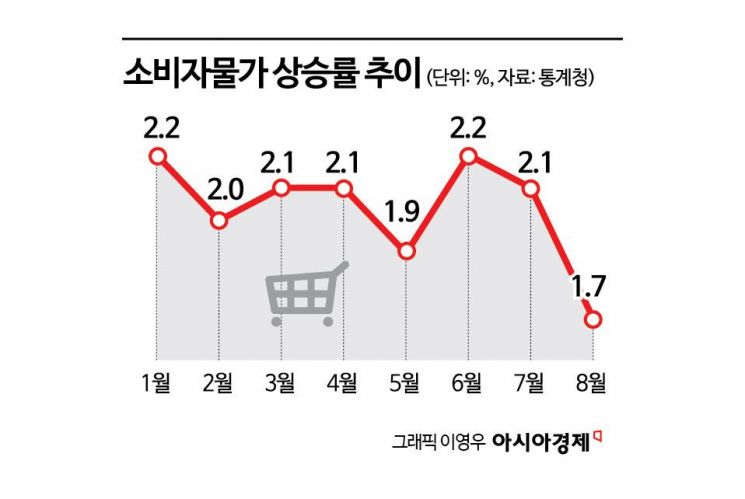
The consumer price inflation rate in August remained in the 1% range, slowing to its lowest level in nine months. Although food prices-including pork, mackerel, cabbage, and eggs-rose by nearly 5% due to heat waves and drought, the overall inflation rate was pulled down by temporary reductions in public service charges, such as telecommunications fees.
According to the "Consumer Price Trends for August 2025" released by Statistics Korea on September 2, last month's Consumer Price Index rose 1.7% year-on-year. This is the lowest increase since November of last year (1.5%). The inflation rate had hovered around 2% earlier this year, showing signs of stability, but dropped to the mid-1% range last month, marking a notable slowdown.

Temporary Telecom Fee Reductions... Impact on Slowing Inflation
The slowdown in consumer price inflation last month was largely due to a 21.0% year-on-year decrease in mobile phone fees. This marked the largest drop since October 2020 (-21.6%), when the government provided a 20,000 won telecom subsidy to all citizens during the COVID-19 pandemic. Following the SK Telecom hacking incident in May, which led to a mass subscriber exodus, telecom fees for more than 20 million subscribers were cut by 50% over the past month. As a result, public service charges, including mobile phone fees, fell by 3.6% year-on-year, dragging down the overall inflation rate by 0.42 percentage points.
During the same period, the "index excluding food and energy," which indicates core inflation, rose only 1.3% year-on-year. The index excluding agricultural products and petroleum products increased by just 1.9%. Lee Dowoon, Director of Economic Trend Statistics at Statistics Korea, explained, "The reduction in telecom fees accounted for most of the downward pressure on overall inflation," adding, "Public service charges also generally declined, resulting in a lower inflation rate."
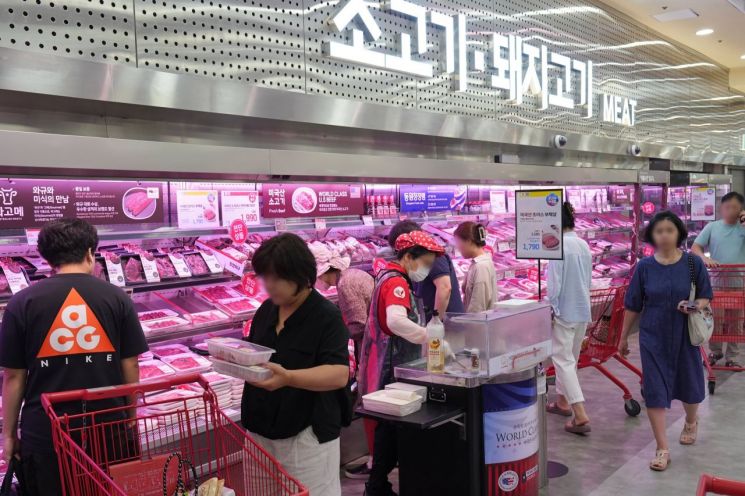
In contrast, prices of agricultural, livestock, and fishery products rose by 4.8% year-on-year, marking the largest increase in 13 months since July of last year (5.5%). This contributed to a 0.37 percentage point rise in overall inflation. Grain prices led the increase, surging by 14.7%, while vegetable prices also turned upward, rising by 0.9% as shipments decreased due to heat waves and drought. Fruit prices, such as apples and pears, rose by 0.2% this month, as the base effect from last year narrowed the decline.
In particular, rice prices jumped 11.0% year-on-year, the largest increase in 19 months since January of last year (11.3%). Bread prices rose by 6.5%, the biggest gain in 25 months since July 2023 (8.6%). In addition, prices of coffee (14.6%), ham and bacon (11.3%), and kimchi (15.5%) all increased, driving up processed food prices.
Livestock product prices also rose as the number of animals slaughtered decreased and demand increased. Pork (9.4%) and domestic beef (6.6%) were notable examples. Demand-side factors, such as increased demand for school meals due to the summer vacation season and the start of the school term, as well as the effect of consumption coupons, also pushed prices up. Chicken (3.2%) and eggs (8.0%) also saw price increases.
Fresh Vegetables Surge 19.3% Due to Heat Waves and Drought
Fishery product prices rose by 7.5% year-on-year, the highest rate in two and a half years since February 2023 (8.2%). While pollock prices fell, prices of hairtail and mackerel increased due to reduced inventories, leading the overall increase. Fresh vegetable prices soared by 19.3% compared to the previous month, the largest increase in five years since August 2020 (24.4%). On a year-on-year basis, cabbage (4.8%) and potatoes (7.6%) also rose significantly due to the effects of heat waves and drought. Cabbage recorded its highest growth rate in four months since April (15.6%), while potatoes saw their largest increase in two years and four months since April 2023 (8.7%).
In contrast, industrial product prices rose only 1.7% year-on-year. Petroleum prices fell by 1.2% compared to last year, thanks to stable international oil prices, with gasoline (-2.0%) and kerosene (-3.8%) also declining. Electricity, gas, and water rates rose by just 0.3% year-on-year, easing the energy price burden. The service sector saw a 1.3% year-on-year increase. While personal services rose by 3.1%, driving the overall increase, public services fell by 3.6%, limiting the overall rise.
Experts believe last month's slowdown in inflation was likely due to temporary factors. Analyses suggest that without the special factor of telecom fee reductions, the inflation rate would have reached 2.3%. There are also concerns that agricultural and energy prices could become unstable again due to climate factors and fluctuations in international commodity prices. Additionally, with the second round of consumption coupons being distributed this month and the Chuseok holiday in October, there are warnings that inflation could accelerate again. Jung Yongtaek, a research fellow at IBK Investment & Securities, said, "Seasonal factors, such as the long Chuseok holiday in September and early October, are expected to keep inflation elevated," adding, "Volatility in oil prices due to geopolitical factors and the won-dollar exchange rate will be key drivers of price changes."
The government plans to maintain its price stabilization policy for the time being while strengthening monitoring of seasonally sensitive items such as agricultural, livestock, and fishery products. Director Lee added, "While the effect of consumption coupons on overall inflation was limited, they did stimulate some price increases by boosting demand for livestock products and dining out," and noted, "Prices of agricultural, livestock, and fishery products may remain unstable for some time due to a combination of supply and demand factors."
© The Asia Business Daily(www.asiae.co.kr). All rights reserved.
![Clutching a Stolen Dior Bag, Saying "I Hate Being Poor but Real"... The Grotesque Con of a "Human Knockoff" [Slate]](https://cwcontent.asiae.co.kr/asiaresize/183/2026021902243444107_1771435474.jpg)

















