Nonfarm Payrolls Expected to Rise by Only 75,000 in August
Continued Labor Market Slowdown Points to Likely September Rate Cut
Trump Nominee Steven Miran Set to Join Fed Board
Miran and Some Members May Advocate for a Larger Rate Cut
This week, Wall Street's attention is focused on the August employment report, which will serve as a key indicator for the September interest rate trajectory and the direction of future monetary policy discussions. Amid a recent slowdown in the labor market, the likelihood of an interest rate cut by the Federal Reserve (Fed) this month has increased. The outcome of the employment data is expected to spark intense debate over the scale of the rate cut and the future rate path. In particular, if the slowdown in employment becomes more pronounced, there is speculation that some within the Fed may advocate for a 0.5 percentage point rate cut this month, the so-called "big cut."
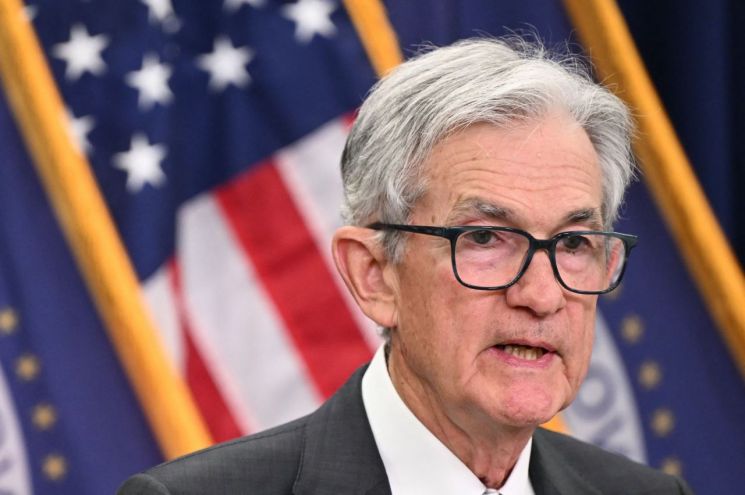
According to the U.S. Department of Labor on September 1, the August nonfarm payroll and unemployment rate figures are scheduled to be released on September 5 (local time).
According to Bloomberg's survey, nonfarm payrolls in August are expected to increase by 75,000 jobs. This is a slight uptick from July's figure of 73,000, but it would mark the fourth consecutive month with job growth below 100,000, reflecting the weakest trend since the COVID-19 pandemic in 2020. Previously, the Department of Labor revised down the number of new jobs in May and June to 19,000 and 14,000, respectively, reducing the initial estimates by about 130,000 each month. The unemployment rate is expected to rise from 4.2% in July to 4.3% in August.
Other employment indicators will also be released this week. On September 3, the Department of Labor will publish the July Job Openings and Labor Turnover Survey (JOLTs). On September 4, the August ADP private employment report and the weekly initial jobless claims will be announced. In addition, the Fed's Beige Book, which provides an economic assessment, is also set to be released on September 3.
Against this backdrop, Wall Street sees a rate cut as highly likely at the Federal Open Market Committee (FOMC) meeting scheduled for September 16-17. Fed Chair Jerome Powell hinted at the possibility of policy adjustments in his speech at Jackson Hole last month, citing downside risks in the labor market. Currently, the interest rate futures market reflects an over 85% probability that the Fed will cut rates by 0.25 percentage points at this month's meeting.
While the market is not pricing in a big cut for September, if the employment data turns out to be weaker than expected, discussions of a big cut could gain traction within the Fed. On August 28, Fed Governor Christopher Waller stated in a speech in Miami, "I will support a 0.25 percentage point cut at the September meeting," but added, "There is concern that the labor market could deteriorate rapidly. We should not wait until the situation worsens and risk falling behind in our policy response." CNBC interpreted this as leaving the door open for a big cut if the labor market deteriorates. Previously, both Governor Waller and Fed Vice Chair Michelle Bowman had emphasized the need for a 0.25 percentage point cut at the July meeting, suggesting that there is room for them to argue for a larger cut depending on the employment data.
Changes in the composition of the FOMC also lend weight to these expectations. Stephen Miran, White House National Economic Council member nominated by President Trump as a new Fed Governor, is scheduled for a Senate confirmation hearing on September 4 and, if confirmed, will participate in the September meeting. He is expected to support a relatively large rate cut. In contrast, Lisa Cook, the Fed Governor dismissed by President Trump, will not be able to participate in the September meeting if the court rejects her request for a stay of dismissal.
Inflationary pressure remains a key variable. The core Personal Consumption Expenditures (PCE) price index, which the Fed closely monitors, rose by 2.9% year-on-year in July, up 0.3 percentage points from the previous month. While this was in line with expectations, some members may adopt a cautious stance on rate cuts due to inflationary pressures. Previously, Jeffrey Schmid, President of the Federal Reserve Bank of Kansas City, and Beth Hammack, President of the Federal Reserve Bank of Cleveland, advocated caution regarding a September rate cut, citing inflation. If inflation remains high and employment exceeds expectations, fierce debate is expected within the Fed over the scale and timing of the September rate cut and the future rate path. At the July meeting, Vice Chair Bowman and Governor Waller opposed the majority decision to hold rates steady, resulting in multiple dissenting votes for the first time in 32 years. Internal disagreements may surface again this time.
Investors are expected to gauge the Fed's internal sentiment this week through public remarks by Neel Kashkari, President of the Federal Reserve Bank of Minneapolis, John Williams, President of the Federal Reserve Bank of New York, and Austan Goolsbee, President of the Federal Reserve Bank of Chicago.
Matthew Luzzetti, Chief U.S. Economist at Deutsche Bank, predicted that it "would not be surprising if dissenting opinions continue to emerge regularly at FOMC meetings going forward."
© The Asia Business Daily(www.asiae.co.kr). All rights reserved.
![Clutching a Stolen Dior Bag, Saying "I Hate Being Poor but Real"... The Grotesque Con of a "Human Knockoff" [Slate]](https://cwcontent.asiae.co.kr/asiaresize/183/2026021902243444107_1771435474.jpg)















