Most Non-Citizens and Non-Permanent Residents Face Restrictions
Growing Outcry Over "Modern-Day Discriminatory Law"
The state of Texas in the United States is set to implement a new law next month that restricts real estate purchases and rentals by individuals from certain countries, and Chinese Americans are increasingly voicing their opposition to the measure.
The BBC reported on August 28 (local time) that this law effectively targets Chinese nationals, and that confusion and concern are spreading within the local community.
The law, known as Senate Bill 17 (SB17), passed the Texas state legislature in June. The bill prohibits individuals or companies holding citizenship from China, Russia, North Korea, or Iran from owning real estate within the state, and only allows short-term rentals of up to one year. The law will take effect on September 1, and violations may result in fines of up to $250,000 or imprisonment.
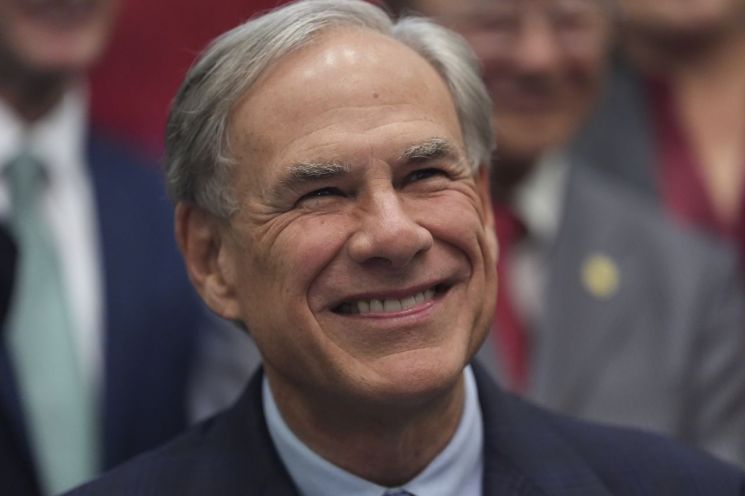
Texas Governor Greg Abbott stated at the time of the law's enactment that it was "the strongest measure to protect our state from foreign 'enemies'," and the bill specifically names China first among the four countries, describing it as "a nation that is engaging in coercive, destructive, and malicious activities to weaken the United States economically, militarily, and politically."
Some analysts believe that the enactment of this law is not unrelated to a previous incident in which a Chinese businessperson purchased large tracts of land near a military facility and attempted to build a wind farm. That project was halted due to security concerns, and discussions on similar foreign ownership restrictions intensified thereafter.
However, human rights organizations and legal experts argue that these measures are excessive and biased. Patrick Toomey, an attorney with the American Civil Liberties Union (ACLU), stated, "There is no evidence that Chinese residents owning or renting real estate poses a threat to national security," adding that "some politicians are making the serious mistake of equating Chinese individuals with the Chinese government."
In fact, there are about 120,000 residents of mainland Chinese origin living in Texas, making them the group most likely to be directly affected by this measure.
The nonprofit organization Chinese American Legal Defense Alliance (CALDA) filed a constitutional lawsuit on behalf of three Chinese Americans with valid visas before the law's implementation, but the state court dismissed the case. This was based on the legal authorities' interpretation that "holders of student or work visas are not subject to the law." However, the BBC reported that the individuals involved still feel uneasy due to the ambiguous language of the law.
The economic impact is also significant. Between 2011 and 2021, 34 Chinese companies launched a total of 38 projects in Texas, investing as much as $2.7 billion and creating more than 4,600 jobs. However, since the bill's passage, Chinese companies are reportedly avoiding Texas and turning to other states. Texas State Representative Gene Wu pointed out, "This law is driving away investments worth millions of dollars."
Other states are following Texas's example. The Committee of 100, a Chinese American organization, found that since 2021, a total of 26 states have passed bills restricting foreign ownership of real estate. Most of these are Republican-led states, and the Trump administration had also previously expressed its intention to prevent Chinese nationals from acquiring farmland.
Local Chinese American leaders are strongly opposing the law, likening it to a "2025 version of the Chinese Exclusion Act." Jason Yuan, who runs a used car business, emphasized at a rally that "banning home ownership based on country of origin is fundamentally discriminatory" and criticized it for "undermining the rules of democracy."
© The Asia Business Daily(www.asiae.co.kr). All rights reserved.
![Clutching a Stolen Dior Bag, Saying "I Hate Being Poor but Real"... The Grotesque Con of a "Human Knockoff" [Slate]](https://cwcontent.asiae.co.kr/asiaresize/183/2026021902243444107_1771435474.jpg)















