Meeting Ishiba to Attract Investment
Seeking to Improve Relations with China
Indian Prime Minister Narendra Modi will visit Japan and China consecutively to promote economic cooperation and strengthen bilateral relations.
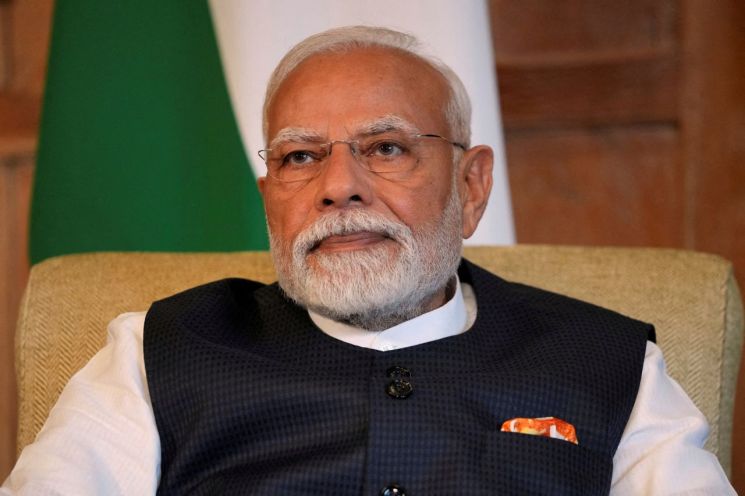
On August 29, Prime Minister Modi will visit Japan for a two-day trip and hold a summit with Japanese Prime Minister Shigeru Ishiba that afternoon. During his visit to Japan, Modi is expected to focus on expanding economic cooperation, including attracting investment, to minimize the economic impact of the 50% tariffs imposed by the Donald Trump administration in the United States. In a statement, Modi said that through this visit, he would work to advance cooperation between the two countries in economic and investment sectors, as well as in new high-tech fields such as semiconductors and artificial intelligence (AI).
According to Indian government officials, the two countries are expected to sign an economic security agreement that includes cooperation in the fields of semiconductors, AI, and critical minerals. Sources told Bloomberg that during this visit, India is also expected to secure investment commitments worth about 10 trillion yen from Japanese companies and others.
As members of the four-nation security framework known as the Quad, along with the United States and Australia, the two countries also plan to strengthen their security cooperation. In an interview with Yomiuri Shimbun ahead of his visit, Modi stated, "India and Japan are not just close partners; we share a strategic outlook," adding that he plans to discuss enhancing security cooperation and promoting technological innovation in his meeting with Prime Minister Ishiba.
Afterwards, Modi will travel to China, where he will attend the Shanghai Cooperation Organization (SCO) summit in Tianjin from August 31 to September 1, and hold separate bilateral meetings with Chinese President Xi Jinping and Russian President Vladimir Putin.
During this visit to China, his first in seven years, Modi is expected to consult with President Xi to accelerate the improvement of relations between the two countries, which have been at odds due to border disputes. Both countries have recently agreed to resume border trade and direct flight routes for the first time in five years, as they both face tariff pressures from the United States. The Indian government is also considering easing investment monitoring regulations on Chinese companies, while China has agreed to lift export restrictions to India on fertilizers, rare earths, and tunnel boring machines (TBMs).
© The Asia Business Daily(www.asiae.co.kr). All rights reserved.
![Clutching a Stolen Dior Bag, Saying "I Hate Being Poor but Real"... The Grotesque Con of a "Human Knockoff" [Slate]](https://cwcontent.asiae.co.kr/asiaresize/183/2026021902243444107_1771435474.jpg)















