Operations to Resume in Second Week of Next Month
Over 1,000 Sellers Sign On
Concerns Over Lack of Legal and Institutional Safeguards
Repayment Rate for Damages Remains at Only 0.75%
With the conclusion of Tmon's corporate rehabilitation process, its new acquirer, Oasis, is officially beginning to take the reins of management. There is cautious optimism that Tmon, which is promoting the industry's lowest commission fees and a next-day settlement system, could become a new sales channel for small and medium-sized enterprises and small business owners. However, concerns are also mounting that a repeat of the "second Tmon & Ticket Monster (Tmon & Ticket Monster Price Fraud)" crisis could occur.
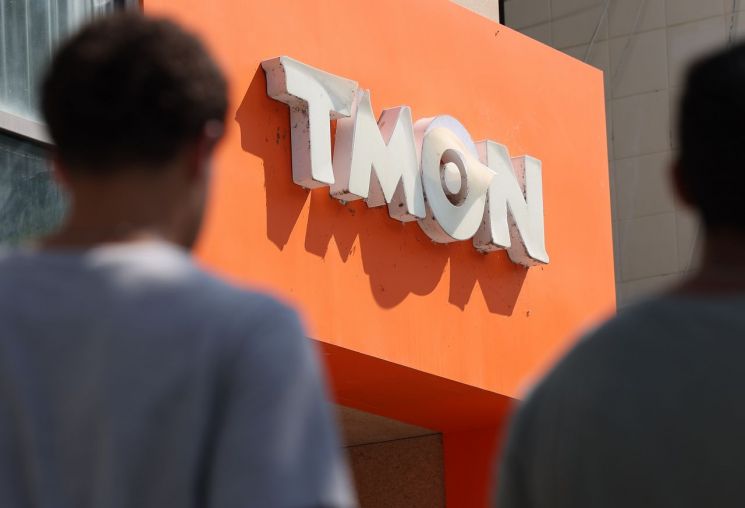
According to related industry sources on August 25, Tmon graduated from court receivership on August 22, about a year after the initiation of its corporate rehabilitation process, and is preparing to resume operations next month. Previously, Tmon had planned to resume operations on August 11, but postponed the schedule temporarily following the conclusion of the rehabilitation process. An Oasis Market representative said, "We initially expected the corporate rehabilitation process to end around August or September, so we were planning to reopen in the second week of September. We will make a separate announcement once the exact reopening date and operational direction are decided."
The industry is generally expressing cautious optimism about Tmon's new start, which comes about a year after the Tmon & Ticket Monster Price Fraud crisis that caused significant harm to many consumers and small sellers. As sales commissions on online platforms continue to rise and the emergence of private brand (PB) products narrows the space for small business owners in the distribution environment, there are expectations that Tmon could serve as a new sales channel. Tmon's promise to affected sellers of the industry's lowest commission rates of 3-5% and the introduction of a next-day settlement system is also drawing attention. According to Oasis Market, more than 10,000 sellers have signed contracts to join Tmon since the new acquirer was determined.
Han Mo, who sold agricultural products on Tmon until just before the Tmon & Ticket Monster Price Fraud crisis, said, "I think it's better for the platform to reopen under a new system and return various benefits to small business owners, rather than disappearing altogether. Although I still have concerns, I plan to proceed with the contract for now."
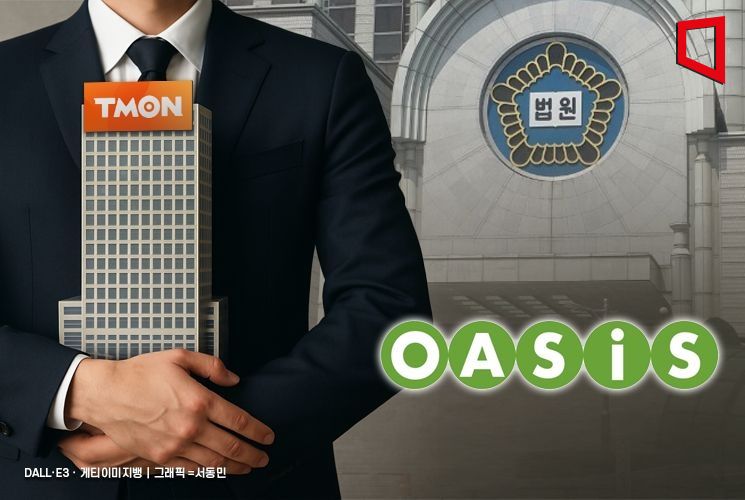
However, there are growing concerns about the resumption of operations without sufficient legal and institutional safeguards in place after the Tmon & Ticket Monster Price Fraud crisis. In response to the public outcry over the incident, the Fair Trade Commission drafted an amendment to the Large-scale Distribution Business Act, which would shorten the settlement cycle for sales proceeds and require that 50% of sales proceeds be deposited or held in trust with a third party until sellers are paid. However, this amendment is still pending in the National Assembly.
The amendment to the Electronic Financial Transactions Act, prepared by the Financial Services Commission, passed the National Policy Committee of the National Assembly last month and is one step closer to implementation. However, it only covers small payment gateway companies (PG) that act as intermediaries, excluding large e-commerce companies that handle both distribution and electronic payments. The key provision of the amendment is that PG companies must deposit 100% of settlement funds with an external institution.
Meanwhile, the suffering of consumers and sellers affected by the Tmon & Ticket Monster Price Fraud crisis is still ongoing. According to the rehabilitation plan, Tmon's total rehabilitation claims amount to 1.2083 trillion won, but Oasis's repayment rate is only 0.75%. This means that a victim who was owed 10 million won would receive only 75,000 won back. Shin Jeongwon, chairman of the Black Umbrella Emergency Response Committee, said, "The numbers are outrageous compared to any other rehabilitation plan," adding, "There is outrage over the fact that operations are resuming when almost no compensation has been made to the victims."
Yoo Byungjoon, a professor at Seoul National University's Department of Business Administration, said, "The cause of the Tmon & Ticket Monster Price Fraud crisis lies in the financial authorities' lack of oversight and supervision over companies that used sellers' and consumers' funds for other purposes." He emphasized, "When there are signs such as delayed settlement of sales proceeds, the authorities should intervene quickly and suspend operations before the situation escalates." He added, "Authorities must ensure that Tmon continues to compensate the victims."
© The Asia Business Daily(www.asiae.co.kr). All rights reserved.
![Clutching a Stolen Dior Bag, Saying "I Hate Being Poor but Real"... The Grotesque Con of a "Human Knockoff" [Slate]](https://cwcontent.asiae.co.kr/asiaresize/183/2026021902243444107_1771435474.jpg)
















