August 23: Summit with Ishiba, August 25: Meeting with Trump
Discussions to Strengthen Korea-Japan and Trilateral Cooperation
President Lee Jaemyung will depart on August 23 for the Korea-Japan and Korea-US summits. On the afternoon of the 23rd, President Lee will hold a summit with Japanese Prime Minister Shigeru Ishiba, and on the 25th, he will meet US President Donald Trump for the first time. The Korea-Japan summit is expected to focus on discussions about strengthening economic and security cooperation, particularly in the context of Korea-Japan and Korea-US-Japan trilateral collaboration. At the Korea-US summit, issues related to trade and security, which have become increasingly burdensome due to President Trump's unilateral approach to diplomacy, are likely to be on the agenda. Given that both summits could have significant impacts on the economy and security, the presidential office's diplomatic and security teams, along with relevant ministries, are continuing consultations with the US government.
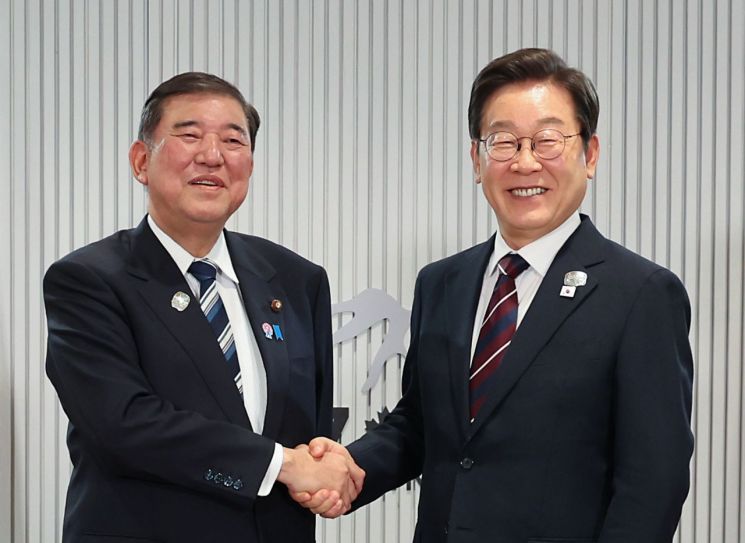
According to the presidential office on August 22, President Lee will depart for Japan on the 23rd for a summit with Prime Minister Ishiba, then head to the United States for the Korea-US summit. On August 24, President Lee will attend a dinner meeting with Korean residents in Washington, D.C., and on the 25th, he is scheduled to hold a summit with President Trump. After meeting with figures from the business and academic sectors, on the 26th, he will visit the Philadelphia Philly Shipyard, which Hanwha Group acquired in December last year through a $100 million (approximately 140 billion won) investment.
The focus of the upcoming Korea-Japan summit will be on supply chain and economic security cooperation, as well as Korea-US-Japan trilateral collaboration. Attention is being paid to how specifically practical agenda items such as key materials for semiconductors and batteries, standards and certifications, and simplification of export procedures will be included in the joint statement. While historical issues will remain in a "managed phase," the Korean government's statement regarding the controversy over the Yasukuni Shrine visit on Liberation Day means the level of expression will be a variable. Just before the trip, there were reports that President Lee mentioned the intent to "respect intergovernmental agreements" in reference to the 2015 Comfort Women Agreement, suggesting that message management with Japanese public opinion in mind will also be necessary.
The government is accelerating efforts to draft a joint statement that redefines Korea-Japan relations. According to a report by Japan's Yomiuri Shimbun on the 21st, President Lee emphasized in an interview, "I hope to inherit and go beyond the 1998 Korea-Japan Partnership Joint Declaration by President Kim Daejung and Prime Minister Keizo Obuchi and announce a new joint declaration." On the same day, presidential spokesperson Kang Yujeong also expressed optimism, saying, "Looking at the congratulatory remarks from both sides, there is reason for some public expectation." However, she added, "It is still difficult to say at what level the joint statement will be finalized."
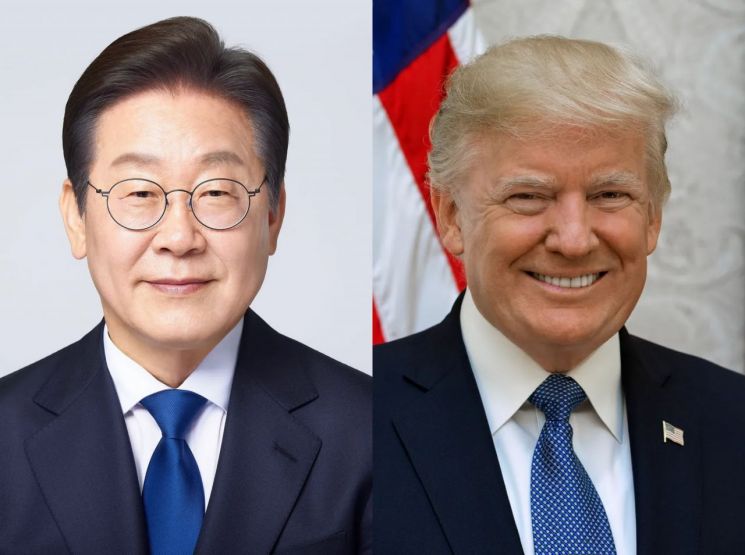
At the Korea-US summit, the following issues are likely to be discussed: application of mutual tariffs and details of the US investment fund; review of non-tariff barriers, currency, and regulatory issues; and, with "alliance modernization" as a core theme, negotiations on increasing defense spending and the operation of US Forces Korea. In particular, the joint design of manufacturing supply chains for semiconductors, batteries, shipbuilding, and critical minerals is expected to be a key agenda item that spans both trade and security, all of which are burdensome issues for Korea. If the Korea-Japan summit with Prime Minister Ishiba results in calls for stronger Korea-Japan and Korea-US-Japan cooperation, this could serve as leverage for the Korea-US summit. On the security agenda, issues such as the Special Measures Agreement (SMA) on defense cost-sharing, combined defense posture, and extended deterrence are likely to be discussed under the theme of alliance modernization.
Business organizations and major conglomerate leaders are also expected to participate in full force. According to the business community, leaders of major companies, including the four largest groups, will accompany the president as part of an economic delegation during the US visit. Details of the $35 billion investment fund, which is central to the tariff negotiations, as well as the investment amounts of individual companies, are expected to be disclosed. Previously, during the summit preparation process, the presidential office held a meeting with business organizations and major conglomerate leaders on the 19th. At the meeting, President Lee acknowledged the private sector's role in the tariff negotiations and conveyed the message, "Please deliver results on the ground."
However, it remains uncertain whether the Korea-US summit will proceed smoothly. Foreign Minister Cho Hyun suddenly departed for the United States on the 21st, just four days before the Korea-US summit. He was originally scheduled to accompany President Lee and attend the Korea-Japan summit on the 23rd, but instead left early for the US, skipping the Japan summit. It is highly unusual for the foreign minister to miss a presidential summit, leading to speculation that an unexpected variable may have arisen during preparations for the Korea-US summit. Upon arrival in the US, Minister Cho is scheduled to meet US Secretary of State Marco Rubio in Washington, D.C.
© The Asia Business Daily(www.asiae.co.kr). All rights reserved.
![Clutching a Stolen Dior Bag, Saying "I Hate Being Poor but Real"... The Grotesque Con of a "Human Knockoff" [Slate]](https://cwcontent.asiae.co.kr/asiaresize/183/2026021902243444107_1771435474.jpg)

















