Investigations Expanded to University Teaching Assistants and Drivers
Dismissal of Mainland Chinese ID Holders
Ruling DPP Also Cracking Down on Chinese Spies
Strengthening Security and Technology Protection
At Least 200,000 Hold Mainland C
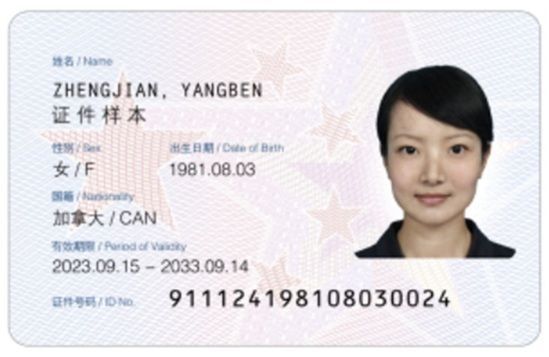 Sample appearance of identification cards issued to foreigners and overseas residents in China. National Immigration Administration of China
Taiwan is intensifying its efforts to identify holders of Chinese mainland ID cards, expanding its investigation beyond public officials and military personnel to include certain professions such as university teaching assistants and drivers. The Taiwanese government has announced that if espionage charges are found against holders of Chinese mainland ID cards, they will be suspended from their duties and dismissed. There are concerns that this crackdown could potentially lead to a suspension of cross-strait exchanges.
Investigation Expanded to University Teaching Assistants and Drivers... Dismissal of Chinese ID Holders
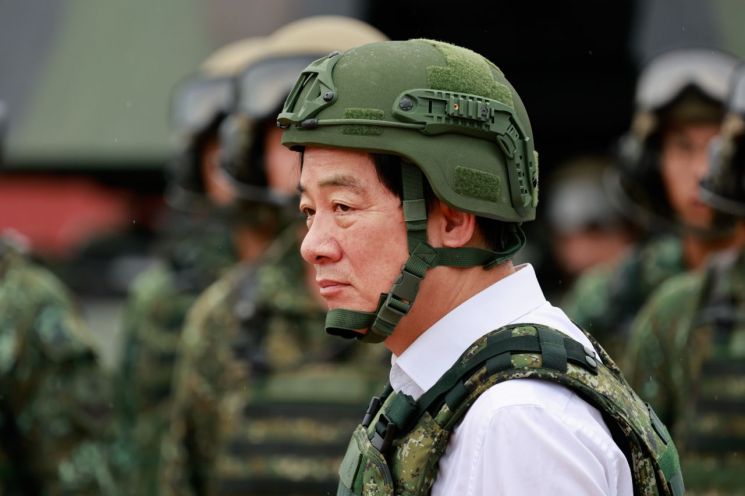
The Mainland Affairs Council (MAC), Taiwan's agency responsible for mainland affairs, announced that starting January 1 next year, it will expand the scope of its investigation into holders of Chinese mainland ID cards. In addition to the existing targets-general public officials, teachers, and military personnel-judges, prosecutors, drivers, security guards, university teaching assistants, and temporary teachers will also be included in the investigation.
Previously, the Taiwanese government conducted a large-scale investigation from February to the end of June, targeting about 740,000 people, including general public officials, teachers, and military personnel, to determine whether they held Chinese mainland ID cards or residence permits. As a result, two people who had applied for mainland ID cards and 75 people who held residence permits were identified, and all of their documents were revoked.
Taiwan has warned that those who possess Chinese mainland ID cards without authorization or refuse to cooperate with the investigation may be dismissed. The MAC stated, "According to Article 9 of the 'Act Governing Relations between the People of the Taiwan Area and the Mainland Area' (Cross-Strait Act), if a Taiwanese national acquires a Chinese ID card, they lose their Taiwanese status and cannot serve as a volunteer soldier or public official." The MAC added, "Those subject to investigation, such as general public officials, teachers, and military personnel, must cooperate with the review process during initial appointment and job transfers in accordance with relevant appointment laws and contracts. Failure to do so will result in the non-conclusion of appointment, reappointment, or employment contracts."
Ruling Democratic Progressive Party Also Cracking Down on Chinese Spies... Strengthening Security and Technology Protection
The Taiwanese government's aggressive crackdown is believed to be due to an increasing number of people being arrested on suspicion of spying for China. With a surge in espionage suspects among not only public officials and military personnel but also members of the ruling Democratic Progressive Party, vigilance has been heightened.
According to the Liberty Times, in April, the Taipei District Prosecutors Office indicted five former and current Democratic Progressive Party officials on charges of violating the National Security Act. Among them, former aide Huang Chuilong, considered a key figure, was sentenced to 30 years and six months in prison for leaking state secrets and money laundering. He was found to have contacted officials from the Presidential Office of Taiwan and passed on details of secret meetings between Taiwan's leadership and foreign dignitaries to China's Ministry of State Security.
Subsequently, Taiwan's National Security Bureau (NSB) expanded its espionage investigations into the political and military sectors. According to the NSB, a total of 159 people in Taiwan's political and military circles have been indicted for espionage since 2020, including 95 active and retired military personnel. It is believed that a significant amount of Taiwan's military secrets and defense technologies have been leaked.
Taiwanese authorities are concerned that various defense technologies, including TSMC's semiconductor technology, could be transferred to China. As a result, they are further strengthening security at key national defense research institutions, such as the National Chung-Shan Institute of Science and Technology (NCSIST), the Taiwan Space Agency (TASA), and the National Atomic Research Institute (NARI).
At Least 200,000 Holders of Chinese ID Cards... Concerns Over Shrinking Cross-Strait Exchanges
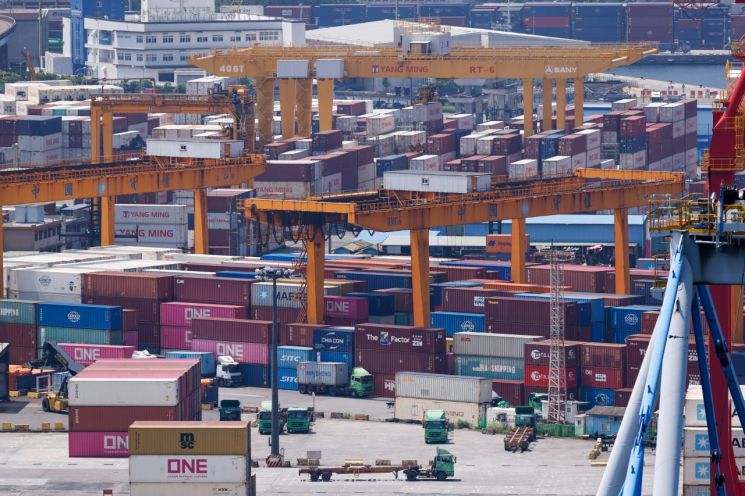
Some are concerned that Taiwan's excessive regulations could hinder cross-strait exchanges and lead to economic losses for Taiwan. Many Taiwanese businesspeople who travel between the two sides for import and export activities may see their operations restricted.
Since 2018, the Chinese government has issued mainland residence permits to Taiwanese who visit the mainland, seeking to embrace Taiwanese residents. Various incentives, such as gifts and discount events, have been offered to tourists from Taiwan and businesspeople traveling to China, encouraging them to apply for residence permits, bank accounts, and local mobile phone numbers. As a result, it is estimated that about 210,000 Taiwanese currently work while traveling between China and Taiwan. As of January to May this year, Taiwan's exports to China accounted for 28.1%, surpassing the United States (26.8%), indicating that Taiwan's economic dependence on China remains high.
Li Xuefeng, a researcher at the Global Taiwan Institute, stated in a report, "While the Chinese government is encouraging the acquisition of mainland ID cards by offering certain incentives, the Taiwanese government's approach of relying solely on strict crackdowns could lead to public backlash." He added, "In particular, many people who were born in mainland China and moved to Taiwan at a young age now do business between the two sides, and they are anxious about the possibility of losing their Taiwanese nationality."
© The Asia Business Daily(www.asiae.co.kr). All rights reserved.
![Clutching a Stolen Dior Bag, Saying "I Hate Being Poor but Real"... The Grotesque Con of a "Human Knockoff" [Slate]](https://cwcontent.asiae.co.kr/asiaresize/183/2026021902243444107_1771435474.jpg)

















