Powell Called for Rate Cuts in Last Year's Speech
Fed Followed Up With a Significant Cut
Divisions Persist Within the Fed
Rate cuts or a resurgence of inflation?
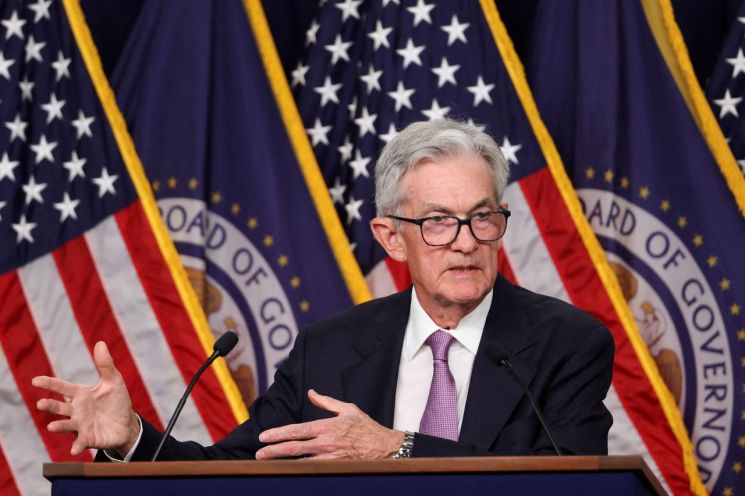
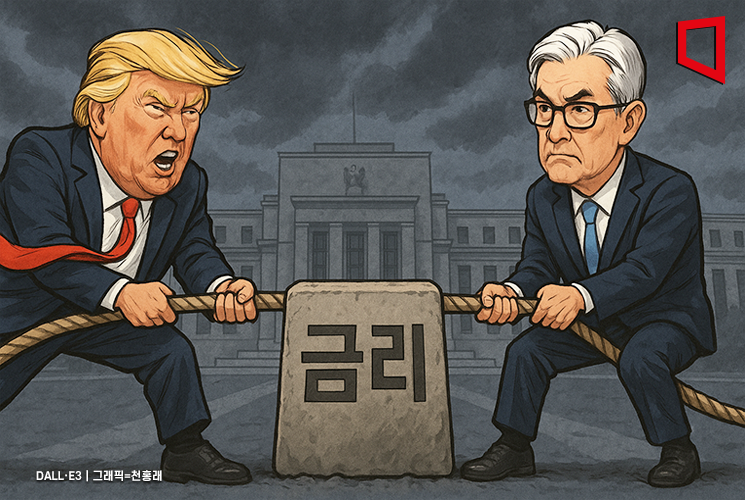
The market's attention is focused on Federal Reserve (Fed) Chair Jerome Powell's upcoming speech at Jackson Hole, which is expected to offer clues to this question. Scheduled for August 22 (local time), Powell's address comes amid overt pressure from the Trump administration to lower rates, making the possibility of him announcing a 'resumption of rate cuts' the primary focus. This week will also see earnings announcements from major U.S. retailers such as Walmart and Home Depot, providing an opportunity to gauge consumer sentiment trends and the inflationary pressures brought about by tariff policies.
"All Ears on Jackson Hole"
On August 17, U.S. financial media outlet CNBC highlighted Powell's Jackson Hole speech as the biggest event likely to determine the direction of the stock market this week, reporting that investors are keenly watching to see whether Powell will signal the possibility of a rate cut at the September Federal Open Market Committee (FOMC) meeting.
The Fed will hold its annual economic policy symposium, known as the 'Jackson Hole Meeting,' from August 21 to 23 in Jackson Hole, Wyoming. On the second day, August 22, Powell will deliver a speech titled 'Economic Outlook and Policy Framework Review.' At last year's Jackson Hole event, he remarked, "The time has come to lower rates," and the Fed subsequently cut rates by 50 basis points (0.5 percentage points) at the September meeting.
The Financial Times (FT) noted that this event is "likely to be Powell's final appearance at Jackson Hole," emphasizing that "it is crucial for him to deliver a clear message amid divisions within the Fed over rate policy."
Such expectations stem from weak employment data. New job creation in July fell short of market forecasts, and employment figures for May and June were also revised downward. The average monthly job growth over the past three months was only 35,000, a sharp drop from 123,000 a year earlier. The Consumer Price Index (CPI) for the same month showed only limited increases, and price pressures from tariffs have yet to become pronounced, leading to growing calls to focus more on employment slowdown than inflation. According to CME FedWatch, the interest rate futures market is pricing in an 85.6% probability of a rate cut at the September FOMC. The probability of holding rates steady has risen to 15.4%, up from 11.1% a week ago.
However, uncertainties remain. Powell has continued to describe the U.S. labor market as "solid" and has refrained from signaling a cut. Moreover, the July Producer Price Index (PPI) showed a significant increase in business costs due to tariffs, casting doubt on Treasury Secretary Scott Besant's assertion that a "0.5 percentage point cut in September" is likely.
There are still divisions within the Fed. Some members advocate for an early cut citing weak employment, while others remain concerned about tariff-driven inflation. The Associated Press (AP) reported, "Ultimately, it is difficult to predict what conclusion will be reached at the September FOMC," adding, "Upcoming employment reports and inflation data will be decisive factors."
The minutes of the July FOMC, to be released on August 20, are also expected to provide important clues regarding the direction of monetary policy. The minutes are anticipated to detail the background of rate decisions discussed at the July FOMC meeting, differences of opinion among committee members, and the specific grounds cited by some members in support of a rate cut. Investors will be able to gauge the distribution of views within the FOMC regarding the path of rates, including the extent of support for rate cuts and more conservative perspectives. AP noted, "Powell's speech will be an important opportunity to assess which side the Fed is leaning toward amid these differing opinions."
Retailers' Earnings Put to the Tariff Test
Market attention is also focused on the earnings reports of major retailers. The results from large chains such as Walmart, Home Depot, Target, and Ross will serve as key indicators for assessing inflationary pressures from tariffs, shifts in consumer sentiment, and the effectiveness of pricing strategies. These reports will reveal how much consumers can withstand higher costs and whether they have the capacity to maintain spending. Previously, Walmart announced plans to raise prices to offset increased costs from tariffs, while Home Depot chose to maintain its prices.
Investment research firm Investopedia analyzed, "As the Trump administration's tariffs begin to impact inflation, this week's retail earnings will show whether tariffs are actually taking a toll on sales."
© The Asia Business Daily(www.asiae.co.kr). All rights reserved.
![Clutching a Stolen Dior Bag, Saying "I Hate Being Poor but Real"... The Grotesque Con of a "Human Knockoff" [Slate]](https://cwcontent.asiae.co.kr/asiaresize/183/2026021902243444107_1771435474.jpg)
















