Reducing Working Hours to OECD Average
Expanding Occupational Accident Insurance to All Citizens
Gradual Extension of Retirement Age Starting in 2028
The Presidential National Planning Committee has announced its key labor policy plans to be implemented during President Lee Jaemyung's term. The main initiatives include the gradual application of the Labor Standards Act and the Industrial Safety and Health Act to workplaces with fewer than five employees, as well as the introduction of a 4.5-day workweek within the term, aiming to reduce the statutory working hours to the OECD average level.
According to the 123 major national policy tasks unveiled by the National Planning Committee at a public report conference on the 13th, starting in the second half of this year, provisions prohibiting workplace harassment and protecting maternity rights will be applied to businesses with fewer than five employees. In the first half of 2027, paid and substitute holidays, as well as annual leave, will be granted. By 2028, even ultra-short-term workers working less than 15 hours per week will be eligible for the four major social insurances, severance pay, and weekly holiday allowances.
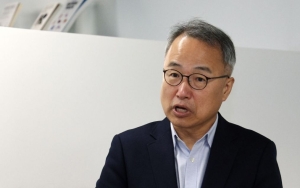
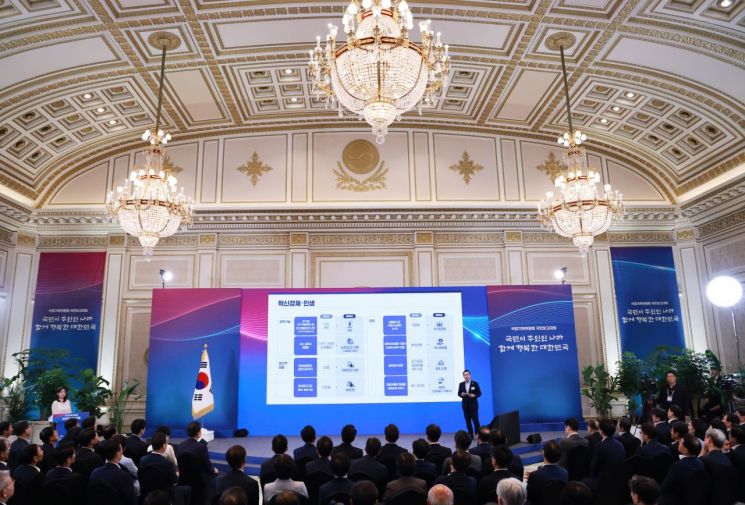 Park Honggeun, Head of the National Planning Division of the National Planning Committee, is presenting at the National Planning Committee Public Report Conference held at the Blue House State Guest House on the 13th. Photo by Yonhap News
To enhance job security for non-regular workers, the government will resume the conversion of non-regular employees engaged in regular, ongoing, or life-and-safety-related tasks to regular positions starting in the second half of next year. The subsidy program supporting the conversion to regular positions in private businesses will also be reinstated. The goal is to reduce wage arrears by more than half by 2030. Mandatory retirement pension coverage will begin with businesses employing 100 or more people in 2027 and will be expanded to include those with fewer than five employees by 2030.
Furthermore, to promote work-life balance, the government has set a goal to reduce statutory working hours to the OECD average of around 1,700 hours per year by implementing the 4.5-day workweek within the presidential term. A "roadmap for reducing actual working hours" will be established by the end of this year and implemented from next year. A supporting law, stipulating the roles of local governments and the basis for financial support, will also be enacted within this year.
The government plans to revise the law to prohibit the comprehensive wage system, and will introduce legislation to ban unfavorable treatment due to the use of annual leave, as well as to guarantee the "right to disconnect" outside working hours.
The principle of "equal pay for work of equal value" will be codified into law, and the minimum wage system will be applied to platform workers, specially employed workers, and freelancers starting in the first half of 2027. The roadmap for reducing actual working hours will be completed by the end of this year and implemented from next year, alongside measures to improve work environments such as prohibiting disadvantages for using annual leave, banning work-related contact outside working hours, and introducing an automatic parental leave system.
Regarding industrial accidents, the government aims to reduce the occupational fatality rate to the OECD average of 0.29 per 10,000 workers by 2030. To achieve this, the scope of businesses subject to the Industrial Safety and Health Act will be expanded by size and industry, and coverage will be extended to specially employed workers, platform workers, and freelancers starting in the first half of next year. The plan also includes the introduction of a safety and health disclosure system, a state responsibility system for industrial accident insurance, and the expansion of industrial accident insurance to all citizens.
The retirement age will be set by law through social consensus within this year and will be gradually extended starting in 2028. To support migrant workers, the government will enact a "Basic Act on Working Foreigners," relax restrictions on changing workplaces, and revise the employment permit system to support long-term employment.
Additionally, the government plans to rename "Workers' Day" as "Labor Day," promote industry-wide collective bargaining, and establish labor courts.
© The Asia Business Daily(www.asiae.co.kr). All rights reserved.