Controversy Over Registration-Based Restrictions in Gwangju and Daegu
Hi-Pass Discounts Unavailable in Gwangju
Calls Grow for Nationwide Uniform Policy
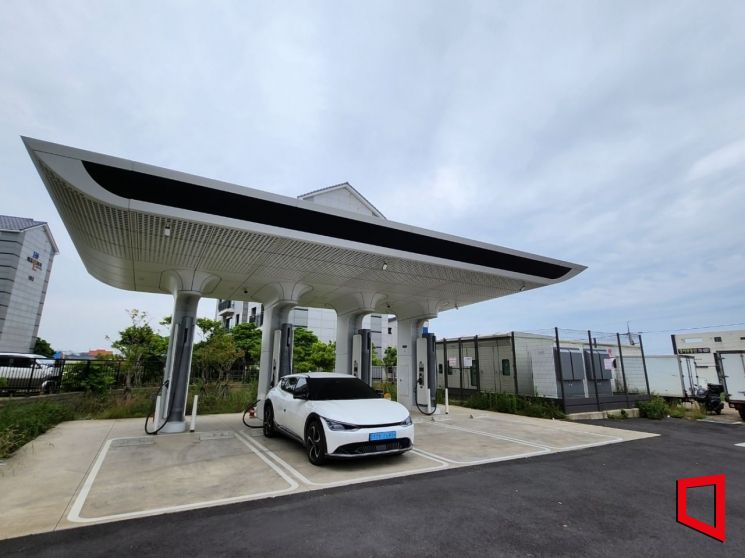
There are growing concerns that the inconsistency in eco-friendly vehicle toll reduction policies-such as for electric and hydrogen vehicles-across local governments nationwide is undermining both fairness and the coherence of environmental policy. In particular, Gwangju and Daegu only grant toll discounts if the vehicle is registered in their respective jurisdictions, meaning that vehicles from other regions are excluded from benefits even if they achieve the same emission reduction effects.
On the Gwangju ring road, a 50% toll discount is available only if the vehicle is registered in Gwangju. The owner’s place of residence is irrelevant, but discounts cannot be obtained via Hi-Pass. To receive the discount, drivers must enter through a regular lane and have their eligibility verified by a toll collector before payment.
Similarly, in Daegu, only vehicles registered in Daegu are eligible for toll reductions. However, unlike Gwangju, the discount is automatically applied when using Hi-Pass, making payment more convenient.
On expressways and in regions such as Seoul, Gyeonggi, and Busan, toll discounts are applied to eco-friendly vehicles regardless of registration location, and automatic Hi-Pass discounts are available. In contrast, Gwangju requires vehicle registration in Gwangju for such benefits, while Daegu’s system is similar but does allow for automatic Hi-Pass discounts.
Because each region has different requirements and procedures, whether an eco-friendly vehicle receives benefits depends on the area. There are many cases where eco-friendly vehicles are excluded from discounts due to these policies. First, any vehicle not registered with the local government in question is excluded. For example, an electric vehicle registered in Jeollanam-do cannot receive any benefits when using the Gwangju ring road, even though it is an adjacent region.
Additionally, for long-term rental or leased vehicles, even if the actual user resides in the area, they cannot receive discounts if the vehicle is not registered with the local government. The same applies to corporate vehicles: even if multiple employees use the vehicle for business purposes, there are no benefits unless it is registered in Gwangju or Daegu.
In particular, in Gwangju, even if the vehicle is registered locally, discounts are not applied when using Hi-Pass lanes. Drivers must enter through a regular lane, present a discount card to the toll collector, and pay accordingly.
Environmental expert Mr. A points out that registration-based restrictions do not align with the original intent of “rewarding environmental contributions.” He notes that electric and hydrogen vehicles improve air quality regardless of where they are driven, and differentiating benefits based on administrative boundaries ultimately reduces the policy to a form of local tax rebate.
Environmental experts emphasize the need for a nationwide, unified standard for eco-friendly vehicle toll reduction. In some privately operated roads in Seoul, Gyeonggi, and Busan, discounts are applied to eco-friendly vehicles regardless of registration, and Hi-Pass discounts are also supported. In contrast, local governments like Gwangju and Daegu impose registration restrictions, resulting in the unreasonable situation where the same eco-friendly vehicle receives different benefits depending on the region.
An Pyunghwan, a Gwangju city council member who formally raised this issue three years ago, said in a phone interview with this newspaper, “Environmental policy should not be confused with local interests. The lack of Hi-Pass discount support and the registration restrictions ultimately become obstacles to the spread of eco-friendly vehicles. Air quality does not stop at city or provincial borders, but the system is trapped within administrative boundaries.”
Council member An stressed, “Environmental protection is a nationwide task, but the system is fragmented by region. It is urgent for the government to develop measures so that benefits for eco-friendly vehicles are applied uniformly across the country.”
© The Asia Business Daily(www.asiae.co.kr). All rights reserved.
![Clutching a Stolen Dior Bag, Saying "I Hate Being Poor but Real"... The Grotesque Con of a "Human Knockoff" [Slate]](https://cwcontent.asiae.co.kr/asiaresize/183/2026021902243444107_1771435474.jpg)















