"Explained Since April," Says Government
Opposition Criticizes Taiwan’s Clarification
"Final Tariff Rate for Food Products May Reach 26.7%"
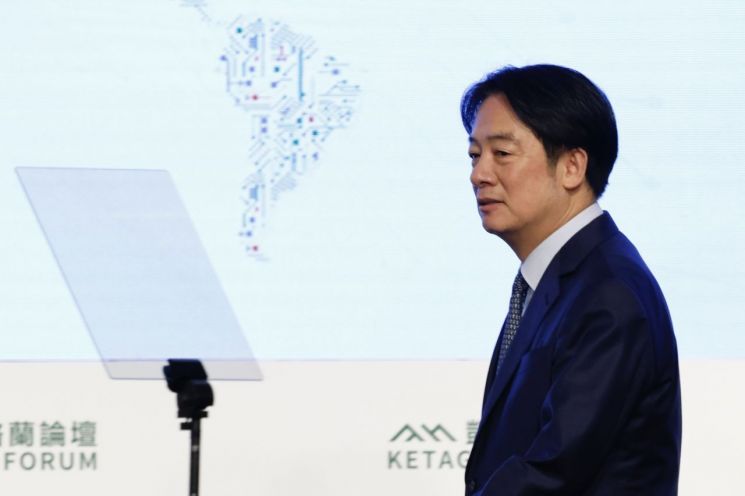
As of August 7, the 20% reciprocal tariff imposed by U.S. President Donald Trump on Taiwan took effect, sparking controversy in Taiwan over the interpretation of the new U.S.-Taiwan reciprocal tariff rate, following similar debates in Japan. While the Taiwanese government stated that it had previously explained the U.S. policy of adding a 20% tariff on top of the existing rate, opposition parties responded by insisting that a more detailed explanation, one that meets public expectations, was necessary.
According to Taiwanese media outlets such as United Daily News and China Times on August 11, the Office of Trade Negotiations (OTN) under Taiwan's Executive Yuan announced late on August 8 that the reciprocal tariff applied to Taiwan was not just 20%, but rather the sum of the existing tariff and the additional 20%.
The OTN clarified that the 20% reciprocal tariff, which Taiwan is temporarily subject to, must be added to the existing Most Favored Nation (MFN) rate. For example, for Taiwanese machine tools, the existing MFN rate of 4.7% combined with the 20% reciprocal tariff results in a total tariff of 24.7%.
The Ministry of Economic Affairs' Bureau of Foreign Trade stated that as early as April 4, it had explained that the Trump administration's reciprocal tariff was to be added on top of the MFN rate. Yang Jenni, the chief negotiator of the OTN, also said that this method of calculating the reciprocal tariff had been explained in detail on April 16 and again on August 6.
According to Taiwan News, the MFN tariff rates are as follows: beverages and food at 6.7%, electronic materials at 0%, plastic products at 4.1%, machine tools at 4.0%, and molds at 2.6%. If the additional 20% tariff is imposed, the final tariff rate for beverages and food, for example, would rise to 26.7%.
Previously, the United States announced through the Federal Register and other channels that, for the European Union (EU), items with an existing tariff rate below 15% would have a cap set at a total tariff rate of 15%, and no additional tariffs would be applied to items with a rate above 15%. However, this policy did not include other trading partners such as Japan, Taiwan, or South Korea. South Korea, benefiting from the Korea-U.S. Free Trade Agreement (FTA), has an effective tariff rate of 0% on U.S. imports and was thus spared, but Japan and Taiwan, facing increased tariff burdens, were placed in a difficult position. In particular, Japan immediately protested, saying that the U.S. policy differed from what had been agreed upon during negotiations.
The fallout in Taiwan was significant. Huang Kuo-chang, chairman of the Taiwan People's Party, the second-largest opposition party, criticized the authorities for releasing information about the reciprocal tariff in what he called an "opaque" manner. Lawmakers from the main opposition Kuomintang also pointed out that the Executive Yuan's explanations were insufficient. Some lawmakers from the ruling Democratic Progressive Party noted that the public wanted to hear an accurate account of the situation, rather than simply being told that the government had previously mentioned the reciprocal tariff.
The Taiwanese business community expressed concern that, following recent exchange rate fluctuations, the increase in tariff rates would raise the cost of traditional Taiwanese industrial products by more than 10% compared to those from South Korea and Japan. As a result, they predicted that the loss of price competitiveness would cause orders for related products to shift to competing countries such as South Korea, Japan, and Singapore, potentially leading to higher unemployment and other problems. One expert noted that the tariff gap between Taiwan and Japan in the industrial and agricultural sectors ranges from 15% to 27%, raising concerns about a decline in price competitiveness.
In response to the controversy, the Foreign and National Defense Committee of Taiwan's Legislative Yuan announced that on August 14, it would summon the Minister of Foreign Affairs, deputy ministers from relevant agencies, and the deputy chief negotiator of the Executive Yuan's OTN to report on reciprocal tariffs between Taiwan and the United States and the impact of changes in the international situation.
Meanwhile, Ryohei Akazawa, Japan's Minister for Economic Revitalization and chief trade negotiator, traveled to Washington, D.C., on August 5. On August 7, Akazawa announced that, after meetings with U.S. Secretary of Commerce Howard Lutnick and U.S. Secretary of the Treasury Scott Besant, the two countries had agreed on Japan's interpretation of a "final tariff rate of 15%" regarding the disputed reciprocal tariff. However, according to the Washington Post, the White House did not issue an official statement on the matter.
© The Asia Business Daily(www.asiae.co.kr). All rights reserved.
![Clutching a Stolen Dior Bag, Saying "I Hate Being Poor but Real"... The Grotesque Con of a "Human Knockoff" [Slate]](https://cwcontent.asiae.co.kr/asiaresize/183/2026021902243444107_1771435474.jpg)















