Average Daily Sleep for Ages 9 to 17 is 7.9 Hours
"Structural Problems in College Entrance Exam-Centered Education"
One out of every three children aged 9 to 17 in South Korea feels that they do not get enough sleep, according to a recent survey.
Yonhap News reported on August 10, citing the "2023 Comprehensive Survey on the Status of Children: In-depth Analysis" released by the Korea Institute for Health and Social Affairs (KIHASA).
The institute surveyed 3,137 children nationwide between the ages of 9 and 17, finding that their average daily sleep duration was 7.9 hours. This is shorter than the amount recommended by the US National Sleep Foundation, which suggests 9 to 11 hours for children aged 6 to 13, and 8 to 10 hours for those aged 14 to 17.
While 65.1% of respondents said their sleep was sufficient, the proportion who answered "so-so" (22.0%), "not enough" (10.8%), or "not at all enough" (2.1%) added up to 34.9%, indicating a significant level of sleep deprivation.
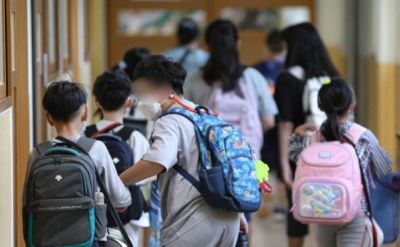
The primary cause of sleep deprivation was academics. In response to the question about the main reason, "private academies and tutoring" accounted for the largest share at 34.3%. When combined with "home study such as homework or online lectures" (15.2%) and "nighttime self-study" (10.8%), a total of 60.4% of responses were directly related to academic activities. Other reasons included "using mobile phones for SNS or chatting" (15.5%), "gaming" (14.1%), and "watching dramas, movies, or listening to music" (5.1%).
The research team pointed out, "Within the college entrance exam-centered education system, the structural problem of longer study hours and reduced sleep time persists."
A similar trend was observed in the 2024 Child Happiness Index survey on daily life time use. Children who felt academic pressure slept an average of 21 minutes less and spent 45 minutes more on academic activities compared to those who did not feel such pressure. In particular, time spent studying outside of regular school hours was 36 minutes longer, indicating that a significant amount of time is devoted to studying even after school.
Experts warn that insufficient sleep can negatively affect children's physical development and mental health. Children in their growth period need adequate sleep to improve concentration and memory and to maintain a healthy immune system. Prolonged lack of sleep can lead to decreased learning efficiency and emotional instability.
As a result, there is a growing call to reduce academic burdens and to create an educational environment where children can enjoy school life while learning. In particular, experts suggest that it is necessary to reduce dependence on private education and to establish institutional measures to limit nighttime study.
© The Asia Business Daily(www.asiae.co.kr). All rights reserved.
![Clutching a Stolen Dior Bag, Saying "I Hate Being Poor but Real"... The Grotesque Con of a "Human Knockoff" [Slate]](https://cwcontent.asiae.co.kr/asiaresize/183/2026021902243444107_1771435474.jpg)















