USTR Chief Highlights "Tariffs" and "Manufacturing Protection"
"Higher Tariffs Will Be Reimposed for Non-Compliance with Trade Agreements"
Jameson Greer, the United States Trade Representative (USTR) overseeing U.S. trade policy, has characterized the Trump administration's tariff- and manufacturing protection-focused strategy as a "new trade order" that is set to replace the existing World Trade Organization (WTO) system.
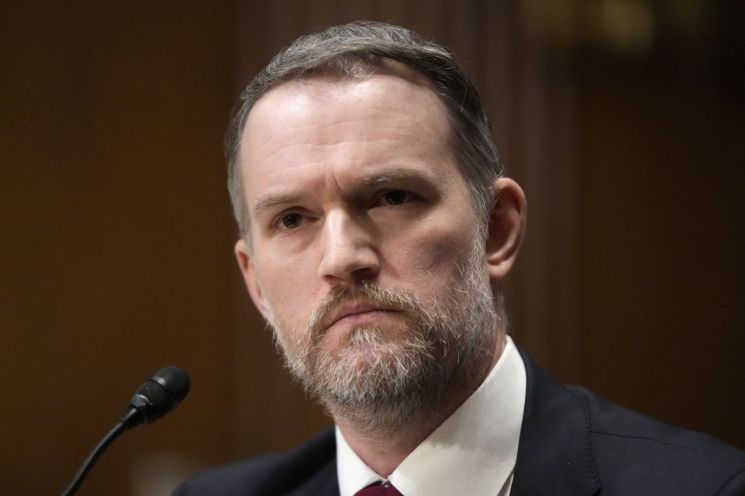
In an op-ed for the New York Times (NYT) on August 7 (local time), Greer stated that the Trump administration is seeking to reform the global trade order, which has worked against U.S. interests, including the Bretton Woods system established during World War II and the Uruguay Round that led to the creation of the WTO. He declared, "We are now witnessing the 'Trump Round.'" Greer used the term "round" to draw a parallel between the country-by-country trade negotiations that followed President Trump's announcement of reciprocal tariffs on April 2 and past multilateral trade negotiation rounds. He assessed that, through these efforts, "the United States has laid the foundation for a new global trade order."
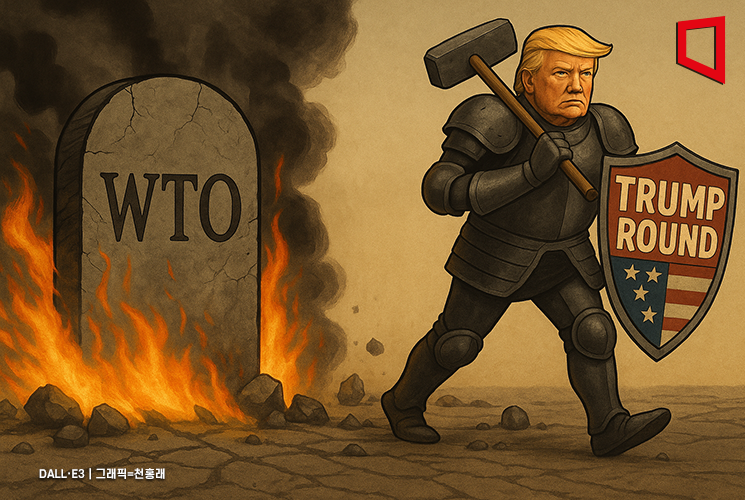
He said, "Under the WTO system, the United States lost manufacturing jobs and economic stability, while other countries failed to implement the reforms they needed." He added, "The biggest beneficiary was China, which operates under five-year plans and state-owned enterprises." He further pointed out, "There has been growing bipartisan dissatisfaction both within the United States and in the international community over the failure of various countries to meet their core national interests. The existing system is no longer sustainable."
Greer described the trade agreement announced by President Trump and the European Union (EU) on July 27 in Turnberry, Scotland, as "a historic agreement that is fair, balanced, and aligned with concrete national interests, rather than the vague aspirations of multilateral organizations." He said, "A new economic order was solidified in Turnberry, and this order is emerging in real time." He added, "Although less than 130 days have passed since the Trump Round began and the Turnberry system cannot be considered complete, this system is taking shape even at this very moment."
Greer explained, "President Trump fully understands that the United States can use its status as the world's most lucrative consumer market as a 'carrot,' and tariffs as a 'stick.'" He continued, "Through this approach, the United States has secured more access to foreign markets in just a few short months than it did through years of fruitless WTO negotiations."
He noted that many countries around the world recognize the need to realign their economic relationships with the United States. As evidence, he cited trade agreements concluded not only with the EU, but also with the United Kingdom, Cambodia, Indonesia, Japan, Malaysia, Pakistan, the Philippines, South Korea, Thailand, and Vietnam.
In particular, Greer highlighted South Korea, stating, "South Korea is accepting U.S. automotive standards along with a 15% reciprocal tariff." He noted that South Korea has committed to investing $35 billion in the United States, saying, "Such capital will allow U.S. manufacturing to regain leadership in strategic industries." He also added, "South Korea will help revive the U.S. shipbuilding industry, which has declined due to non-market competition."
Greer emphasized that the United States will enforce other countries' commitments made in trade negotiations. He stated that, instead of relying on the lengthy WTO dispute settlement process, "the United States will closely monitor the implementation of agreements and, if necessary, swiftly reimpose higher tariffs on non-compliant parties." He stressed, "The process of resolving issues may not always be smooth, but strong and decisive action is necessary to strengthen the U.S. industrial base."
© The Asia Business Daily(www.asiae.co.kr). All rights reserved.
![Clutching a Stolen Dior Bag, Saying "I Hate Being Poor but Real"... The Grotesque Con of a "Human Knockoff" [Slate]](https://cwcontent.asiae.co.kr/asiaresize/183/2026021902243444107_1771435474.jpg)
















