Deducting Support Payments from Basic Deductions
A Proposed Solution to the Universal vs. Selective Distribution Debate
Reducing Administrative Costs and Securing Tax Revenue
Whenever the government has implemented cash support policies such as COVID-19 disaster relief funds or livelihood recovery support payments, there has always been debate over whether to distribute them universally or to differentiate based on income. In relation to this issue, a tax law has been proposed in the National Assembly that would adopt universal payment as a principle, but selectively recover the funds by deducting them from the basic tax deduction amount.
According to the National Assembly's legislative information system on August 8, Min Byungdeok, a lawmaker from the Democratic Party of Korea, has proposed an amendment to the Income Tax Act. The amendment stipulates that the amount equivalent to cash support payments, such as the recently distributed livelihood recovery consumption coupons, would be deducted from the basic deduction amount.
The amendment proposes that, during the calculation of the tax base, cash support payments be deducted from the basic deduction per person. For low-income earners, this would result in little or no additional tax burden, while high-income earners would pay back a portion of the support as tax. Kim Shineon, a tax accountant at Ant Tax Corporation and an expert in tax law, explained, "According to this law, even those with a taxable income exceeding 1 billion won would only pay additional tax equivalent to 45% of the 250,000 won they receive," adding, "About 70-80% of people have a taxable income below 50 million won, and they would either have no extra tax burden or only pay a small portion."
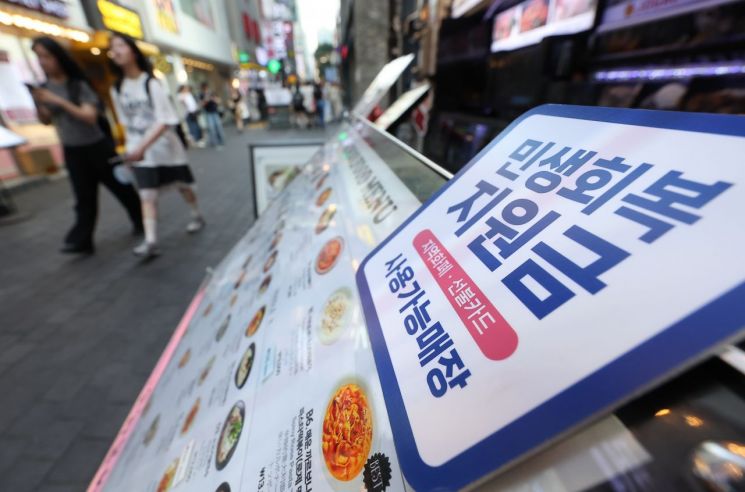
Whenever livelihood recovery support funds have been distributed, issues have arisen regarding the fairness and difficulty of establishing selection criteria, administrative costs, and backlash from high-income groups.
This new approach, which deducts part of the support payment from the basic deduction, can avoid unnecessary controversy. In addition, it eliminates the extra administrative costs required to classify recipients for selective support and has the advantage of securing part of the support funds as tax revenue.
An official from Min's office stated, "Every time livelihood support payments are discussed, there has been controversy over whether to distribute them universally or selectively, but this amendment could put such debates to rest," adding, "Some have argued that this approach is akin to giving and then taking back, but since it is deducted from the income deduction, unnecessary controversy can be avoided."
© The Asia Business Daily(www.asiae.co.kr). All rights reserved.
![Clutching a Stolen Dior Bag, Saying "I Hate Being Poor but Real"... The Grotesque Con of a "Human Knockoff" [Slate]](https://cwcontent.asiae.co.kr/asiaresize/183/2026021902243444107_1771435474.jpg)















