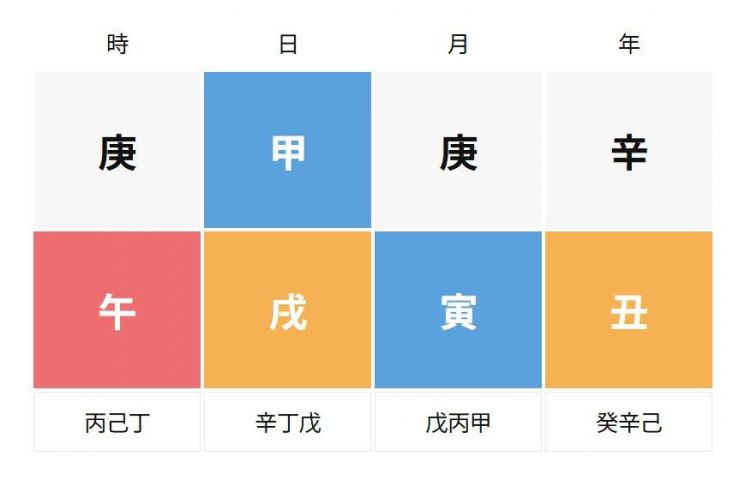
 [Choi Hwajung's Four Pillars of Destiny generated by entering her birthdate and the hour of the Horse]
We have analyzed the Four Pillars of Destiny (Saju Palja) of Choi Hwajeong, an actress and TV personality, based on the birth date and time registered on Namuwiki.
What is Choi Hwajeong's innate Day Stem (Ilgan)?
The Day Stem is [Gapmok (甲木)].
This symbolizes pillars, main beams, and large fruit-bearing trees that grow tall and strong.
It can also represent loud sounds like thunder and lightning.
People with this element tend to have a dynamic spirit,
possessing planning ability, creativity, and initiative,
and often have a strong desire to become a leader or a person in charge.
They have a tendency to want to be at the top,
and feel satisfied only when they are at the forefront.
With integrity, decisiveness, sincerity, and an active nature,
if you can control excessive competitiveness and self-confidence, you have all the qualities needed to become a leader of a group.
However, when Gapmok (甲木) is not controlled,
it can lead to difficulty adapting to organizational life, and as a result, many end up starting their own businesses rather than working for others.
Is Choi Hwajeong's Day Stem strong (Shingang) or weak (Shinyak)?
The Day Stem is [very strong].
The most fundamental factor in evaluating a good Four Pillars of Destiny is having a strong Day Stem.
There are many advantages to having a strong Day Stem.
Of course, this does not mean that everything in life will be easy.
You will still encounter many difficult and fateful events in life.
However, such hardships will make you stronger and help you grow significantly.
When good fortune comes, you can achieve greater success than others.
A strong Day Stem means you have the fundamental strength to overcome difficulties.
What is Choi Hwajeong's Day Pillar (Ilju)?
The Day Pillar is [Gap-Sul (甲戌)].
This indicates a direct, critical, and self-righteous nature, which can sometimes lead to disadvantages.
Many with this configuration are independent and have sharp intellects.
They also tend to have good artistic sensitivity.
It is important to always be cautious of turbulence caused by relationships with the opposite sex.
There may be many ups and downs in married life.
Because there is a possibility of separation, late marriage is considered preferable.
For women, having a career is beneficial for family life as well.
What is Choi Hwajeong's Gyeokguk (structure)?
The power of Bigyeon (比肩) is at work.
The element of the same energy as the Day Stem is present in the monthly order,
so people with this configuration are generally very self-centered.
Although some may become excessively stubborn and self-righteous, most are steadfast and do not let others sway their opinions.
They have the ability to manage wealth and status without difficulty, leading to steady accumulation or personal success.
They are outstandingly sociable.
They have a talent for gathering people and maintaining good relationships.
However, they may display a dual attitude, being forceful and self-righteous toward those who think differently or do not agree with them.
They pursue an independent lifestyle and value freedom, disliking relying on others.
On the other hand, if their energy is disrupted by clash (Chung) or combination (Hap), they may lack decisiveness and become dependent on others, leading to sudden personality changes.
They tend to maintain trust in someone once they believe in them, making them vulnerable to betrayal.
They may have difficulty clearly defining rights and obligations in documents,
which can sometimes lead to financial trouble or being cornered due to loans or guarantees, so caution is needed.
As the saying goes, "Gunbijeongjae (群比爭財),"
there may be situations where siblings fight over wealth.
In severe cases, this can lead to estrangement between siblings, living apart as if they were strangers.
If the wealth star (Jaeseong) is too weak in the Four Pillars, the relationship with the father may be distant.
This can manifest in various ways: being separated from the father at a young age, having a poor relationship even if living together, or in severe cases, the father may pass away early.
In such cases, there is often misfortune in forming a connection with wealth.
If only Bigyeop (比劫) is strong in the Four Pillars,
there will be problems in relationships with the opposite sex, regardless of gender.
This is not necessarily due to personal shortcomings, but rather because of excessive self-consciousness.
In any case, for this structure to bring wealth and status, there must be a strong wealth or official star (Jaegwan) in the Four Pillars.
Choi Hwajeong's Four Pillars are influenced by the power of Bigyeon (比肩), but have been transformed into a Pyongwanggyeok (偏官格) structure.
Depending on the case, Pyongwanggyeok is also called Chilsalgyeok (七殺格).
Chilsal (七殺), meaning "seven killings,"
has a rather ominous meaning, signifying that changes in destiny can be dramatic.
Below are the general characteristics of people with this structure.
In short, it symbolizes wildness. Like a rough, unpolished stone that can become a gem if properly refined.
They have a basic personality that does not yield to injustice and tries to overpower others head-on. They tend to be quick-tempered, but have strong leadership qualities, being tough toward the strong and lenient toward the weak. Sometimes, this can lead to looking down on others.
If Pyongwanggyeok is well-controlled, it suits professions that determine the fate of others, such as judges, soldiers, or police officers.
If not well-controlled, it is usually called Chilsalgyeok, and can result in a problematic personality, so caution is advised.
They are versatile and have a strong competitive spirit in everything.
They are strong in confrontation and sometimes use any means necessary to achieve their goals, even resorting to unscrupulous tactics.
Their independence and drive are unmatched.
If the Inseong (印星) is strong in the Four Pillars,
they have dignified conduct and authority, but it is important to cultivate patience.
If Bigyeop (比劫) is strong in the Four Pillars,
they tend to work in jobs that require the help of siblings or colleagues, but for men, relationships with their wives are generally distant, and greed for wealth can lead to misfortune, so caution is needed.
People with this structure often live very contrasting lives depending on the composition of the other elements. Some achieve great authority and status, while others may live in poverty or even die young.
Personality can also vary, from those who value etiquette and order to those who are despised for their unruly character.
If the use of Sik-Sang (食傷) is appropriate in the Four Pillars,
they protect the weak, overpower the strong, and use quick thinking and adaptability to enhance their value. This is why jobs in prosecution or police are suitable.
If they use the official star (Gwan),
they become goal-oriented individuals who mostly lead successful lives.
Arrogance is the root of misfortune, so caution is needed.
Now, let's look at the phenomena that appear when the composition of this Pyongwanggyeok structure is not good.
These are only examples of what can happen if the Four Pillars are poorly composed, not necessarily applicable to this particular Four Pillars.
If the Day Pillar is too weak,
there is a lack of confidence in everything, frequent minor illnesses, and in severe cases, chronic diseases or even disability. Sometimes, their spiritual energy is stronger than others.
They may be overly boastful, lack perseverance, and have difficulty bringing things to a conclusion, leading to an unsettled life.
They may have lofty ideals but lack the means to overcome reality, resulting in constant fatigue and health issues.
▶ Visit "Asia Economy Saju·Fortune" for more destiny readings
Which element is lacking in Choi Hwajeong's Four Pillars?
The lacking element is [Inseong].
For both men and women, Inseong represents status, honor, and the spirit of learning.
For both genders, Inseong also signifies the mother.
For both men and women, Inseong represents documents or writings.
If Inseong is absent from the Four Pillars, it is natural to have problems with the above aspects.
If Inseong is strong, there is a good relationship with the mother.
Those with a strong and solid Inseong usually study well and have literary talent.
If Inseong is weak in the original Four Pillars, unless the luck cycle brings Inseong, it is difficult to enjoy these benefits.
Inseong is the spirit that helps you and is a support in difficult times.
If Inseong is absent, you may often feel loneliness and solitude.
Without Inseong, you are likely to be perceived as stingy.
Which elements are strongly present in Choi Hwajeong's Four Pillars?
The powers of Bigyeop (比劫) and Sik-Sang (食傷) are strongly present.
Bigyeop (比劫) here does not mean "cowardice" as in the common usage.
When this power is strong, the sense of self becomes very strong.
With a strong sense of self comes clear subjectivity and strong independence.
Despite a strong sense of self, sociability is also excellent.
Therefore, there are many people around, and you have good interpersonal luck,
and there is always someone to help you in difficult times.
However,
this can also manifest as unnecessary pride or a tendency to force others to yield, leading to losses due to unnecessary trouble.
If this power is excessive, relationships with the father may not be good, as the desire for independence is strong. For women, relationships with mothers-in-law may not be smooth.
Both men and women tend to have difficulties in relationships with the opposite sex.
Especially for women, this power can cause troubles with the spouse even after marriage.
They have a strong spirit to fight through adversity, and are the type to find strength in difficult times.
They tend to have a gambling spirit and may have tendencies toward jealousy or suspicion, so it is crucial to marry someone who can be completely trusted for success.
They often achieve great success at the right time, but their fortune tends to fluctuate sharply, so arrogance must be avoided. The rise can be steep, but so can the fall.
When Bigyeop (比劫) is the dominant power in determining destiny, harmony with those around you is the key to success in all matters.
If you can blend in with those around you rather than asserting yourself, you can expect great success.
Sik-Sang (食傷) here is unrelated to the common expression of being "fed up."
This power symbolizes activity, fortune related to food, and creativity.
Being active naturally leads to abundance, and seeing and hearing much leads to an outstanding ability to create new things.
While everyone has some talent, those with strong Sik-Sang are said to have particularly unique abilities.
However,
excessive talent can lead to laziness or an overly playful nature, manifesting as a preference for leisure activities.
Nevertheless, this power is the source of wealth.
With a creative mind, talent, and an active nature, financial fortune naturally follows.
Therefore, there is no particular need to worry about making a living.
For women, if this power is too strong, they may lack luck with husbands or end up supporting their families on their own.
Being smart and clever, they also like to dress up and have a strong desire to showcase their talents.
Sometimes, what they say without much thought can unintentionally hurt others.
Success or failure can come through words or writing.
Many have excellent eloquence.
If you rely solely on your own talent and turn those around you into adversaries, you will inevitably suffer misfortune.
In any case,
having the power to determine your destiny through outstanding talent is a blessing.
If you find a field in life to devote your talents to, you are guaranteed a happy life.
Does Choi Hwajeong's Four Pillars have any Clash (Chung) or Combination (Hap)?
In Lee Soogeun's Four Pillars, there are no Clash or Combination elements.
The absence of Clash and Combination has two meanings.
First,
it means that there are relatively fewer storms in life.
Of course, changes and fluctuations in life due to the influence of major or annual luck cycles are natural. However, there are relatively fewer major unexpected events or upheavals in life.
This is the same reason why it is said that it is good for the Four Pillars to have no Punishment (Hyeong), Clash (Chung), or Combination (Hap). The potential for negative interpretations is greatly reduced.
Second,
because the fortune is relatively smooth, there may be a lack of intensity in life.
Some may think that living without unexpected incidents is good, regardless of whether life is intense or not.
This, of course, depends on individual perspectives.
In any case, it is desirable that the elements present in the Four Pillars are fulfilling their roles well.
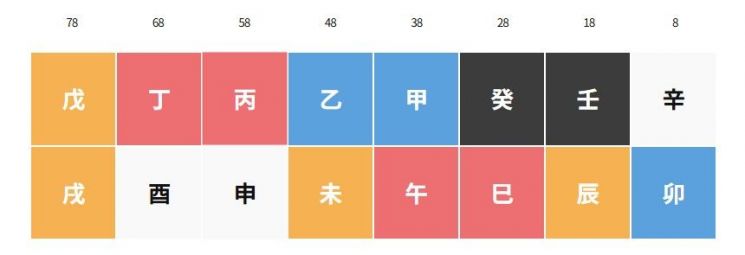
When are the major fortune periods for Choi Hwajeong?
The period when strong financial luck enters the major fortune cycle is between the ages of 18 and 27, and between 48 and 57.
The period when strong romantic luck enters the major fortune cycle is between the ages of 58 and 77.
The period when strong career luck enters the major fortune cycle is between the ages of 58 and 77.
What careers are suitable for Choi Hwajeong's Four Pillars?
- Brokerage or intermediary work dealing with many people.
- Employee at a large corporation.
- If talented in entertainment, work in the entertainment industry.
- Self-employment is also possible.
- Work related to government or public organizations.
- Professions such as doctor, lawyer, journalist, and other freelance careers are also suitable.
What special stars (Shinsal) are present in Choi Hwajeong's Four Pillars?
- Cheoneulgwiin (天乙貴人)
Cheoneulgwiin is also known as Okdang-gwiin or Cheoneun-gwiin.
People with Cheoneulgwiin in their Four Pillars
have a fair and upright character, face few disasters in life, and are said to be saved by a benefactor even in life-threatening situations.
Depending on the composition of the Four Pillars, they may become famous for their writing or become a master to many due to outstanding talent.
They have good fortune with food and achieve wealth, rank, and fame, making this one of the most auspicious stars.
- Hongyeomsal (紅艶煞)
Hongyeomsal is an inauspicious star that indicates vanity and a fondness for pleasures.
Regardless of gender, it means giving affection to someone other than one's spouse.
For men, it means having multiple wives; for women, unless in the entertainment or nightlife industry, it can mean having a child with another man, which is considered an unpleasant star.
It usually does not manifest in ordinary people, but is often seen in those working in entertainment or nightlife industries.
- Geonrok (建祿)
Geonrok, also known as Im-gwan, means taking office or entering a government post.
It is an auspicious star that signifies health and wealth.
If the Four Pillars are well composed, it brings comfort at home, good fortune in official career, and a peaceful life.
- Hyeoncheumsal (懸針煞)
If this star works positively, it brings success in the medical, military, or clothing manufacturing industries.
If negative, it can lead to frequent injuries, and in severe cases, gunshot or stabbing wounds, or accidents.
- Gokgaksal (曲脚煞)
This star indicates that one may experience bone fractures or skeletal issues due to accidents or illness at least once in life. It can also cause neuralgia.
Summary
- Corresponds to a mixture of official and killing stars, leading to complex relationships with the opposite sex, but lives a dignified life due to strong personal energy.
- Born with the potential to become at least wealthy, if not extremely rich.
▶ Visit "Asia Economy Saju·Fortune" for more destiny readings
※ This analysis is based on the birth date and time available online and interpreted using the traditional Manse calendar algorithm. If the birth date and time are different, the analysis may not be accurate.
※ The analysis of Choi Hwajeong's Four Pillars is not based on an exact birth time. There are many variables that can change the interpretation, such as combinations and clashes of heavenly stems and earthly branches, as well as the analysis of the five elements.
© The Asia Business Daily(www.asiae.co.kr). All rights reserved.
![Clutching a Stolen Dior Bag, Saying "I Hate Being Poor but Real"... The Grotesque Con of a "Human Knockoff" [Slate]](https://cwcontent.asiae.co.kr/asiaresize/183/2026021902243444107_1771435474.jpg)
















