19.9 Billion Won in Government Funds Allocated for Priority Support to Buk-gu and Gwangsan-gu
Emergency Restoration and Disaster Relief Funds Provided Separately in July
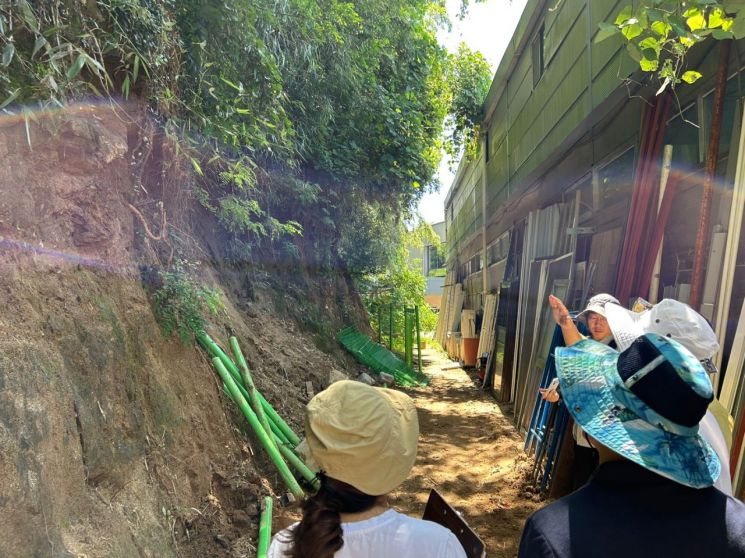
The Gwangju city government announced on July 31 that it will urgently distribute 1.99 billion won in disaster response funds, allocated by the central government, to local districts in order to swiftly restore damage caused by the recent record-breaking heavy rainfall and to support displaced residents.
The central government, on the previous day, urgently allocated a total of 24.6 billion won in disaster response funds to seven cities and provinces nationwide, including Gwangju, and assigned 1.99 billion won to Gwangju city. Unlike previous years, this allocation was made in advance, prioritizing urgency before the final damage assessment was completed.
The government comprehensively considered the damage status and the necessity for restoration, and allocated 1.57 billion won to Buk-gu and 420 million won to Gwangsan-gu as a priority. These funds will be used for support payments for the restoration of private facilities such as flooded homes, as well as for emergency restoration and restoration design costs for public facilities such as roads and rivers.
In addition to this emergency allocation, the city has also provided 1 billion won in emergency restoration funds (distributed on July 31) and 180 million won from the disaster relief fund (distributed on July 25) to local districts to accelerate practical recovery efforts.
Mayor Kang Gijung has been personally inspecting major sites such as Yuchon Bridge, Nongseong Underpass, Sinan Bridge, Yangdong Market, and the construction site of Metro Line 2 since immediately after the heavy rainfall damage occurred.
Mayor Kang stated, "We will concentrate administrative resources on rapid restoration and systematic support so that citizens can return to their daily lives as soon as possible," and added, "We will do our utmost to cooperate with the central government for the designation of special disaster zones and the establishment of fundamental recovery measures."
On July 17 alone, Gwangju experienced a record-breaking 426.4mm of rainfall in a single day, marking the highest precipitation since weather observations began in 1939. As of July 30, the damage in the Gwangju area was tallied at: two deaths, 286 households and 416 people displaced, and 3,407 cases of facility damage (410 public, 2,997 private). The emergency restoration rate stands at 70.17%.
Meanwhile, the city plans to conduct a damage assessment and establish a recovery plan in cooperation with the Central Joint Investigation Team, and will request additional financial support from the Ministry of the Interior and Safety.
© The Asia Business Daily(www.asiae.co.kr). All rights reserved.
![Clutching a Stolen Dior Bag, Saying "I Hate Being Poor but Real"... The Grotesque Con of a "Human Knockoff" [Slate]](https://cwcontent.asiae.co.kr/asiaresize/183/2026021902243444107_1771435474.jpg)















