Russians Traveling More to Italy and France
Number of Visas Issued in Each Country Also on the Rise
Ukraine: "European Travel Privileges... Growing Security Concerns"
Although various European countries have imposed numerous sanctions on Russia since the outbreak of the war in Ukraine, the number of Russian tourists visiting Europe has actually increased. On the 27th (local time), Yonhap News quoted the British daily The Telegraph, reporting that, according to Eurostat, the statistical office of the European Union (EU), the number of nights booked by Russians in major EU countries such as France and Italy increased last year.
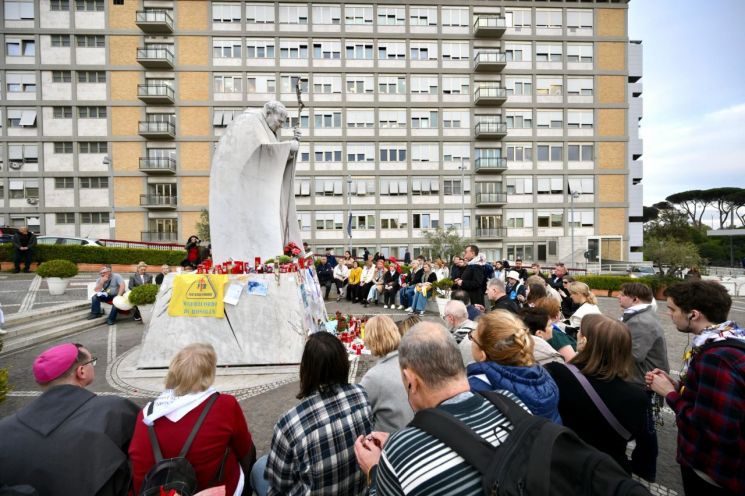 In March, Russian pilgrims gathered in front of a hospital in Rome, Italy, where Pope Francis was hospitalized at the time. Photo by EPA Yonhap News
According to the statistics, the annual number of nights booked by Russians in Italy reached 321,678, marking an 18.9% increase from the previous year?the highest growth rate in Europe. In Hungary, which is known for its pro-Russian stance, the figure increased by 13%, while in France it rose by 7.8%. Spain, which had been considered more popular among Russians than France, actually saw a 3.6% decrease in bookings compared to the previous year.
The number of visas issued to Russians has also risen. According to the media outlet's analysis of Schengen visa issuance data (Schengen being the free movement area established to facilitate travel within Europe), Italy issued approximately 152,000 visas to Russians last year, an increase of 19,000 from the previous year. France issued about 123,000 visas, up by 25,000, and Spain issued 111,000 visas, an increase of 15,000 from the previous year.
This situation has immediately sparked complaints from Ukraine. Vsevolod Chentsov, Ukraine's ambassador to the EU, stated, "The statistics showing an increase in the number of visas issued to Russian citizens and the number of Russian tourists heading to EU countries are truly astonishing." He further argued, "Given the rise in cyberattacks, acts of sabotage, and various activities by Russia aimed at undermining European democracy in EU member states, it is concerning that Russian citizens can so easily enjoy the benefits of traveling in Europe." He added, "Continuing to ignore this situation is shortsighted," stressing, "This is a matter of European security."
William Browder, a British anti-Putin activist, asserted, "Russians should not be allowed to enter Europe unless they can prove during their visa interview that they oppose the Putin regime." He emphasized, "France, Italy, and Spain should not be issuing visas to Russians."
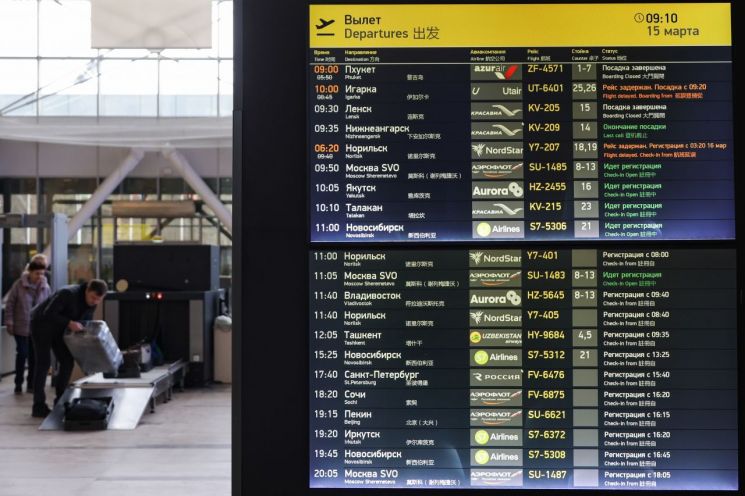
After Russia's invasion of Ukraine, the UK and the EU banned Russian airlines from entering European airspace, causing the number of Russian tourists to plummet compared to previous years. However, dozens of flight routes via countries such as T?rkiye, Georgia, and Serbia are still operating, making it impossible to completely prevent Russians from entering the Schengen area. Russian tourists wishing to travel to Rome, for example, can simply transfer flights in T?rkiye or the United Arab Emirates (UAE).
However, even after arriving in Europe, Russians find it difficult to use their domestic bank cards due to economic sanctions. As a result, it is known that they typically exchange large amounts of euros at their transit points. Activist Browder told the media, "Russians should never be allowed to enjoy Europe's privileges and resources while simultaneously supporting Putin's war," adding, "Visas should not be issued to wealthy individuals who support (Russian President Vladimir Putin)."
The increase in Russian tourism in countries such as Italy and France has also drawn complaints within the EU. Previously, Czech Foreign Minister Jan Lipavsky stated, "It is deeply concerning that some EU countries are normalizing transactions with big-spending Russian tourists while Ukraine is suffering under a brutal invasion," and called for a halt to the processing of tourist visas across the entire EU.
In response, a spokesperson for the Italian Ministry of Foreign Affairs countered, "We regularly issue visas to Russian tourists who meet the requirements," and emphasized, "What we oppose is Russia's military operation in Ukraine, not the Russian people themselves."
© The Asia Business Daily(www.asiae.co.kr). All rights reserved.
![Clutching a Stolen Dior Bag, Saying "I Hate Being Poor but Real"... The Grotesque Con of a "Human Knockoff" [Slate]](https://cwcontent.asiae.co.kr/asiaresize/183/2026021902243444107_1771435474.jpg)

















