US and China May Extend Trade Truce by 90 Days in Stockholm
China Prioritizes Removal of Fentanyl Tariffs
Trump Warns of Tariff Sanctions on Purchases of Russian Oil
On July 27 (local time), CNN reported that ahead of the upcoming high-level US-China trade talks in Stockholm, Sweden on July 28-29 (local time), China has made the removal of the 20% tariff related to fentanyl its top priority. As the extension of the bilateral trade truce, set to expire on August 2, by 90 days is considered highly likely, there are also observations that China could use not only rare earth elements but also core supply chains such as drones and electric vehicle batteries as leverage in negotiations to pressure the US.
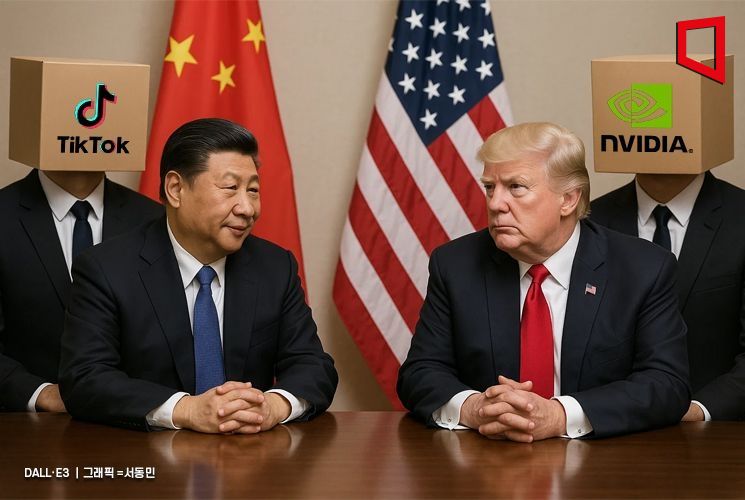
CNN, citing Chinese experts, reported that China's main concern in these negotiations remains the US tariffs on Chinese goods, with the removal of the fentanyl tariff being the top priority for the Chinese side.
Ha Weiwen, senior fellow at the Center for China and Globalization (CCG), told the state-run Global Times in an interview, "The core goal of this meeting is to produce tangible results based on the agreements reached in previous talks," adding, "The top priority is to resolve the remaining tariff issues, including those imposed by the US for fentanyl-related reasons."
China is also taking measures to push for the removal of fentanyl-related tariffs. Last month, China announced that it had newly added two types of fentanyl precursor substances to its regulated substances list and included nitazenes, a powerful class of synthetic narcotics, in its controlled substances list. Earlier, in March, US President Donald Trump imposed an additional 20% tariff on Chinese imports, claiming that China was not taking sufficient action to prevent the inflow of fentanyl into the US.
Currently, the tariffs imposed by the US on China largely consist of three categories: a 20% tariff imposed due to responsibility for fentanyl inflow, a 10% reciprocal tariff applied across major trading partners in April, and existing tariffs that have been maintained from before. According to the Peterson Institute for International Economics (PIIE), the combined result is that the current average tariff level on Chinese goods stands at 51.1%.
There are also predictions that China may further demand an easing of US export controls on technology. During the first Trump administration, sanctions were imposed on major Chinese technology firms, including Huawei, and former President Joe Biden later expanded the scope of these controls. Analysts suggest that, in order to induce the lifting of such controls, China may use strategic supply chains such as rare earth minerals, electric vehicle batteries, and drones as bargaining chips in negotiations.
Wu Xinbo, director of the Center for American Studies at Fudan University in Shanghai, emphasized, "In the past, China did not consciously use such cards, but now it is highly likely that China will take a more proactive approach," adding, "China's influence is not limited to rare earths; it also includes supply chains for drones and electric vehicle batteries."
In April, when the US-China trade war was at its peak, China introduced a new export permit system for seven types of rare earth minerals and magnets, weaponizing its dominance over supply chains. In response, President Trump imposed export controls on chip software, ethane, jet engines, and other items. During this process, the two countries engaged in a tariff war, imposing tariffs exceeding 100% on each other's goods without compromise. The conflict was narrowly resolved at the London talks in June, when China allowed the resumption of rare earth exports and the US partially lifted export controls on AI chips and other items.
Wu predicted that it is unlikely China will succumb to US tariff threats and halt imports of Russian or Iranian oil. However, he analyzed that the US could use this as leverage to extract cooperation from China regarding the war in Ukraine or negotiations with Iran.
US Treasury Secretary Scott Besant said in a July 21 interview with CNBC that the upcoming third round of high-level US-China trade talks will raise the issue of China's purchases of Russian and Iranian oil. This is interpreted as a continuation of President Donald Trump's earlier warning that countries continuing to import Russian crude oil (such as China and India) would face a 100% secondary sanction tariff. The US Senate is currently pushing for legislation to impose ultra-high so-called "secondary tariffs" on exports from countries that import Russian crude oil and related products.
Meanwhile, Hong Kong media outlet South China Morning Post (SCMP) reported on the same day, citing sources from both countries, that the two sides are expected to agree to extend the tariff truce by an additional 90 days at the Stockholm trade talks. According to SCMP, the two sides are expected to state their respective positions rather than prepare concrete agreements on key contentious issues.
© The Asia Business Daily(www.asiae.co.kr). All rights reserved.
![Clutching a Stolen Dior Bag, Saying "I Hate Being Poor but Real"... The Grotesque Con of a "Human Knockoff" [Slate]](https://cwcontent.asiae.co.kr/asiaresize/183/2026021902243444107_1771435474.jpg)















