Gyeonggi Province will conduct special inspections of hygiene-vulnerable facilities, such as meal delivery manufacturers, to prevent food poisoning during the heatwave.
This inspection will be carried out until August 1, targeting 67 facilities in the province that are considered at high risk for food poisoning. These include meal service facilities other than schools where suspected food poisoning has been reported, establishments with a history of violating the Food Sanitation Act, meal delivery manufacturers for non-school institutions, and youth training centers.
The main inspection items are: ▲ Compliance with standards for expiration dates, preserved food samples, and storage of ingredients (frozen/refrigerated); ▲ Compliance with temperature standards (frozen/refrigerated) for vehicles transporting ingredients; ▲ Management of personal hygiene, food utensils, and cleanliness of kitchens and cooking areas.
Businesses found in violation will be subject to administrative action, and non-compliant establishments will be re-inspected within six months.
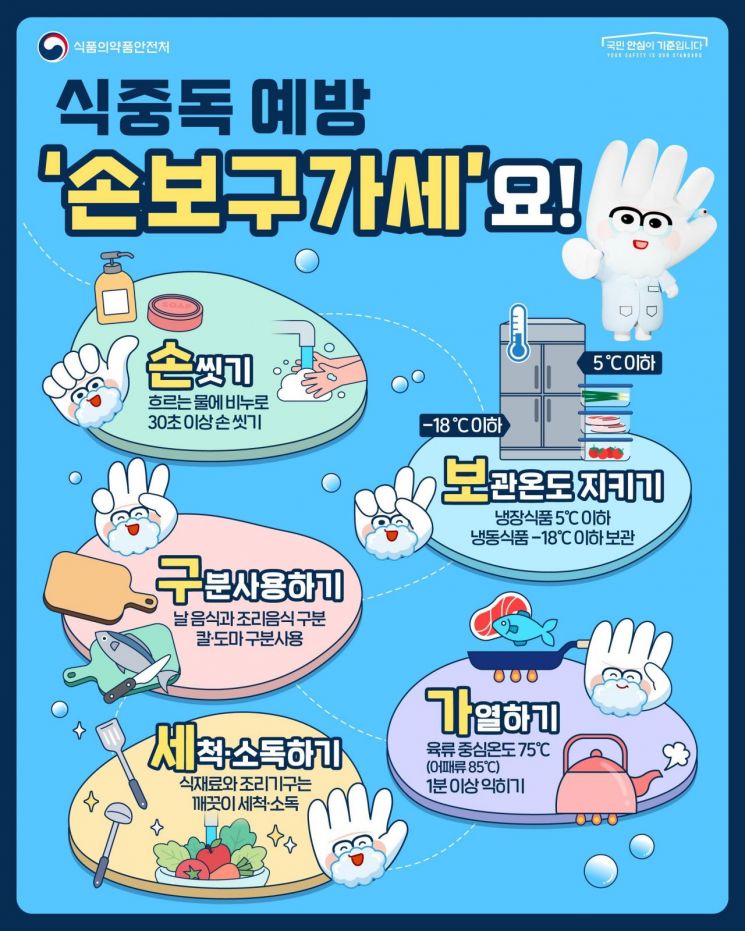
According to food poisoning statistics from the past five years, the facility with the highest number of food poisoning cases during the summer (June to August) was restaurants, with 33 incidents, accounting for 41.3% of the total. The leading cause of food poisoning was Salmonella, with 19 cases, representing 23.2%.
Since the main foods causing Salmonella are eggs and egg products, both restaurants and households should store eggs in the refrigerator immediately after purchase and ensure they are thoroughly cooked. In addition, care must be taken to avoid cross-contamination by not touching other ingredients, food, or utensils with hands that have come into contact with liquid egg.
Chicken, which is commonly consumed in summer, can also cause Campylobacter food poisoning if it is not fully cooked, or if water used to wash raw chicken splashes onto other ingredients, resulting in cross-contamination. Therefore, extra caution is needed during cooking and washing.
Jung Yeonpyo, head of the Food Safety Division of Gyeonggi Province, said, "Cases of food poisoning caused by delivered meals are increasing every year, so preemptive safety management is extremely important," and urged, "Please strictly follow the prevention guidelines at home and in businesses."
© The Asia Business Daily(www.asiae.co.kr). All rights reserved.
![Clutching a Stolen Dior Bag, Saying "I Hate Being Poor but Real"... The Grotesque Con of a "Human Knockoff" [Slate]](https://cwcontent.asiae.co.kr/asiaresize/183/2026021902243444107_1771435474.jpg)















