Domestic Concert Market Reaches 1.4 Trillion Won... Overseas Fans on the Rise
K-pop Concerts Face Health Issues, Technical Failures, and Heatwaves
"Government Should Establish Guidelines Such as Mandatory Insurance"
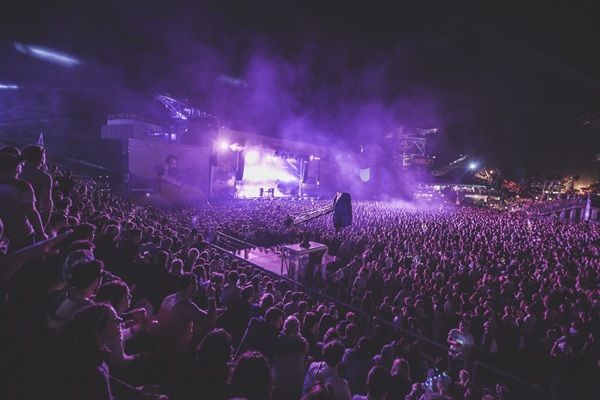
There has been a noticeable increase in cases where concerts are canceled without prior notice. As unexpected variables such as health issues, worsening weather conditions, and technical malfunctions have led to schedules being withdrawn right before performances, criticism of the consumer compensation system has also been growing.
Singer BoA canceled her 25th debut anniversary concert, which was scheduled for next month, due to a diagnosis of acute osteonecrosis. Daesung, formerly of Big Bang, canceled his Melbourne, Australia concert citing "unexpected technical and production reasons," while G-Dragon halted his Bangkok concert due to extreme heat and the risk of heatstroke.
There are also numerous cases overseas. Taylor Swift canceled her concert in Austria one day before the event due to a terror threat at the venue, and Celine Dion suspended her European tour due to health problems. The Steve Miller Band canceled their entire North American tour due to worsening weather conditions, resulting in fans who traveled to the venue on the day of the concert bearing the full cost of airfare and accommodation. A concert production company official explained, "As concerts grow in scale and stage technology becomes more sophisticated, there are increasing cases where the entire show is canceled if it is judged that the level of completion does not meet expectations."
◆Even if a concert is canceled, compensation for audience losses is difficult= The problem is that even if a concert is canceled, it is virtually impossible for the audience to expect compensation for incidental damages. When Adele's Las Vegas concert was postponed one day before the event in 2022, there was an outpouring of complaints from fans who could not get refunds for airfare and accommodation, and the situation is not much different in Korea.
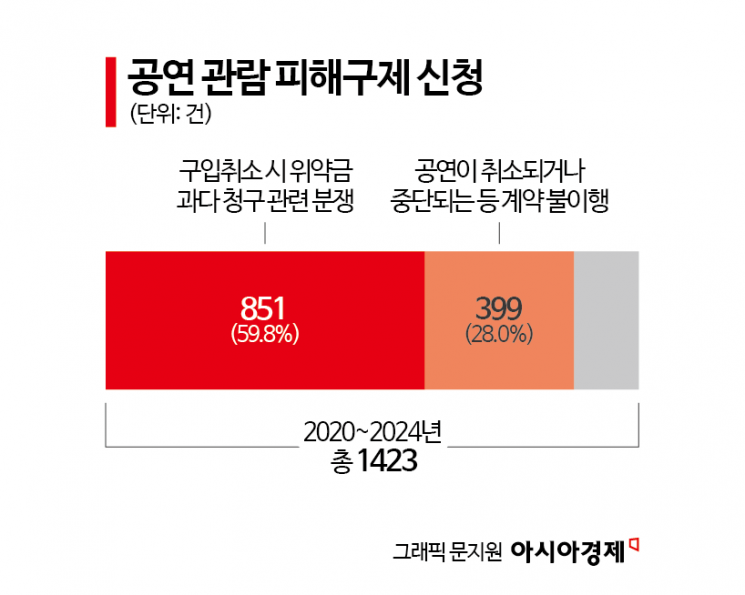
According to the Korea Consumer Agency, there were 1,423 applications for damage relief related to concert attendance over the past five years, with a 63% increase last year compared to 2023. Disputes over excessive penalty charges and unilateral cancellations accounted for 87.8% of all cases, indicating that most of the damage was related to the responsibility of the business operators.
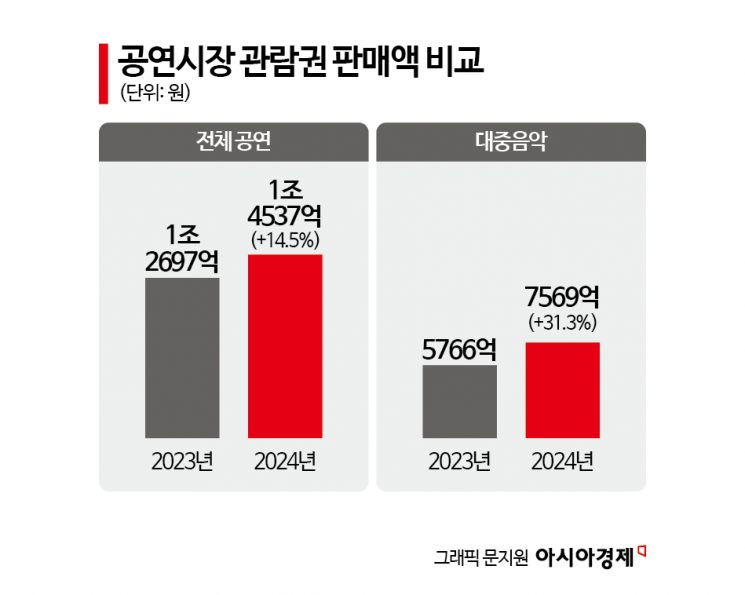
The concert market is growing rapidly. According to the Ministry of Culture, Sports and Tourism, ticket sales for performances in 2024 reached 1.4537 trillion won, a 14.5% increase from the previous year, and sales from popular music concerts reached an all-time high of 756.9 billion won. However, there are concerns that risk management systems are not keeping pace with the rapid growth of the industry.
Experts agree that as the concert industry has become a commercial service based on advance payments rather than a simple event, institutional measures such as the introduction of guarantee insurance or the establishment of minimum refund standards are urgently needed.
Cultural critic Kim Heonsik pointed out, "K-pop grew as a fan-centered service, but recently, as the scale of management companies has increased, the gap between artists and management has also widened." He added, "Especially since the pandemic, management capabilities have not kept up with the explosive demand for concerts." He further emphasized, "If, in the process of targeting casual fans and expanding the audience base, the trust of 'core fans' is lost, it could deal a major blow to the sustainability of the industry."
In particular, since K-pop concerts have a high proportion of overseas fans, there is a high possibility that consumer disputes could escalate internationally. A concert marketing company official expressed concern, saying, "Airfare and accommodation are often non-refundable, and if repeated damages accumulate, trust in K-pop artists could be shaken. This could even become a source of conflict between countries."
Kim also analyzed, "Recently, groups that have grown into global stars have been unable to cope with the existing management system, leading to repeated problems such as concert cancellations, health issues, and declines in content quality. This is not simply a matter of responding to variables, but reveals the structural limitations of the entire planning system." He stated, "Now, cultural policy needs to be reorganized from an industry-centered approach to a fan-centered perspective that focuses on consumer protection."
◆A new concert category should be added to the 'Consumer Dispute Resolution Standards'= However, there are limits to what can be achieved through the voluntary efforts of management companies alone. While some companies are notifying audiences in advance about the possibility of schedule changes, there is still no standard guideline that covers the entire industry. There is a growing call to standardize compensation criteria and establish procedural manuals through collaboration among ticketing agencies, consumer organizations, and the insurance industry.
Lee Eunhee, a professor of consumer studies at Inha University, advised, "The Ministry of Culture, Sports and Tourism should prepare guidelines to require business operators planning performances to purchase guarantee insurance. In the event of an unexpected concert cancellation, insurance should cover not only ticket refunds but also a certain level of compensation for damages." She added, "Like e-commerce, the concert industry, which is based on advance payment, must have at least basic consumer protection mechanisms in place."
Currently, most insurance policies purchased by concert production companies are limited to equipment damage or personal injury, and do not cover concert cancellations due to health issues or technical problems. There are also no established standards for refunds or compensation for incidental expenses such as airfare and accommodation.
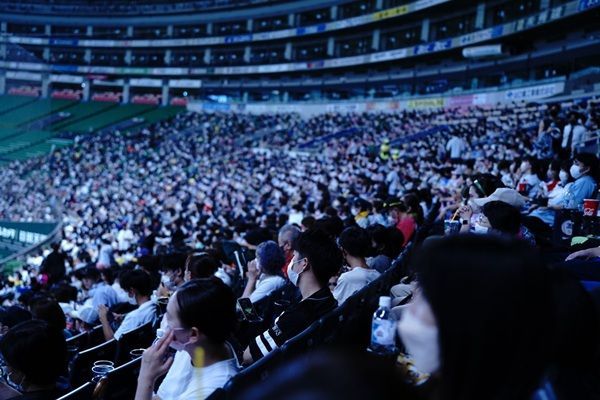
Of course, it is realistically difficult for management companies to fully compensate fans for transportation and accommodation costs incurred when traveling from overseas or other regions to attend concerts. Professor Lee emphasized, "While protecting consumer rights is important, it is also necessary to balance this with industry development. It is crucial to develop a feasible compensation model that takes this into account." She also suggested, "It is worth considering adding a concert category to the 'Consumer Dispute Resolution Standards,' which would set refund and compensation rates depending on the timing of the cancellation."
Some countries have already introduced related systems. In the UK, the 'Live Events Reinsurance Scheme' was introduced after the pandemic to provide compensation up to a certain amount if concerts are canceled due to external factors such as infectious diseases or weather conditions. In some regions of France and Germany, it is mandatory for organizers to purchase concert insurance. In contrast, in Korea, there are few insurance products that cover full concert cancellations, and there are no mandatory subscription regulations, so consumer damages continue to be repeated.
Recently, some fan communities have begun voluntarily collecting and sharing damage cases, but there are limits to pursuing collective lawsuits or legal action. Experts emphasize that a unified system should be established, including a platform for recording damages, standards for calculating losses, and insurance-linked compensation procedures. Now that K-pop concerts have become a global content, consumer protection is a task that must be addressed by the entire industry, not just individual management companies.
Professor Lee stated, "As the concert industry has grown, consumer protection systems must also evolve. It is urgent for the government to establish concrete guidelines and build an insurance system."
© The Asia Business Daily(www.asiae.co.kr). All rights reserved.
![Clutching a Stolen Dior Bag, Saying "I Hate Being Poor but Real"... The Grotesque Con of a "Human Knockoff" [Slate]](https://cwcontent.asiae.co.kr/asiaresize/183/2026021902243444107_1771435474.jpg)

















