About 3,800 Measles Cases Confirmed in Canada This Year
Experts Cite "Low Vaccination Rates and Vaccine Distrust" as Key Factors
The number of confirmed measles cases is surging in Canada, where a movement to avoid vaccinations is spreading.
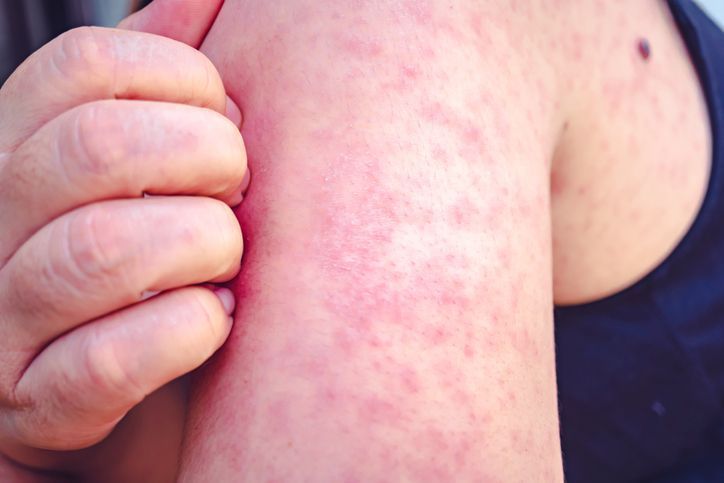
According to the BBC on July 21 (local time), there have been about 3,800 confirmed measles cases in Canada so far this year. Most of these cases involve children and infants. This figure is nearly three times higher than the number of confirmed cases in the United States, which has a population about nine times larger (approximately 1,300 cases).
Canada is currently the only Western country among the top 10 nations for measles outbreaks, as ranked by the World Health Organization (WHO) and the US Centers for Disease Control and Prevention (CDC), placing eighth overall. In particular, Alberta has the highest per capita measles incidence rate in North America.
The BBC noted, "This data raises questions about why measles is spreading more rapidly in Canada than in the United States," and pointed out, "Canada did not have a figure like US Health and Human Services Secretary Robert F. Kennedy Jr., who was previously hesitant about vaccines." While Secretary Kennedy once expressed skepticism about vaccines, he has recently acknowledged the safety of the measles vaccine.
Experts cite low vaccination rates and the spread of vaccine distrust after COVID-19 as the main reasons for the measles outbreak. Jana Shapiro, a researcher at the Vaccine-Preventable Disease Center at the University of Toronto, warned, "Infection may have been introduced by chance, but if vaccination rates are low, the virus will continue to spread." In fact, in southern Alberta, the number of measles vaccinations in 2024 has dropped by about half compared to 2019.
The measles outbreak in Canada began with a large Mennonite gathering in New Brunswick at the end of last year. The infection spread rapidly to southwestern Ontario, where vaccination rates are low, due to attendees who contracted the virus at the event. The BBC reported, "Some conservative Mennonite communities tend to avoid vaccination for religious and cultural reasons," and "most of the confirmed cases were among those who had not been vaccinated." Catalina Friesen, a healthcare worker active in the region, stated, "Since COVID-19, unfounded rumors about vaccine risks have spread, and distrust in the healthcare system is also high."
In Ontario, more than 200 new cases were reported each week, peaking at the end of April. Although the number of cases has since declined, Alberta has now become the new epicenter. Vivian Suttorp, the chief medical officer in the region, emphasized, "In my 18 years in healthcare, I have never seen a measles outbreak like this," highlighting the urgent need for vaccination.
The number of confirmed cases in Canada has now surpassed both the United Kingdom (about 3,000 cases as of 2024) and the United States. In particular, as of July 8, the United States had reported 1,288 confirmed cases, marking the highest number in 33 years.
Measles is a high-risk disease that can lead to pneumonia, encephalitis, and death, but the MMR vaccine is 97% effective at preventing it. However, following the "Freedom Convoy" protests in 2021 against mandatory COVID-19 vaccination, distrust of routine vaccines has also grown.
Currently, Alberta has lowered the eligible age for vaccination, and demand for vaccines is on the rise. Health authorities are encouraging vaccination through media reports and advertisements, but the response is said to be less enthusiastic than during the COVID-19 pandemic.
Morgan Birch, an Alberta resident who recently revealed that her four-month-old daughter was diagnosed with measles, said, "Measles is not a disease that a four-month-old baby should have to endure," expressing frustration and anger at those who refuse vaccination. She added, "We need to protect people who cannot get vaccinated themselves."
© The Asia Business Daily(www.asiae.co.kr). All rights reserved.
![Clutching a Stolen Dior Bag, Saying "I Hate Being Poor but Real"... The Grotesque Con of a "Human Knockoff" [Slate]](https://cwcontent.asiae.co.kr/asiaresize/183/2026021902243444107_1771435474.jpg)















