AI-Based Converged Robotics and Full-Cycle Battery Ecosystem
From Defense and Aerospace Components
Toward a Major Transformation into an Advanced Industrial City
Gumi City in Gyeongbuk has launched a comprehensive advanced industry strategy centered on three key sectors: robotics, secondary batteries, and advanced materials, marking the beginning of a major industrial landscape transformation.
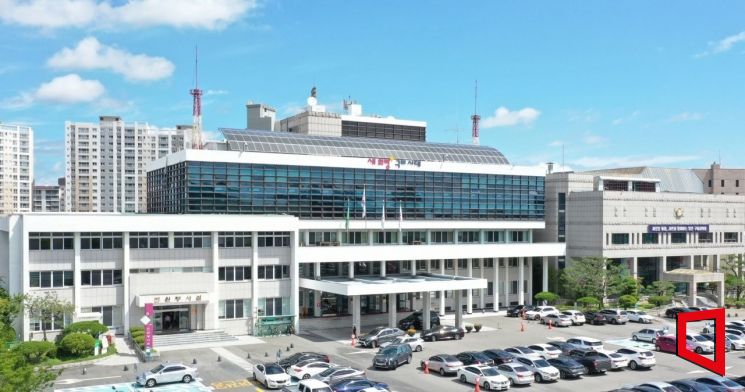
The city is breathing new life into its stagnant manufacturing sector and is concretely transitioning into a future-oriented industrial city that also encompasses energy welfare.
◆ Robotics Industry: Advancing as a Manufacturing Innovation Base Integrating AI
Since announcing its vision as an 'AI Advanced Robotics Convergence City' last year, Gumi has been consecutively selected for projects by the Ministry of Trade, Industry and Energy, emerging as a hub for next-generation robotics.
Through the 'Smart Transport and Logistics Autonomous Mobile Robot Platform Construction Project' (2023-2025, total budget of 12.3 billion KRW), the city has begun localizing parts and enhancing performance. The 'Global Robotics Production Base Support Project' (2024-2026, 1.5 billion KRW) is also facilitating technology development and overseas expansion for robotics companies.
Efforts to expand everyday robot services are proceeding in parallel, including the 'AI Service Robot Distribution Project' for small business owners (630 million KRW) and public facility guide robot demonstrations (400 million KRW). In June this year, Gumi was selected for the 'Robotics Flagship Regional Base Construction Project' (2025, 2.2 billion KRW), securing a foundation for convergence with secondary batteries, defense, and new airport logistics.
◆ Secondary Batteries: Establishing a Full-Cycle Industrial Ecosystem and Leading Used Battery Demonstrations
In the secondary battery sector, the core focus is building a full-cycle ecosystem from raw materials to reuse. With the operation of the LG-HY BCM cathode materials plant, research and development, certification, demonstration, and investment attraction have gained momentum.
The 'Secondary Battery Promotion Hub Center' (2023-2026, 30.9 billion KRW) provides infrastructure for testing, certification, and prototype production for raw materials and cathode materials, supporting companies in advancing their manufacturing processes.
In particular, the 'BaaS Demonstration Base Construction Project' (2023-2027, 27.1 billion KRW) is establishing a foundation for battery reuse by verifying the safety and reliability of used batteries. The main institution, KTR, is relocating its Daegu-Gyeongbuk headquarters to Gumi, thereby strengthening the regional research and development support system.
The nation's only multi-sector battery diagnostic platform for electric vehicles, ESS, agricultural machinery, and ships is also being established through the 'AI-Based Reused Battery Evaluation Project' (2025-2029, 23.4 billion KRW).
The 'Water-Based Electrode Manufacturing Integrated System Development' project (2025-2027, 9.36 billion KRW) is pursuing digital twin-based process advancement for the production of eco-friendly, high-quality electrodes.
◆ Advanced Materials: Upgrading from Semiconductors to Aerospace and Accelerating Technological Independence
The advanced materials and components industry is at the core of Gumi's strategy. The 'Artificial Graphite Testbed' (2022-2025, 24.4 billion KRW) serves as a demonstration platform for performance verification and prototype production of essential materials for semiconductors and secondary batteries, contributing to global supply chain stabilization and localization.
The 'Advanced Support Center' for the localization of high-tech rolls, key equipment parts for secondary batteries, is set to be completed in November (2023-2027, 20.1 billion KRW), and expansion into the defense and aerospace sectors is also underway.
The 'Carbon Material Components Lab Factory Construction Project' (2023-2026, 33.5 billion KRW) will enable the development and mass production testing of highly reliable components, making the transition to high value-added, material-based industries increasingly visible.
◆ Strengthening Energy Independence and Welfare: Accelerating the Transition to a Green City
Gumi established the 'Basic Energy Ordinance' last year and launched the 'Energy Committee' this year, laying the institutional foundation for a shift in energy policy.
Through the 'Renewable Energy Convergence Support Project,' renewable energy was supplied to 811 sites by last year, and this year the program is expanding to 141 sites with a total budget of 1 billion KRW. The city is also achieving tangible results in promoting the hydrogen economy.
Last year, supported companies achieved a 57% increase in sales, and this year, three companies are receiving a total of 300 million KRW in support.
Efforts are also being made to eliminate energy welfare blind spots. Expansion of city gas supply networks in unserved areas and the distribution of small LPG storage tanks in rural regions are being carried out simultaneously, with strengthened support for vulnerable groups.
◆ Comprehensive Investment in Talent Development and Equipment Infrastructure for Future Industries
Gumi is accelerating the development of future talent and equipment infrastructure based on AI and batteries, in line with the new government’s direction.
Initiatives such as the 'AI-Based Robotics and Software Convergence Talent Development Hub,' the 'Next-Generation Battery Electrode Manufacturing Equipment Testbed,' and the 'Demand-Driven Testing Infrastructure' aim to produce field-ready professionals and secure industrial application foundations.
Mayor Kim Jangho of Gumi stated, "To survive in the rapidly changing global industrial environment, proactive and bold industrial restructuring is essential," emphasizing, "We will transform Gumi into a core hub city for advanced industries in Korea, focusing on robotics, batteries, and materials."
© The Asia Business Daily(www.asiae.co.kr). All rights reserved.
![Clutching a Stolen Dior Bag, Saying "I Hate Being Poor but Real"... The Grotesque Con of a "Human Knockoff" [Slate]](https://cwcontent.asiae.co.kr/asiaresize/183/2026021902243444107_1771435474.jpg)















