To Fund the Joint Budget...
Concerns Over Double Taxation Expected
The European Union (EU) has announced plans to begin collecting a type of “contribution” from all large corporations within its territory starting in 2028.
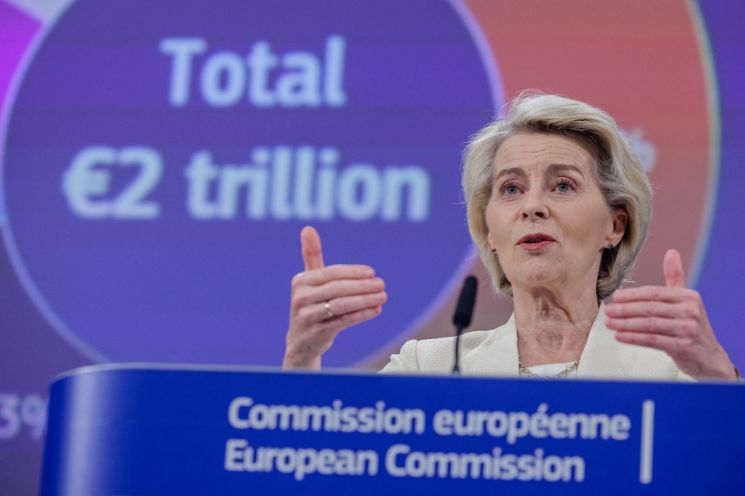
On July 16 (local time), the European Commission, which serves as the EU’s executive body, announced in the draft of its long-term joint budget, the “Multiannual Financial Framework (MFF) for 2028?2034,” that a new funding mechanism called the “Corporate Resource for Europe (CORE)” will be introduced.
CORE is designed to collect an annual fixed (lump-sum) contribution from all companies operating within the EU with annual net sales of at least 100 million euros (approximately 161.4 billion KRW). The Commission expects that the introduction of CORE will secure an average of 6.8 billion euros (about 1.1 trillion KRW) in funding per year, and has specified that its goal is to begin collecting these contributions from the start of the next MFF accounting period in 2028.
The Commission explained that companies with annual sales of 100 million to 250 million euros will be required to pay 100,000 euros (about 160 million KRW) per year; those with sales between 250 million and 500 million euros will pay 250,000 euros (about 400 million KRW); companies with sales between 500 million and 750 million euros will pay 500,000 euros (about 800 million KRW); and companies with sales exceeding 750 million euros will pay 750,000 euros (about 1.2 billion KRW).
The targeted companies are large enterprises that conduct business and sales within the EU, regardless of where their headquarters are located. As a result, not only major U.S. big tech firms, but also leading Korean companies with high sales in Europe, could be subject to this measure. Furthermore, since companies are already paying corporate taxes to the authorities of the relevant member states, this could effectively amount to double taxation, which is expected to spark controversy during the legislative process.
In addition to CORE, the Commission has indicated that new funding sources will include taxes on electronic waste and the introduction of a tobacco tax. It also plans to use revenues generated from the EU Emissions Trading System (ETS) and the Carbon Border Adjustment Mechanism (CBAM) as resources for the EU’s joint budget.
Through these measures, the Commission aims to increase the size of the next MFF while keeping the financial burden on each EU member state at its current level. This is seen as an effort to address concerns among member states about potential increases in their contributions.
The EU establishes its long-term community budget plan, the MFF, as a seven-year plan. This budget focuses on sustainable economic growth and enhancing competitiveness within the EU, and is used for the EU’s major policies, internal support programs, and administration. According to the current draft, the 2028?2034 MFF is set at 2 trillion euros (about 3,232 trillion KRW), representing an increase of nearly 800 billion euros (about 1,292 trillion KRW) compared to the 2021?2027 budget of 1.2 trillion euros (about 1,943 trillion KRW).
The Commission stated, “Such decisions regarding the EU’s long-term budget and revenue system will be discussed in the Council, where all member states participate unanimously, and will require the consent of both the European Parliament and the member states,” adding, “We will spare no effort to ensure a swift agreement can be reached.”
© The Asia Business Daily(www.asiae.co.kr). All rights reserved.
![Clutching a Stolen Dior Bag, Saying "I Hate Being Poor but Real"... The Grotesque Con of a "Human Knockoff" [Slate]](https://cwcontent.asiae.co.kr/asiaresize/183/2026021902243444107_1771435474.jpg)















