Israeli Government and Military Clash Over Construction Costs
A City for 2 Million Residents... "Can Be Built in 3 to 5 Months"
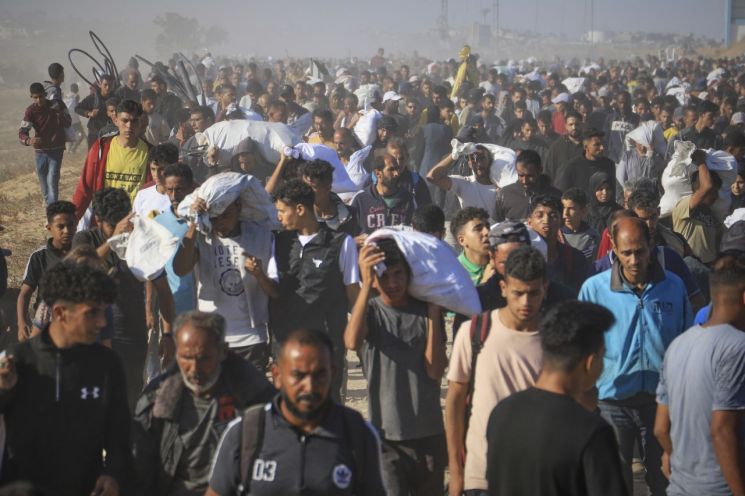 Refugees who entered Rafah in the southern Gaza Strip of Palestine are receiving food distributed by the Gaza Humanitarian Foundation (GHF). Photo by AP Yonhap News
The Israeli government and military are clashing over plans to build a so-called "Humanitarian City" in Rafah, a small city in the southern Gaza Strip, to accommodate 2.2 million residents. The Israeli government claims that the city can be built within three to five months with a budget of several hundred billion won, but the Israeli military is pushing back, arguing that it would require at least 4 trillion to 6 trillion won just to establish essential infrastructure such as food and water supply. There is widespread criticism that it is impossible to suddenly accommodate more than 2 million people in Rafah, given that the existing urban area is already small and the city previously had a population of only 170,000.
Israeli Government vs. Military Conflict: "Defense Ministry Overestimates Costs"
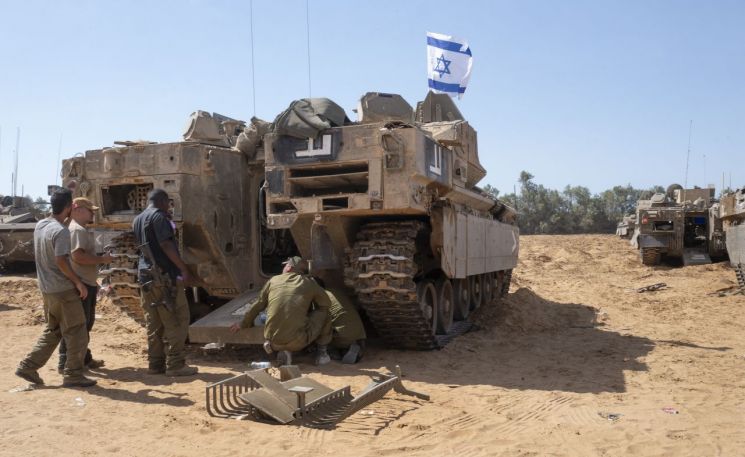
The Times of Israel reported on July 15 (local time), citing government sources, that "the plan to build a humanitarian city has not taken concrete shape due to differences of opinion between the political leadership and the Defense Ministry," and that "the Defense Ministry estimates that it would cost about 3 to 4.5 billion dollars (approximately 4.1 trillion to 6.2 trillion won) just to build basic infrastructure such as water and sewage facilities, sanitation, and medical services for the relocated residents. However, Prime Minister Benjamin Netanyahu claims these estimates are excessive and is demanding a much cheaper plan."
The Netanyahu government argues that it can build about eight temporary settlements in Rafah to accommodate residents and that the humanitarian city can be constructed within three to five months. Israeli Finance Minister Bezalel Smotrich said at a press conference, "The budget proposed by the Defense Ministry is inflated and is an attempt to derail the humanitarian city project," adding, "Creating zones to accommodate Gaza residents is a simple logistical operation that would only require a budget of several hundred million dollars, and the Finance Ministry is willing to cover the entire amount."
Previously, on July 7, Israeli Defense Minister Yoav Gallant announced the humanitarian city construction plan. Minister Gallant stated, "We will first relocate 600,000 residents from the coastal area of Mawasi in Gaza to Rafah, and then gather about 2.2 million civilians from the entire Gaza Strip into this area," adding, "Movement of residents who enter the humanitarian city will not be permitted, but we will encourage voluntary emigration to other countries."
However, the Israeli military has criticized the plan as unrealistic. Chief of Staff Herzi Halevi stated at a government security meeting, "It is impossible to accommodate all civilians from the Gaza Strip on the ruins of Rafah," and expressed opposition by saying, "We cannot be sure that this plan aligns with the actual objectives of the war, and it could negatively impact hostage negotiations with Hamas."
Rafah: A Small City of 170,000, with an Area Smaller than Ulleungdo
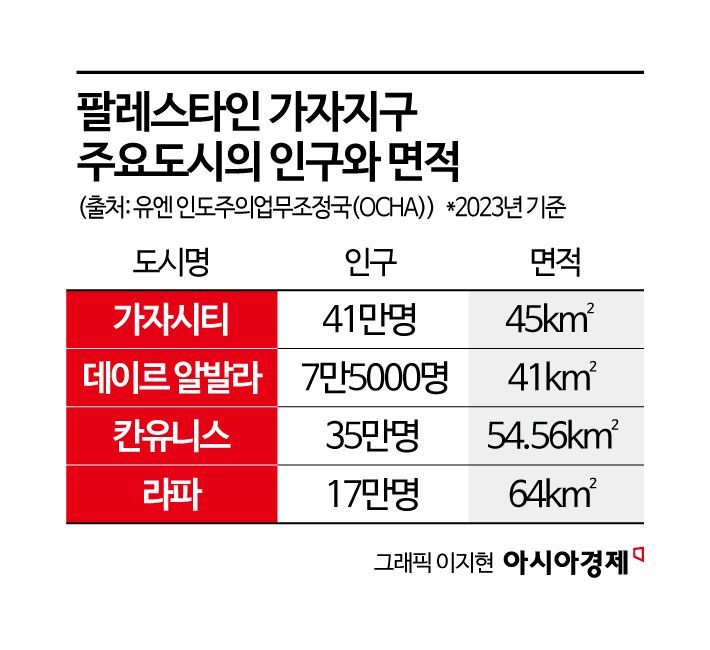
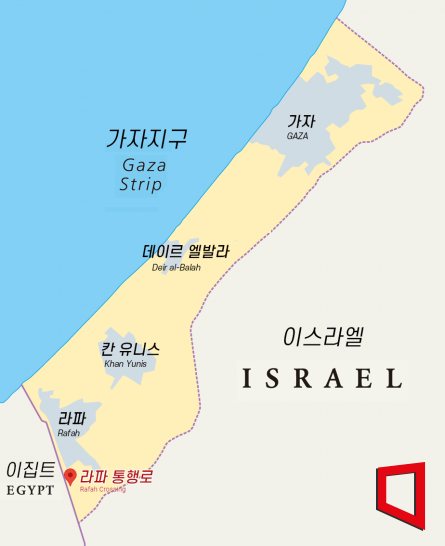
There are also concerns that Rafah, the area where the Israeli government intends to build the humanitarian city, is too small in area and has too small a population to accommodate more than 2 million people, even if the destroyed infrastructure is restored.
According to statistics from the United Nations Office for the Coordination of Humanitarian Affairs (OCHA), the urban area of Rafah is 64 square kilometers, which is slightly smaller than Ulleungdo (72.56 square kilometers). The total area of Gaza Strip (364.3 square kilometers) is only about 60% the size of Seoul, making the urban areas relatively small. Rafah was a small city with a population of about 170,000 before fighting broke out between Israel and Hamas.
Since the outbreak of hostilities between Israel and Hamas in October 2023, about 1.9 million refugees have flocked to the southern area near Rafah. With more than 92% of Rafah's urban and residential areas destroyed and severe overcrowding, refugees are facing enormous difficulties. According to UNICEF, as of last year, there was only one toilet for every 850 people in Rafah, far below the international sanitation standard of one toilet per 20 people.
The Israeli opposition is also against the humanitarian city plan, arguing that it could result in a massive number of civilian casualties. Yair Lapid, leader of the main opposition party Yesh Atid, said at the opening ceremony of the party convention on July 14, "The humanitarian city plan is sheer madness," and strongly criticized, "Who will provide food? Who will take responsibility for water and electricity? What will happen if epidemics or diseases break out? If residents and children want to leave the city, how will soldiers stop them? How many security personnel will be deployed? There is no plan at all."
Benny Gantz, leader of the National Unity Party, also stated, "The plan I proposed to the Netanyahu cabinet at the beginning of the war was to create a 'humanitarian triangle' managed by the international community, but the government has chosen a much more dangerous and costly option," adding, "They are acting against the recommendations of the Israeli military and trampling on common sense."
© The Asia Business Daily(www.asiae.co.kr). All rights reserved.
![Clutching a Stolen Dior Bag, Saying "I Hate Being Poor but Real"... The Grotesque Con of a "Human Knockoff" [Slate]](https://cwcontent.asiae.co.kr/asiaresize/183/2026021902243444107_1771435474.jpg)

















